Reading Theme:
Divert: Definition, Usage & Real-Life Examples (2 meaning)
Meaning 1:redirect (divert)
divert
/daɪˈvɜːt/
vt.
To make something or someone change direction or go a different way.
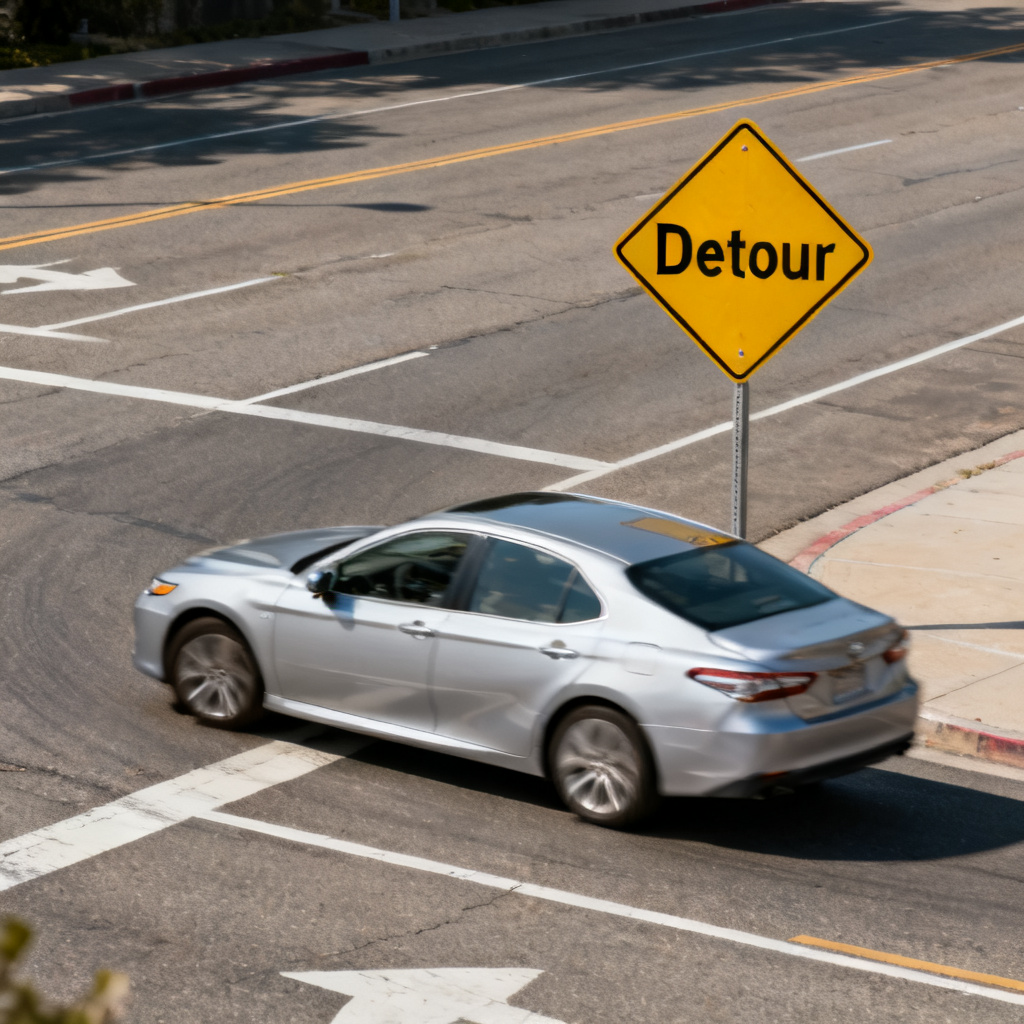
redirect
➕
/ˌriːdɪˈrekt/
vt.
To cause something to change its course or destination.
📘 Details & Usage
📖 Root Explanation
From Latin 'divertere' (to turn in different directions), from 'di-' (apart) + '-vert' (to turn).
💡 Mnemonic
Divers drive to divert attention. Think of turning (*vert*) apart (*di-*) from the main path.
📖 Example
Due to the accident, police had to divert all traffic to the side streets.
Following the collision, authorities rerouted all vehicles onto adjacent roads.
🔗 Collocations
divert traffic – to reroute vehicles away from a particular road
divert funds – to redirect money from one purpose to another
divert a river – to change the course of a waterway
🔄 Synonyms
🚫 Antonyms
🌱 Derivatives
📖 Cultural Story
Entered English via Old French 'divertir' meaning 'to turn aside'. Originally used in military and physical contexts for turning resources or troops, its meaning expanded to include entertainment ('to turn the mind').
Meaning 2:entertain (divert)
divert
/daɪˈvɜːt/
vt.
To entertain someone and take their attention away from something boring or worrying.

entertain
➕
/ˌentəˈteɪn/
vt.
To provide amusement or distraction for someone.
📘 Details & Usage
📖 Example
The clown's silly performance helped to divert the children while they waited at the doctor's office.
The amusing antics of the clown successfully kept the children's minds off their anxiety in the waiting room.
🔗 Collocations
divert attention – to distract someone from noticing something
divert oneself – to amuse or occupy oneself pleasantly
divert suspicion – to mislead others to prevent them from suspecting you
🔄 Synonyms
Wordbook
Your data is saved in this browser