阅读主题:
High/Low Temperature 三种核心含义与常见用法 (共3个含义)
含义1:高温/低温 (High / Low temperature)
High / Low temperature
/haɪ/ /loʊ/ ˈtemprətʃər/
noun phrase
A measurement of how hot or cold the air is, like the number you see in a weather forecast.
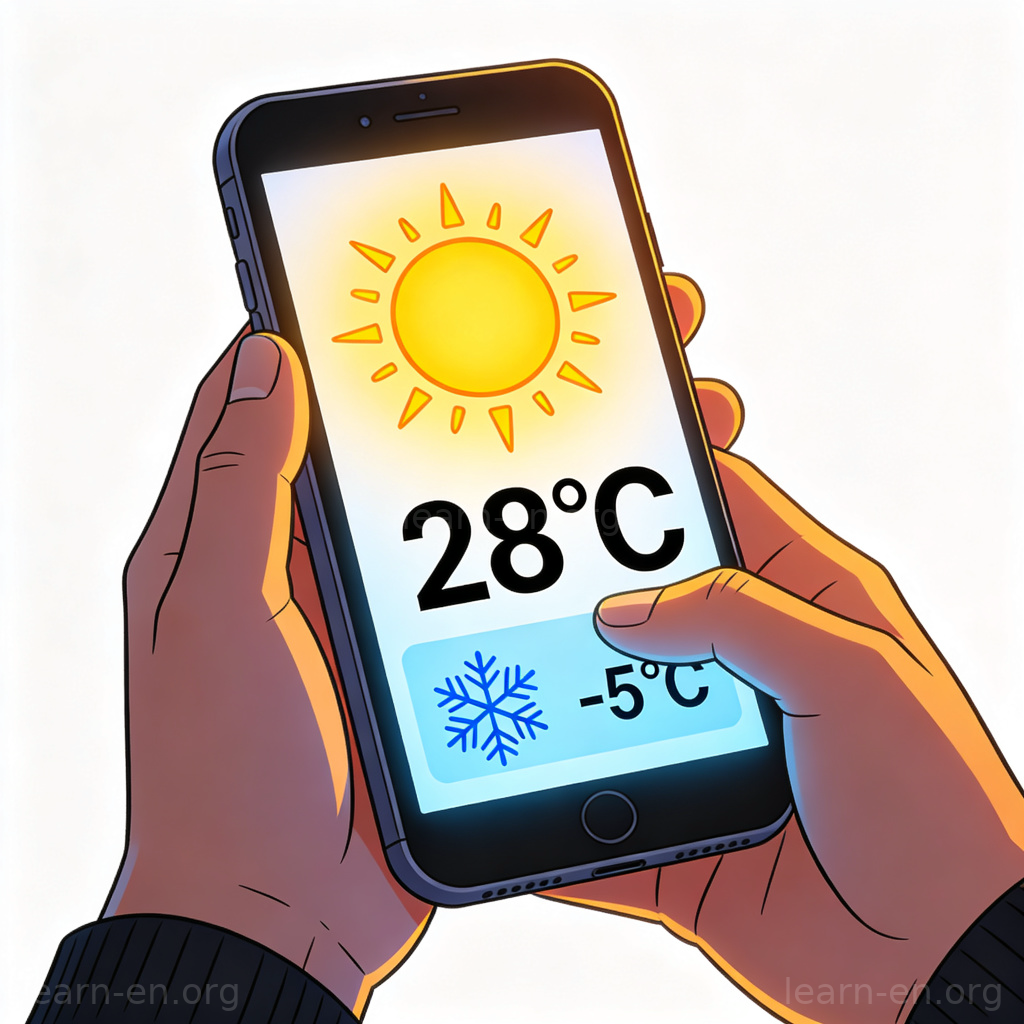
高温/低温
➕
gāo wēn / dī wēn
noun phrase
指空气的冷热程度,就是我们每天看的天气预报里说的‘今天多少度’。
📘 详细信息与用法拓展
📖 词根拆解
Temperature(温度)来自拉丁语temperatura,原意是“混合、适度”,后来指衡量冷热程度的指标。High/Low 就是描述这个指标的“高”或“低”。
💡 联想技巧
联想:**High temperature** 就像夏天发烧(high fever),**Low temperature** 就像冬天手冷(low,低得让你直缩手)。记住‘Hi!’(High)是热得打招呼,‘Low…’是冷得不想说话。
📖 例句
The weather forecast warns of high temperatures reaching 38°C tomorrow, so remember to stay hydrated if you go out.
天气预报警告明天高温将达到38度,所以如果你要出门,记得多喝水。
🔗 固定搭配
record high temperature – 创纪录的高温
extremely low temperature – 极低的温度
🚫 反义词
mild temperature (n.) – 温和的温度
🌱 派生词
thermometer (n.) – 温度计
📖 文化故事
想象一下,在发明温度计之前,人们只能靠身体去猜今天有多热多冷。直到有一天,伽利略把一个带小球的玻璃管放进水里,他发现空气的冷热会让小球上下移动--这个小小的玻璃管,第一次把‘看不见的冷热’变成了‘看得见的刻度’,从此我们再也不需要争论今天到底是‘有点凉’还是‘特别冷’了。
含义2:高温/低温 (High / Low temperature)
High / Low temperature
/haɪ/ /loʊ/ ˈtemprətʃər/
noun phrase
How hot or cold an object or substance itself is.

高温/低温
➕
gāo wēn / dī wēn
noun phrase
指一个东西(比如水、金属)本身的冷热程度。
📘 详细信息与用法拓展
📖 例句
This special plastic can withstand very high temperatures without melting, making it perfect for kitchen tools.
这种特殊的塑料可以承受非常高的温度而不熔化,非常适合做厨房用具。
🔗 固定搭配
operating temperature – 工作温度(机器正常运转的温度范围)
room temperature – 室温
🌱 派生词
temperature control (n.) – 温度控制
含义3:发烧/体温过低 (High / Low temperature)
High / Low temperature
/haɪ/ /loʊ/ ˈtemprətʃər/
noun phrase
When a person's body temperature is higher (fever) or lower than normal.

发烧/体温过低
➕
fā shāo / tǐ wēn guò dī
noun phrase
特指人体体温高于或低于正常范围。‘High temperature’在这里通常就是指‘发烧’。
📘 详细信息与用法拓展
📖 例句
If your baby has a high temperature and seems uncomfortable, it's best to call the doctor.
如果你的宝宝发高烧并且看起来不舒服,最好打电话给医生。
🔗 固定搭配
run a high temperature – 发高烧
suffer from hypothermia (very low body temperature) – 患上体温过低症
🚫 反义词
normal temperature (n.) – 正常体温
Wordbook
您的数据已保存在此浏览器中