Reading Theme:
Traditional Festival: Definition, Examples, and Usage
Meaning 1:heritage celebration (Traditional festival)
Traditional festival
/trəˈdɪʃənəl ˈfɛstɪvəl/
n.
A celebration passed down through generations with cultural meaning, often involving family gatherings and special customs, like Spring Festival or Christmas.
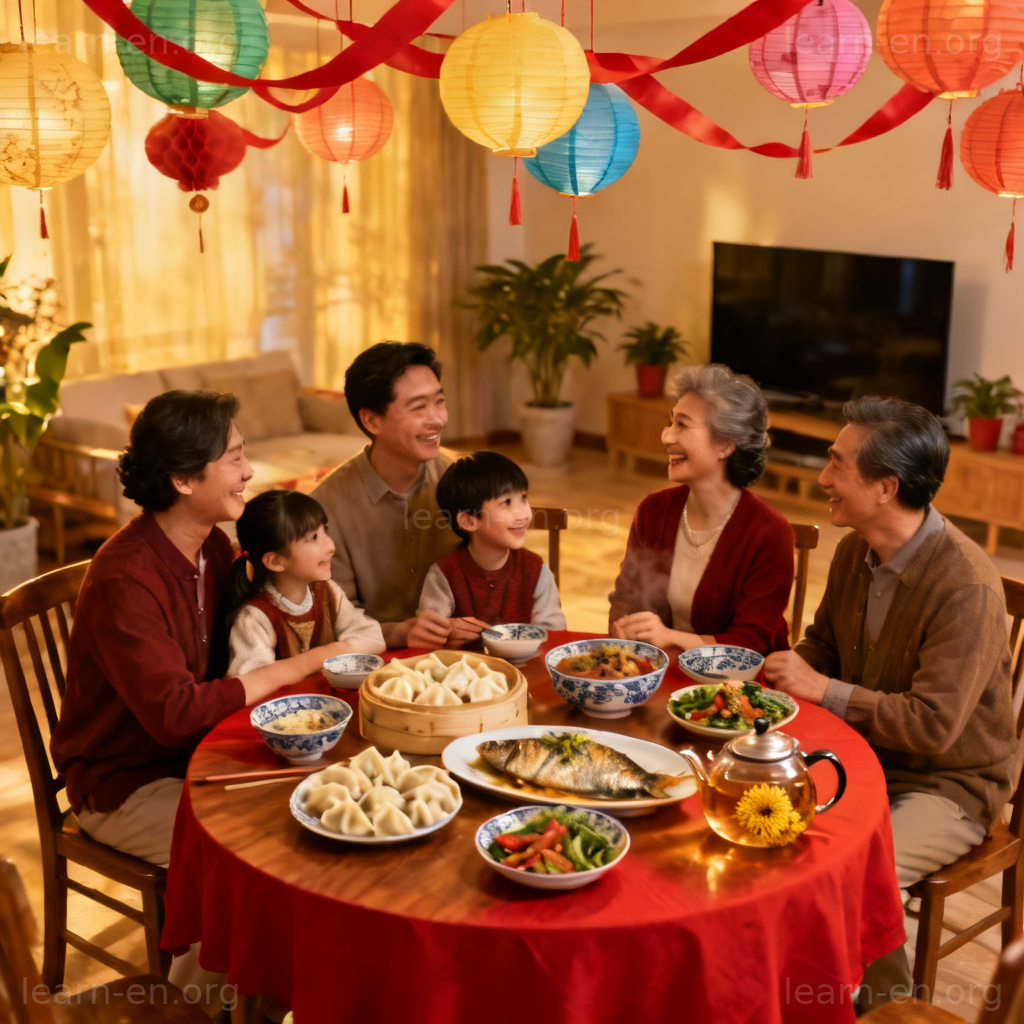
heritage celebration
➕
/ˈhɛrɪtɪdʒ ˌsɛlɪˈbreɪʃən/
n.
A traditional festival is a recurring celebration that has been passed down through generations, often carrying cultural or religious significance, involving specific customs, rituals, and gatherings.
📘 Details & Usage
📖 Root Explanation
Traditional from Latin 'traditio' (handing down) + -al; festival from Latin 'festivus' (joyful).
💡 Mnemonic
Think of 'tradition' + 'festival' — a time-honored celebration passed down. Visualize a family gathering with special foods and customs.
📖 Example
During the Mid-Autumn Festival, my family always eats mooncakes and admires the moon, as it's our favorite traditional festival.
During the Mid-Autumn Festival, my family always eats mooncakes and admires the moon, as it's our favorite traditional festival.
🔗 Collocations
observe a traditional festival – to celebrate or participate in a traditional festival
traditional festival customs – the customs associated with a traditional festival
spring festival – the most important traditional festival in Chinese culture
🔄 Synonyms
holiday (n.) – A day of celebration or rest, often with cultural or religious significance.
celebration (n.) – A joyful event or occasion marked by festivities.
festivity (n.) – A joyful celebration or party, often involving special activities.
🚫 Antonyms
ordinary day (n.) – A typical day without special celebration or cultural significance.
workday (n.) – A day designated for work, lacking festive activities.
🌱 Derivatives
📖 Cultural Story
The word 'festival' derives from Latin 'festivus' meaning 'joyful'. Traditional festivals often have roots in ancient agricultural cycles or religious observances, such as Christmas (from Christ's mass) or Lunar New Year (from harvest celebrations).
Wordbook
Your data is saved in this browser