Reading Theme:
Side Dish Meaning, Examples & Usage
Meaning 1:accompanying dish (Side Dish)
Side Dish
/saɪd dɪʃ/
n.
A small dish of food served with the main meal to make it more complete or balanced, like vegetables or salad.
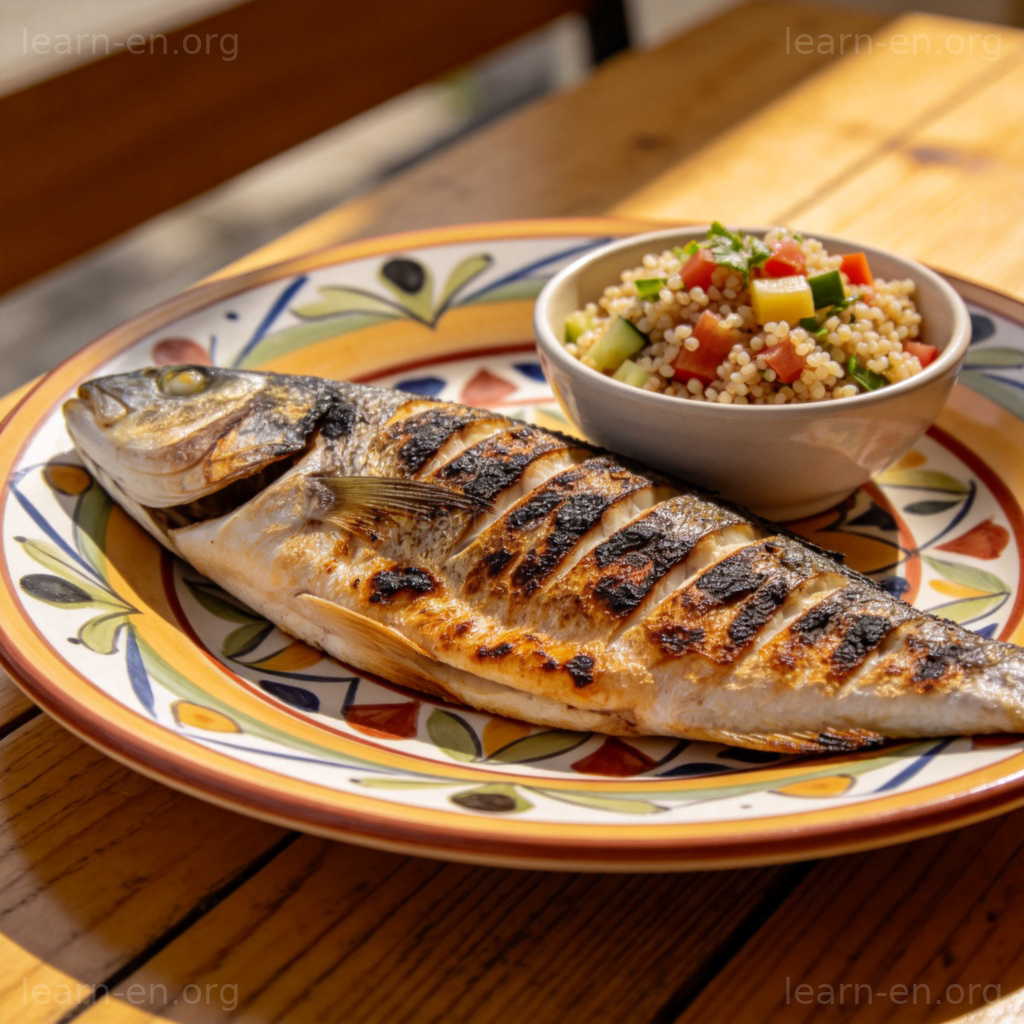
accompanying dish
➕
/əˈkʌmpəniɪŋ dɪʃ/
n.
A small dish of food served alongside the main course to complement it, often vegetables, salad, or grains.
📘 Details & Usage
📖 Root Explanation
"Side" from Old English "sīde" (flank); "dish" from Old English "disc" (plate, bowl). Combined term for a small accompaniment.
💡 Mnemonic
Think of a side dish as the loyal sidekick on your plate—always next to the hero main course, adding balance.
📖 Example
At the barbecue, we grilled chicken as the main course and had corn on the cob as a side dish.
During the barbecue, we grilled chicken as the main dish and enjoyed corn on the cob as a side dish.
🔗 Collocations
side dish of vegetables – a side dish that consists of vegetables
choose a side dish – to select a side dish from the menu
serve with a side dish – to accompany the main food with a side dish
🔄 Synonyms
accompaniment (n.) – Something that goes along with the main item, often food or drink.
garnish (n.) – A decorative or flavorful element added to a dish, often small and placed on or beside the main food.
side (n.) – A short form for side dish, commonly used in restaurants.
🚫 Antonyms
main course (n.) – The primary or largest dish in a meal, which the side dish complements.
entree (n.) – The main dish of a meal, especially in American English.
centrepiece (n.) – The focal point of a meal, typically the most substantial or elaborate dish.
🌱 Derivatives
📖 Cultural Story
The term "side dish" arose in 16th-century European dining, influenced by French "service à la française," where main courses were paired with smaller entremets. It standardized in modern menus to denote complementary foods.
Wordbook
Your data is saved in this browser