Reading Theme:
React Meaning, Examples, and Common Usage (2 meaning)
Meaning 1:respond (react)
react
/riˈækt/
v.
to behave or do something as an answer to what has happened or been said.

respond
➕
/rɪˈspɑːnd/
v.
To behave or do something as a direct result of a situation or event.
📘 Details & Usage
📖 Root Explanation
From Latin 're-' (again) + 'agere' (to do/act); means 'to act in response'.
💡 Mnemonic
Think 're-act': you act again in response to something. Like a quick second action!
📖 Example
The children's faces lit up as they reacted to the surprise gift.
The children's faces lit up as they reacted to the surprise gift.
🔗 Collocations
react to – to respond to a stimulus or event
react with – to show a response using a specific emotion or action
react by – to take a specific action as a response
🔄 Synonyms
🚫 Antonyms
🌱 Derivatives
📖 Cultural Story
Latin prefix 're-' (back) + 'agere' (to do) passed through French to English, first used in 17th-century chemistry for interactions. Now common for any responsive action.
Meaning 2:react chemically (react)
react
/riˈækt/
v.
(in chemistry or medicine) to change after coming into contact with another substance.
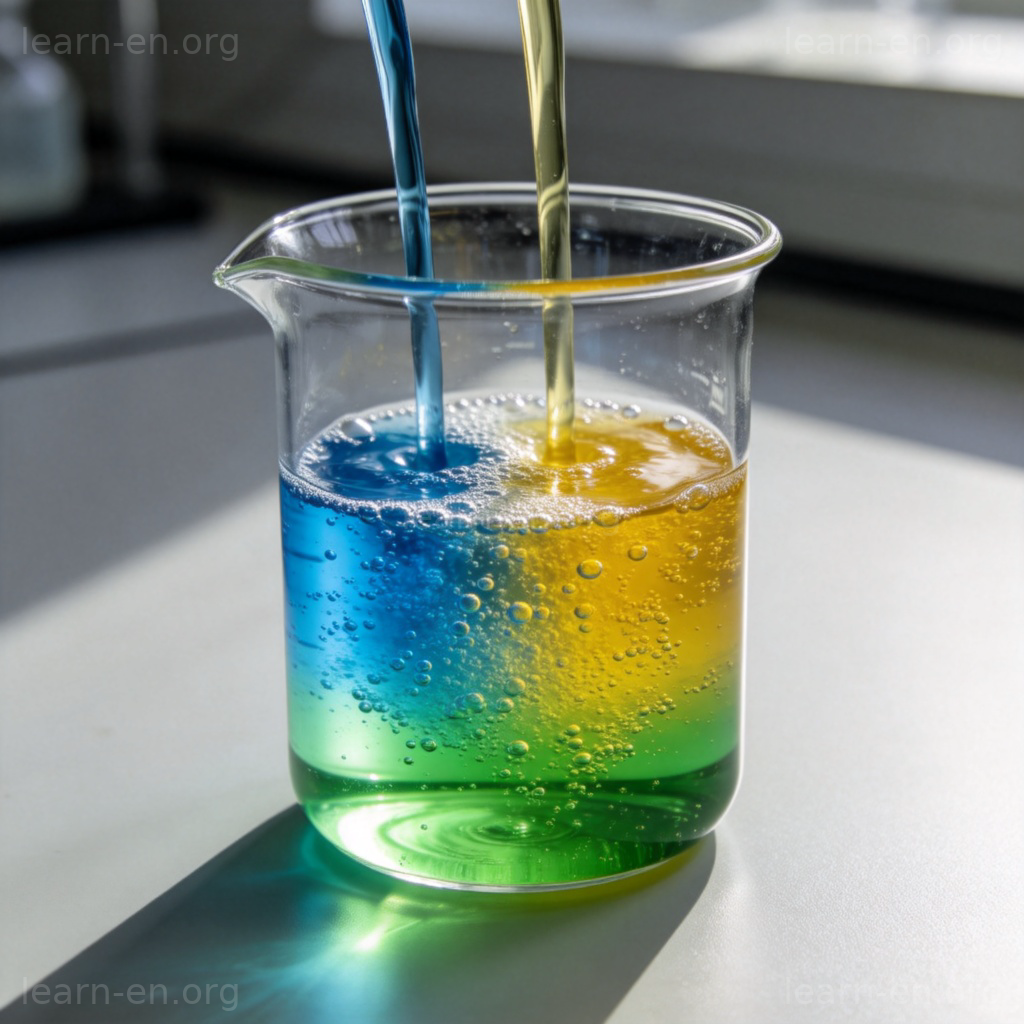
react chemically
➕
/riˈækt ˈkɛmɪkli/
v.
To undergo a chemical transformation when coming into contact with another substance, typically producing new substances.
📘 Details & Usage
📖 Example
In the science experiment, we observed how the metal reacted with the acid, producing bubbles.
In the science experiment, we observed how the metal reacted with the acid, producing bubbles.
🔗 Collocations
react with – to combine chemically with another substance
react (chemically) to – to undergo a change when exposed to a substance
react together – of substances, to interact chemically
🔄 Synonyms
🚫 Antonyms
remain inert (v. + adj.) – to stay unchanged chemically
be stable (v. + adj.) – to not undergo any chemical reaction
stay unresponsive (v. + adj.) – to not react even when in contact
Wordbook
Your data is saved in this browser