Reading Theme:
Comparatively: Definition, Usage & Common Mistakes
Meaning 1:relatively (comparatively)
comparatively
/kəmˈpær.ə.tɪv.li/
adv.
It means 'in comparison to something else'. It helps to show that something is true to some degree, but not absolutely.
relatively
➕
/ˈrel.ə.tɪv.li/
adv.
Used to indicate that something is judged or measured against something else, suggesting it is true only to a certain degree and not in an absolute sense.
📘 Details & Usage
📖 Root Explanation
Derived from Latin 'comparare' (to compare) + suffix '-ive' (forming adjectives) + '-ly' (forming adverbs).
💡 Mnemonic
Think: 'compare-a-tively'. It's the adverb you use when you are actively comparing two things.
📖 Example
The new smartphone is comparatively cheaper than its main competitor, making it a popular choice for students.
It means the smartphone is cheaper when you compare it to its competitor, but it may not be cheap in an absolute sense.
🔗 Collocations
comparatively speaking – when considered in comparison to something else
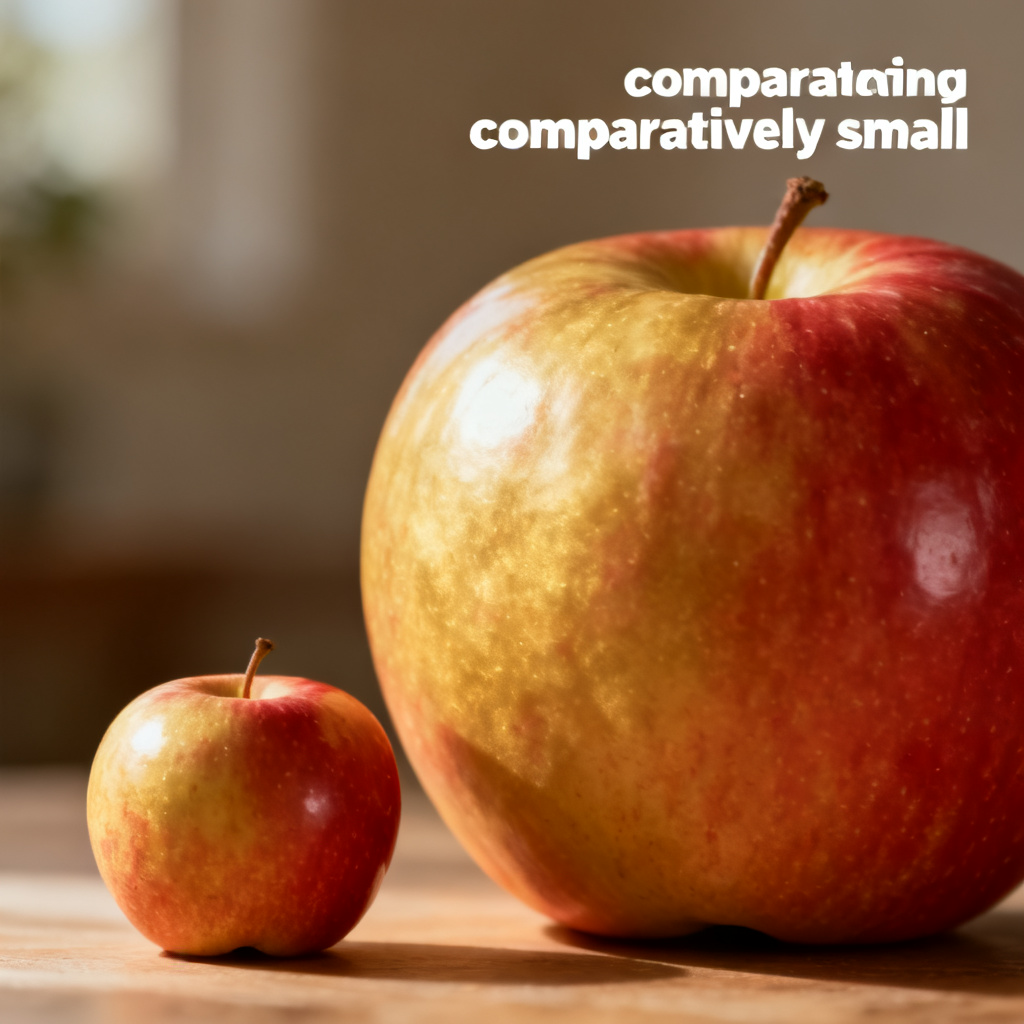
comparatively small – relatively small in size or amount
comparatively easy – fairly easy or simpler than other similar tasks
🔄 Synonyms
relatively (adv.) – In relation, comparison, or proportion to something else.
fairly (adv.) – To a moderately high degree; quite.
somewhat (adv.) – To a moderate extent or by a moderate amount; rather.
🚫 Antonyms
absolutely (adv.) – Completely and totally, without any conditions or limitations.
completely (adv.) – In every way or as much as possible; totally.
🌱 Derivatives
comparative (adj.) – Measured or judged by comparison; relative.
compare (v.) – To examine the similarities or differences between two or more things.
📖 Cultural Story
In modern English, especially in academic writing and business analysis, 'comparatively' is a key hedge word. It's used to present findings as relative rather than absolute, a crucial nuance in scientific papers and market reports to indicate measured, non-definitive claims.
Wordbook
Your data is saved in this browser