Reading Theme:
Comparative: Definition, Usage & Common Mistakes (2 meaning)
Meaning 1:relative (comparative)
comparative
/kəmˈpær.ə.tɪv/
adj.
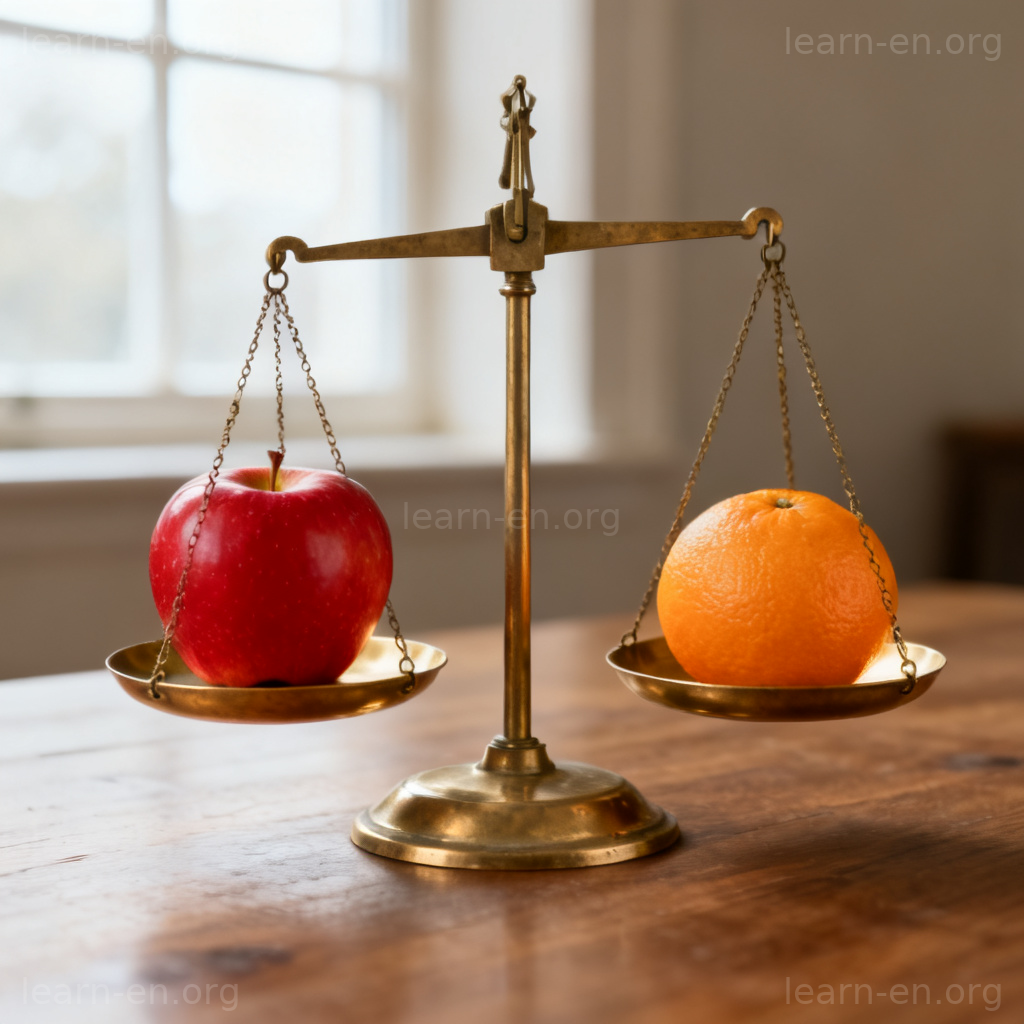
Involving the comparison of two or more things to show their differences or similarities.
relative
➕
/ˈrɛl.ə.tɪv/
adj.
A perspective or method that examines things by putting them side-by-side to highlight their similarities and differences.
📘 Details & Usage
📖 Root Explanation
From Latin roots: 'com-' (together) + 'par' (equal) + '-ative' (adjective-forming suffix). Means 'by putting things on an equal footing (to judge)'.
💡 Mnemonic
COMPARE two things to make them 'ATIVE' (active) in your analysis.
📖 Example
In our history class, we conducted a comparative analysis of ancient Chinese and Egyptian writing systems.
In our history class, we performed a study that compared ancient Chinese and Egyptian writing systems.
🔗 Collocations
comparative analysis – A detailed examination involving comparison.
comparative study – Research that compares two or more subjects.
comparative advantage – An economic term for a superior ability to produce something at a lower cost.
🔄 Synonyms
relative (adj.) – Considered in relation to something else; not absolute.
analytical (adj.) – Using logical reasoning to examine something in detail, which often involves comparison.
evaluative (adj.) – Involving making a judgment by assessing the value of different things.
🚫 Antonyms
📖 Cultural Story
From Latin 'comparativus', from 'comparare' (to pair, match). Entered English via Old French 'comparatif'. It is fundamental in academia for cross-cultural or historical studies, and in business for market analysis.
Meaning 2:comparative degree (comparative)
comparative
/kəmˈpær.ə.tɪv/
adj.
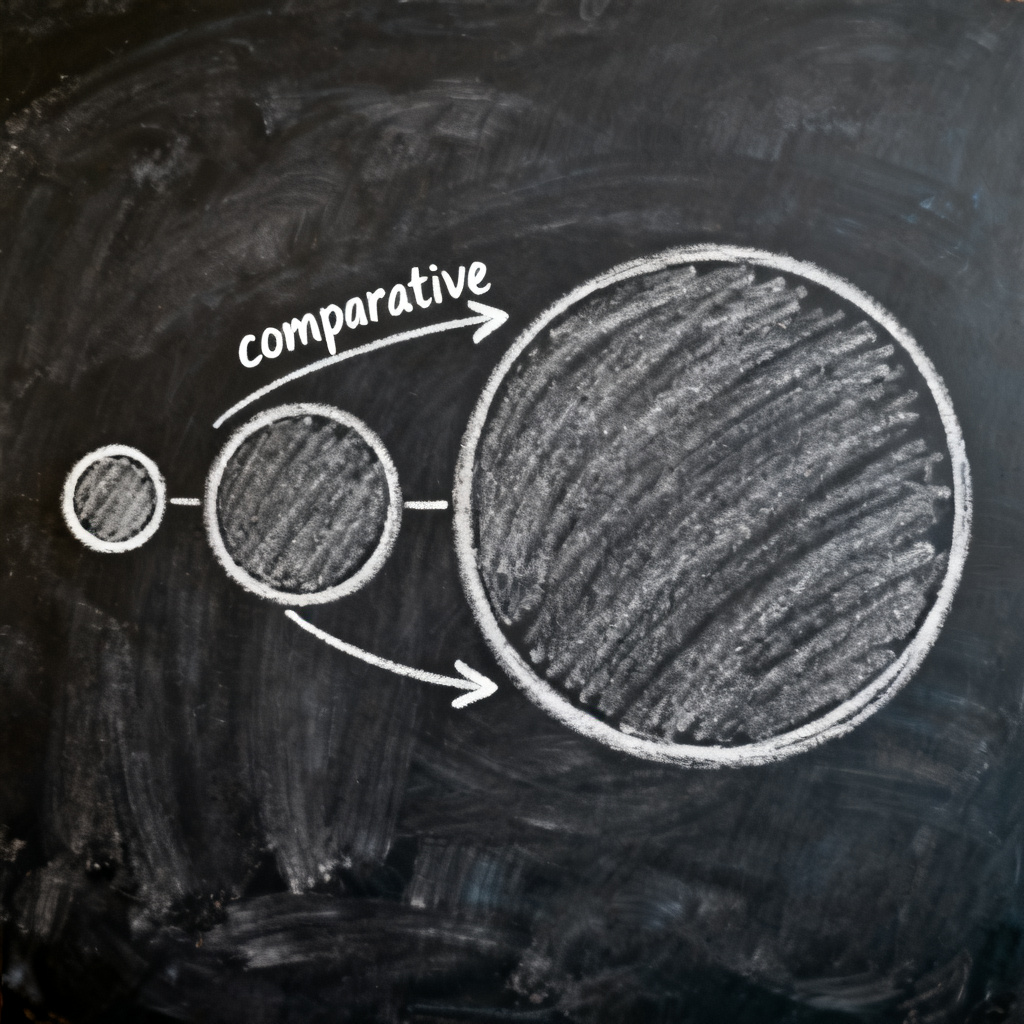
The form of an adjective or adverb used to compare two things, usually by adding -er or using 'more'.
comparative degree
➕
/kəmˈpær.ə.tɪv dɪˈɡriː/
adj.
The specific grammatical form of an adjective or adverb (like 'bigger' or 'more carefully') used to compare two entities.
📘 Details & Usage
📖 Example
"More interesting" is the comparative form of the adjective "interesting."
"More interesting" is the grammatical form of the adjective "interesting" used for comparing two things.
🔗 Collocations
comparative form – The specific grammatical structure used for comparison.
comparative adjective – An adjective in its 'er' or 'more ...' form.
comparative adverb – An adverb in its 'more ...' form.
🔄 Synonyms
comparative degree (n.) – The grammatical term for this form.
relative degree (n.) – A less common synonym for the comparative form.
🚫 Antonyms
positive degree (n.) – The basic, non-comparative form of an adjective or adverb (e.g., 'big', 'interesting').
superlative degree (n.) – The form used to compare three or more things (e.g., 'biggest', 'most interesting').
Wordbook
Your data is saved in this browser