Reading Theme:
Artefact: Definition, Usage & Common Mistakes (2 meaning)
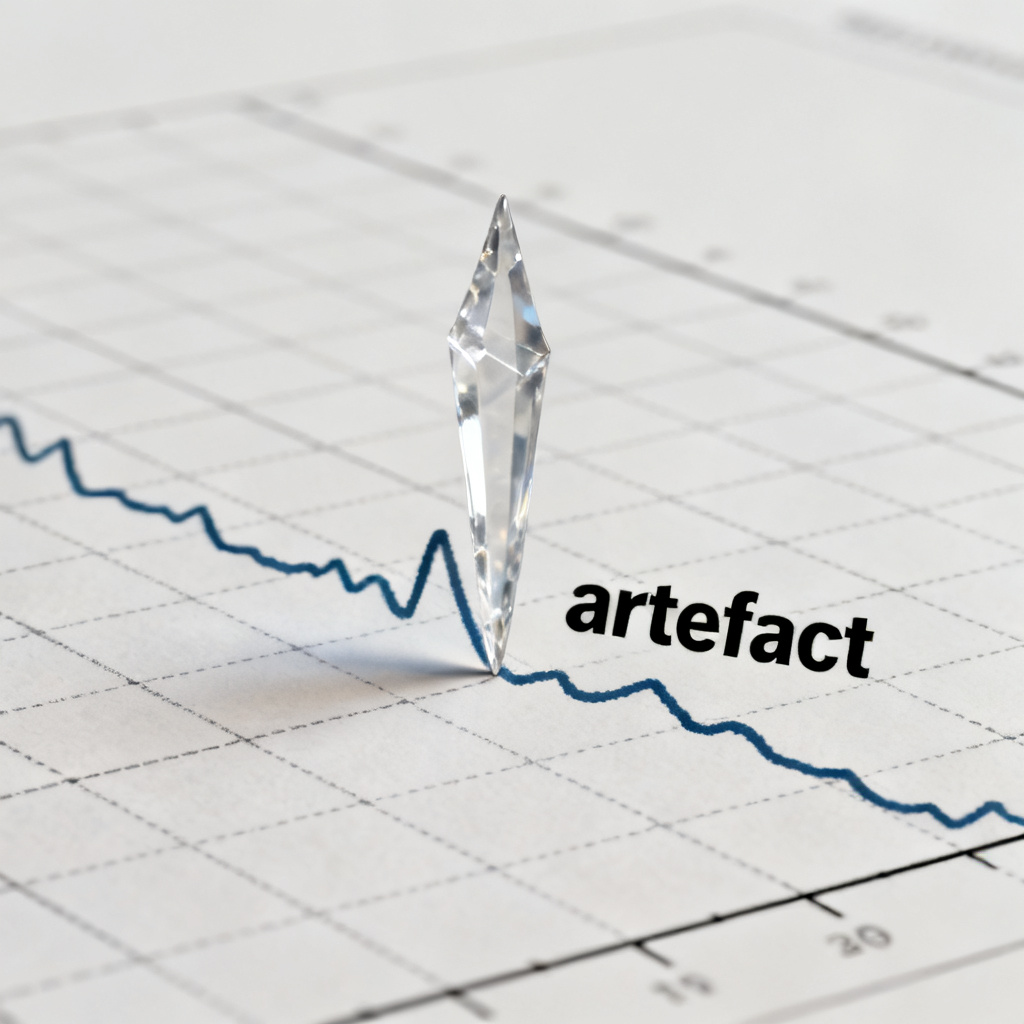
Meaning 1:man-made interference (artefact)
artefact
/ˈɑːtɪfækt/
n.
An object made by humans, not formed naturally. Often something that appears in a scientific study but is not part of the real thing being studied.

man-made interference
➕
/ˌmæn meɪd ˌɪntəˈfɪərəns/
n.
An artificial or extraneous feature or effect introduced into a scientific observation, measurement, or process, which can obscure or distort the true data.
📘 Details & Usage
📖 Root Explanation
From Latin 'arte factum', meaning 'made by art' or 'skillfully produced'.
💡 Mnemonic
ART + FACT: An ART-icle that's a FACT of human creation.
📖 Example
When analyzing the rock sample under the microscope, the scientists carefully distinguished between natural minerals and artefacts introduced during the polishing process.
While examining the rock sample with the microscope, the researchers meticulously differentiated between minerals that occurred naturally and man-made artefacts that got mixed in during the sample preparation.
🔗 Collocations
experimental artefact – an error or result caused by the experimental method itself, not the variable being studied
imaging artefact – a visual distortion or error in a medical scan or photograph
remove artefacts – to eliminate man-made interference from data or results
🔄 Synonyms
contamination (n.) – the presence of an unwanted substance that makes something impure
anomaly (n.) – something that deviates from what is standard, normal, or expected
byproduct (n.) – a secondary or incidental product of a process
🚫 Antonyms
natural phenomenon (n.) – an event or feature that occurs in nature without human intervention
📖 Cultural Story
The word originates from Latin 'arte factum', literally 'made by art' (skill). In archaeology, it distinguishes human-made objects from natural remains, forming the primary material for historical interpretation.
Meaning 2:historical object (artefact)
artefact
/ˈɑːtɪfækt/
n.
An ancient object made by people, which is interesting because it tells us about history or a past culture. It's like a piece of the past you can touch.
historical object
➕
/hɪˈstɒrɪkəl ˈɒbdʒɪkt/
n.
An object, typically a simple tool or ornament, made by human workmanship, especially one of historical or archaeological interest from a past culture.
📘 Details & Usage
📖 Example
The museum's new exhibition features a beautiful clay pot, an artefact from a civilization that thrived over 3000 years ago.
The museum's latest display showcases an attractive clay vessel, a historical object from a society that flourished more than three millennia in the past.
🔗 Collocations
ancient artefact – a very old object made by humans
cultural artefact – an object that represents the culture of its creators
archaeological artefact – an object recovered by archaeological excavation
Wordbook
Your data is saved in this browser