阅读主题:
语言:
it - 基础词汇详解 (共3个含义)
it
/ɪt/
pron.
A word used to talk about a thing or an object that was just mentioned, to avoid repeating its name.

它
➕
tā
名词
用来指代刚刚提到过的一个东西(不是人)。就像我们说话时,不想总重复说一个东西的名字,就用“它”来代替。
📘 详细信息
📖 词根拆解
这个词来自古英语的‘hit’,原本用来指代中性的事物。‘hit’中的‘h’在历史上慢慢丢失了,就变成了现在的‘it’。它是一个非常基础、形态不变的词。
💡 联想技巧
拼音联想记忆:一体 (yī tǐ)。‘it’就像是语言中的‘一体’万能胶水,可以把各种需要指代的东西‘粘’成一个整体,下次说到时就用这个简单的‘it’来替换。画面:想象一个乐高小人,用‘it’这把万能胶水枪,粘合起前面提到的所有乐高块。
📖 例句
I bought a new phone and it has a great camera.
我买了一部新手机,它有一个很棒的相机。
🔗 固定搭配
buy it – 买下它
find it – 找到它
love it – 爱它/很喜欢
🔄 同义词
this (pron.) – 这个(指近处或刚提及的事物)
that (pron.) – 那个(指远处或已提及的事物)
🚫 反义词
🌱 派生词
📖 文化故事
想象一下,在没有‘it’这个词的古时候,人们每提到一个东西,哪怕是个苹果,可能都得说‘那个苹果’或者直接叫名字,多累赘啊。突然,语言里出现了一个神秘的‘万能帮手’,它能悄悄站在任何无生命的物品前面,指代它,让句子一下子变得干净利落。就是这个小小的‘it’,后来竟然发展出各种奇妙的用法,彻底改变了英语表达的逻辑。
it
/ɪt/
pron.
Used to refer to a baby or an animal when you don't know or don't need to mention its gender (whether it's male or female).

它(指婴儿/动物)
➕
tā (zhǐ yīng ér / dòng wù)
名词
当你不知道、不关心,或者不需要强调一个婴儿或小动物的性别(是男是女)时,也可以用“它”来指代。
📘 详细信息
📖 例句
The puppy is so tiny; we need to feed it every few hours.
这只小狗太小了,我们需要每隔几个小时就喂它一次。
🔗 固定搭配
feed it – 喂它
name it – 给它起名
🔄 同义词
🚫 反义词
he (pron.) – 他(指雄性的人或动物)
she (pron.) – 她(指雌性的人或动物)
🌱 派生词
it
/ɪt/
pron.
A grammatical helper. When the real subject of a sentence (like 'to study English') is long and awkward at the beginning, we use 'It' first, and put the real subject later to make the sentence flow better.
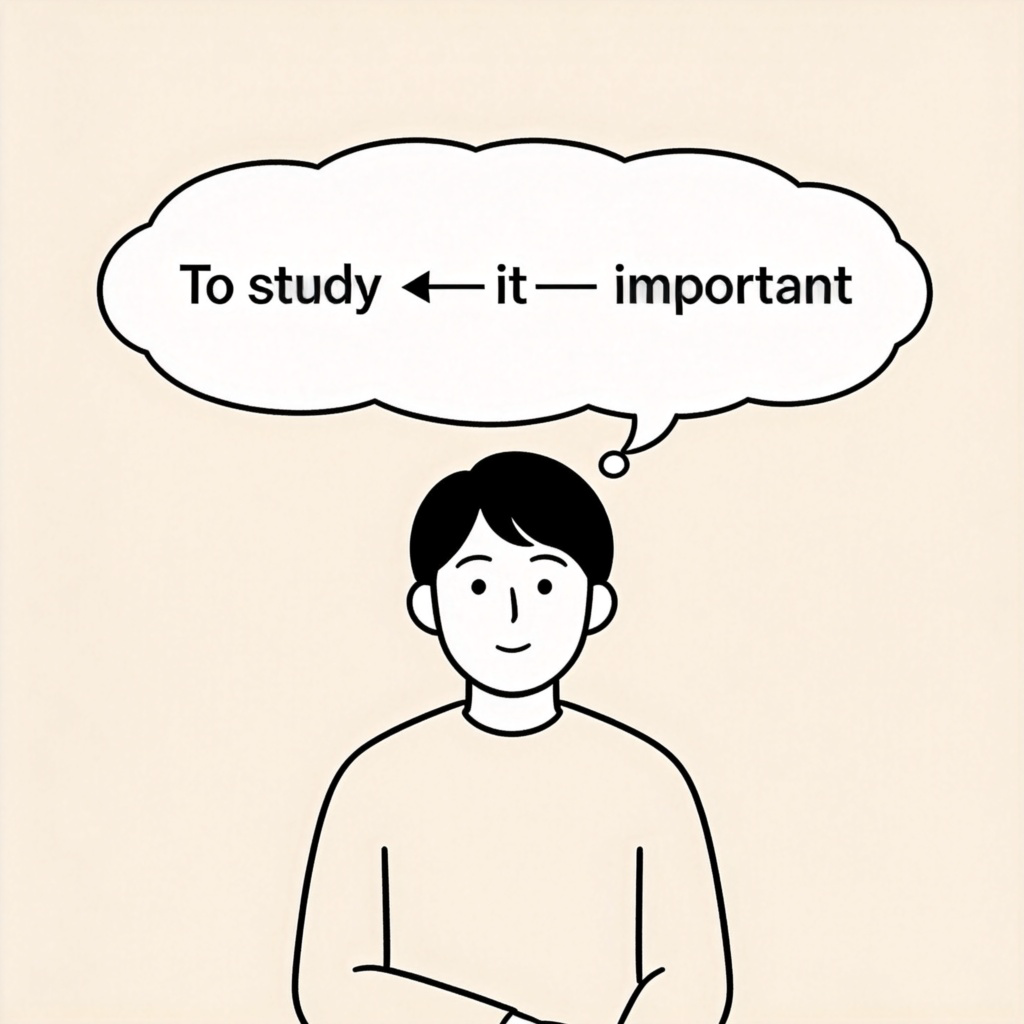
形式主语/宾语
➕
xíng shì zhǔ yǔ / bīn yǔ
名词
这是一个语法“小助手”。有些句子真正的主语(比如“to study English”)太长,放在开头很别扭。我们就先用“It”在句首占个位子,然后把真正的主语放到后面去。这让句子读起来更顺。
📘 详细信息
📖 例句
It is important to study every day.
每天学习是很重要的。(字面:它是重要的去每天学习。)
🔗 固定搭配
It is + adjective + to... – 做……是(怎么样的)
find it + adjective + to... – 发现做……是(怎么样的)
🔄 同义词
🚫 反义词
🌱 派生词
Wordbook
您的数据已保存在此浏览器中