阅读主题:
hypothesis 含义、用法与常见搭配解析
含义1:假说 (hypothesis)
hypothesis
[haɪˈpɒθəsɪs]
n.
An educated guess you make at the start of an investigation to explain something, before you have done enough tests to prove it.
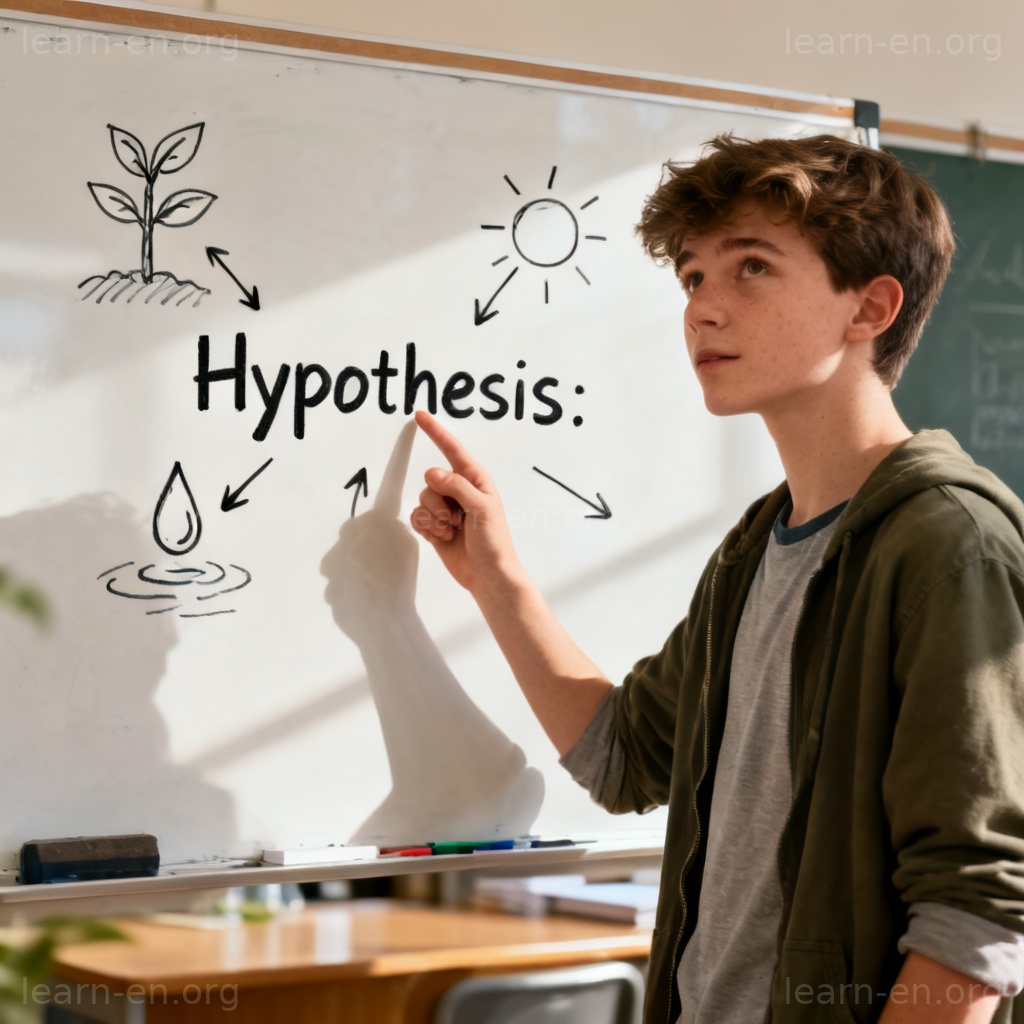
假说
➕
jiǎ shuō
n.
在科学研究或学习中,一个基于现有少量证据做出的、有待检验的‘聪明猜测’。它不是事实,而是你设计的‘实验剧本’的开头。
📘 详细信息与用法拓展
📖 词根拆解
来自希腊语。hypo- 意思是‘在下面’,-thesis 意思是‘放置’。合起来就是‘放在下面的东西’,引申为构成基础的‘假设’或‘前提’。
💡 联想技巧
联想:读音像‘嗨!抛个假设?’想象一个科学家兴奋地大喊‘嗨!我抛出了一个新的假设!’,然后大家都在想怎么验证它。
📖 例句
For her school science project, Jane’s hypothesis was that listening to classical music would help plants grow taller, so she played Mozart to one group of seedlings and left another group in silence.
为了学校的科学项目,简的假说是听古典音乐能帮助植物长得更高,于是她给一组幼苗播放莫扎特的音乐,另一组则保持安静。
🔗 固定搭配
test a hypothesis – 检验一个假说
formulate/propose a hypothesis – 提出/构想一个假说
🔄 同义词
theory (n.) – 理论;指经过大量验证、更可靠、更系统的解释。假说是理论的起点。
supposition (n.) – 假定;推测;指基于少量证据或直觉的猜想,比‘假说’更随意一些。
🌱 派生词
hypothesize (v.) – 假设;提出假说
hypothetical (adj.) – 假设的;假定的
📖 文化故事
你知道吗?那个著名的苹果下落事件,其实是一个猜谜游戏的开始。当牛顿看到苹果落地时,他脑子里冒出的第一个想法,并不是万有引力定律,而是一个大胆的“如果”--一个需要验证的初步猜想。正是这个最初的‘假设’,像一把钥匙,开启了解释宇宙规律的大门。
Wordbook
您的数据已保存在此浏览器中