阅读主题:
语言:
but - 基础词汇详解
but
/bʌt/
conj.
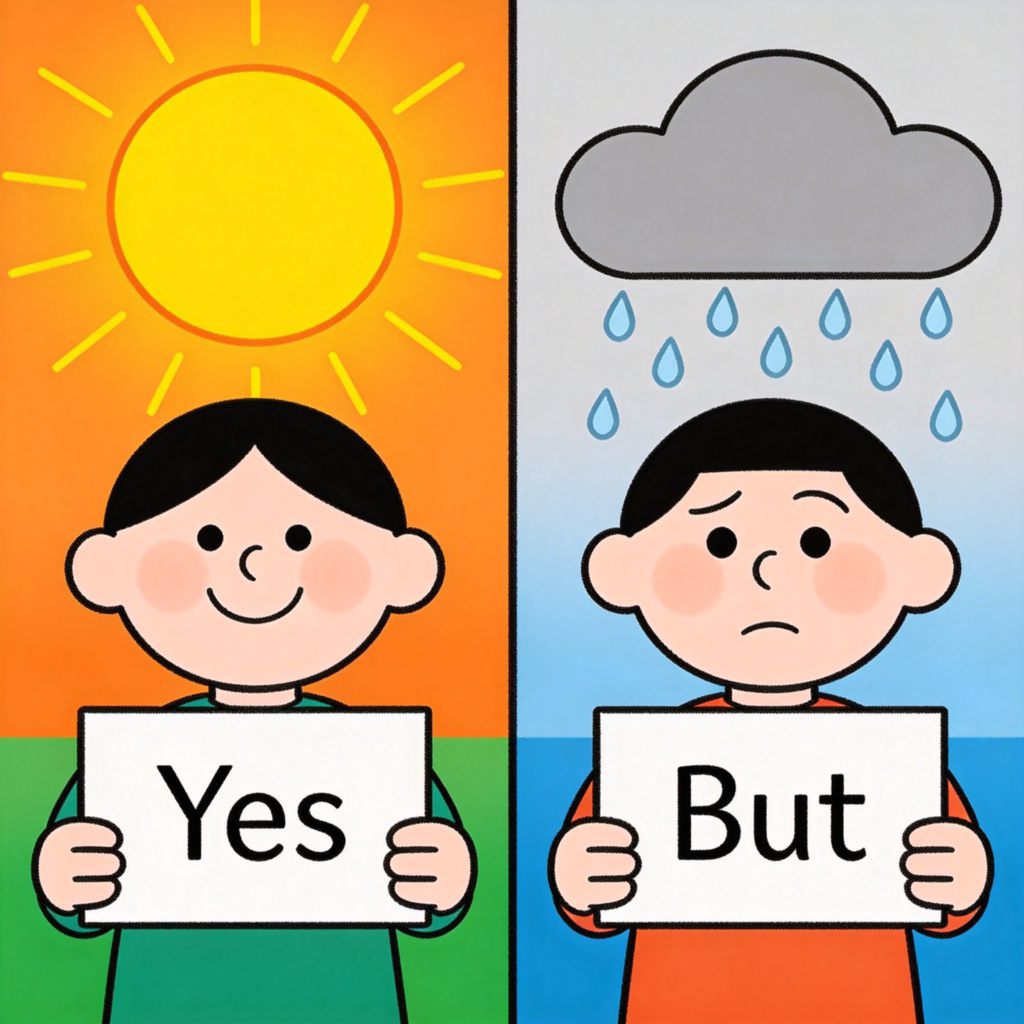
Used to introduce a statement that contrasts with or differs from what was said before.
但是
➕
dàn shì
形容词
用于连接两个句子,表示后一句话的意思与前一句话相反或形成对比,引出不同的观点。
📘 详细信息
📖 词根拆解
来自古英语 'butan',原意是 '外面' 或 '除了'。后来演变成连词,用来连接两个相反的想法,就像从门内走到门外一样,表示转变。
💡 联想技巧
把 'but' 想成 '不特' 的谐音--'不特别'。当你说了 '是',但又想说不那么特别同意时,就说 '但是'。或者想象一个箭头从左边转向右边,表示想法突然转弯。
📖 例句
I planned to finish my homework early, but my friend invited me to play video games.
我计划早点完成作业,但是朋友邀请我玩电子游戏。
🔗 固定搭配
not only... but also... – 不仅...而且...
but for – 要不是,用于表示例外
🔄 同义词
however (conj.) – 然而,表示轻微的转折或对比
yet (conj.) – 然而,但,常用于正式或强调语境
🚫 反义词
and (conj.) – 和,表示并列或添加,而不是转折
🌱 派生词
📖 文化故事
想象一下,在古代的集市上,一个商人刚刚夸赞自己的货物完美无缺,顾客点头准备购买。突然,另一个旁观者插嘴说 '但是……',这个词像一块石头扔进平静的水面,瞬间打破了和谐。从那时起,'but' 就成了语言中引入对立观点的经典信号,记录了人类对话中永恒的对比与冲突。
Wordbook
您的数据已保存在此浏览器中