Reading Theme:
Worm: Definition, Examples, and Usage
Meaning 1:earthworm (worm)
worm
/wɜːrm/
n.
A small, long, soft-bodied animal with no legs, like an earthworm or a caterpillar.
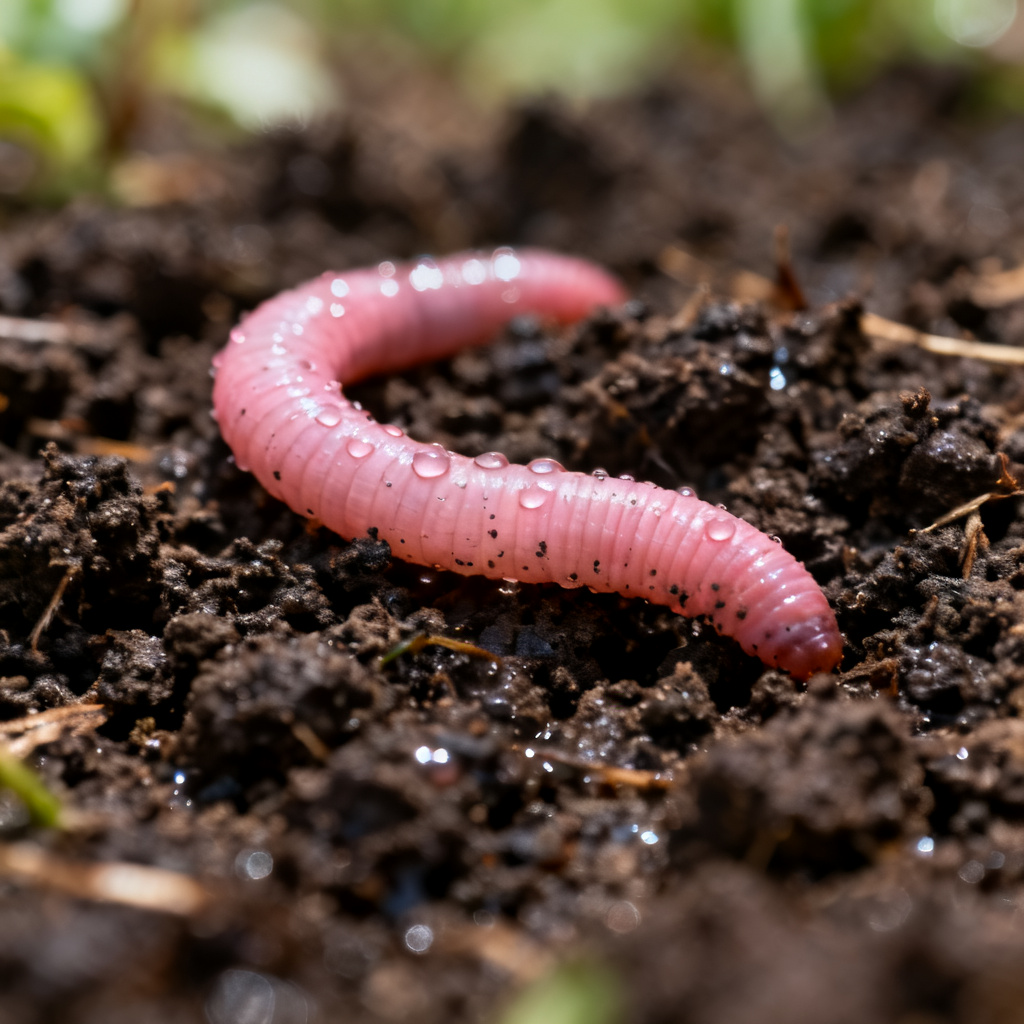
earthworm
➕
/ˈɜːrθwɜːrm/
n.
A long, soft-bodied, legless animal that lives in soil or water, often used as bait or in composting.
📘 Details & Usage
📖 Root Explanation
From Old English 'wyrm', meaning serpent or dragon, related to Latin 'vermis' (worm).
💡 Mnemonic
Imagine a wiggly 'worm' wriggling through wet soil — the 'w' starts 'wriggle' and 'worm'.
📖 Example
After the rain, the curious child found a wiggling worm in the garden soil.
After the rain, the curious child found a wiggling worm in the garden soil.
🔗 Collocations
earthworm – A common type of worm that lives in soil.
bookworm – A person who reads a lot, compared to a worm eating through books.
computer worm – A malicious program that replicates itself to spread to other computers.
🔄 Synonyms
grub (n.) – A young insect that looks like a short, thick worm.
maggot (n.) – A legless larva of a fly, often found in decaying matter.
caterpillar (n.) – The worm-like larva of a butterfly or moth.
🌱 Derivatives
📖 Cultural Story
In computing, a 'worm' is a self-replicating malware that spreads across networks, named for its worm-like movement. In biology, earthworms are vital for soil health, as noted by Darwin.
Wordbook
Your data is saved in this browser