Reading Theme:
Voter Definition: Meaning, Examples, and Usage
Meaning 1:voter (voter)
voter
/ˈvoʊtər/
n.
A person who officially votes in an election or has the right to do so.
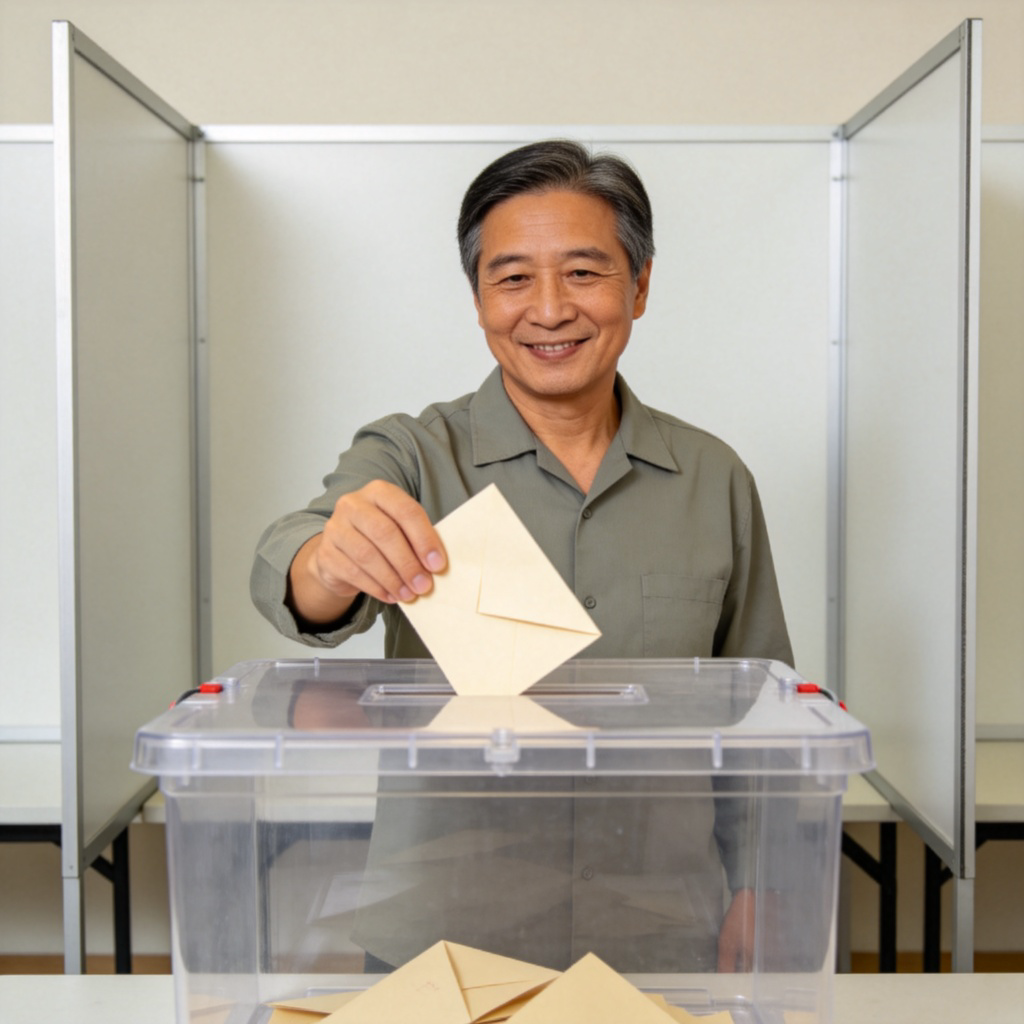
voter
➕
/ˈvoʊtər/
n.
A person who has the right to participate in an election by casting a vote, or who actually does so.
📘 Details & Usage
📖 Root Explanation
From 'vote' (choice or expression of opinion) + agent suffix '-er', meaning 'one who votes'.
💡 Mnemonic
Think: 'Voter' sounds like 'vow' + 'er' — you make a vow with your ballot.
📖 Example
As a first-time voter, Maria felt a strong sense of pride when she entered the polling station.
As a first-time voter, Maria felt a strong sense of pride when she entered the polling station.
🔗 Collocations
eligible voter – a person who meets the legal requirements to vote
registered voter – a person who has officially signed up to vote
swing voter – a voter who is not committed to any one party and can decide the outcome
🔄 Synonyms
elector (n.) – A person who is entitled to vote in an election.
constituent (n.) – A resident of a district represented by an elected official; often used interchangeably with voter.
balloter (n.) – A person who votes, especially by ballot.
🚫 Antonyms
🌱 Derivatives
voting (n./adj.) – The action of casting a vote.
voter turnout (n.) – The percentage of eligible voters who actually vote.
nonvoter (n.) – A person who does not vote.
📖 Cultural Story
Originates from Latin 'votum' (a vow or wish). Entered English via Old French 'vote' in the 15th century, evolving from a personal pledge to a formal electoral choice. Today, 'voter' is central to democratic systems worldwide.
Wordbook
Your data is saved in this browser