Reading Theme:
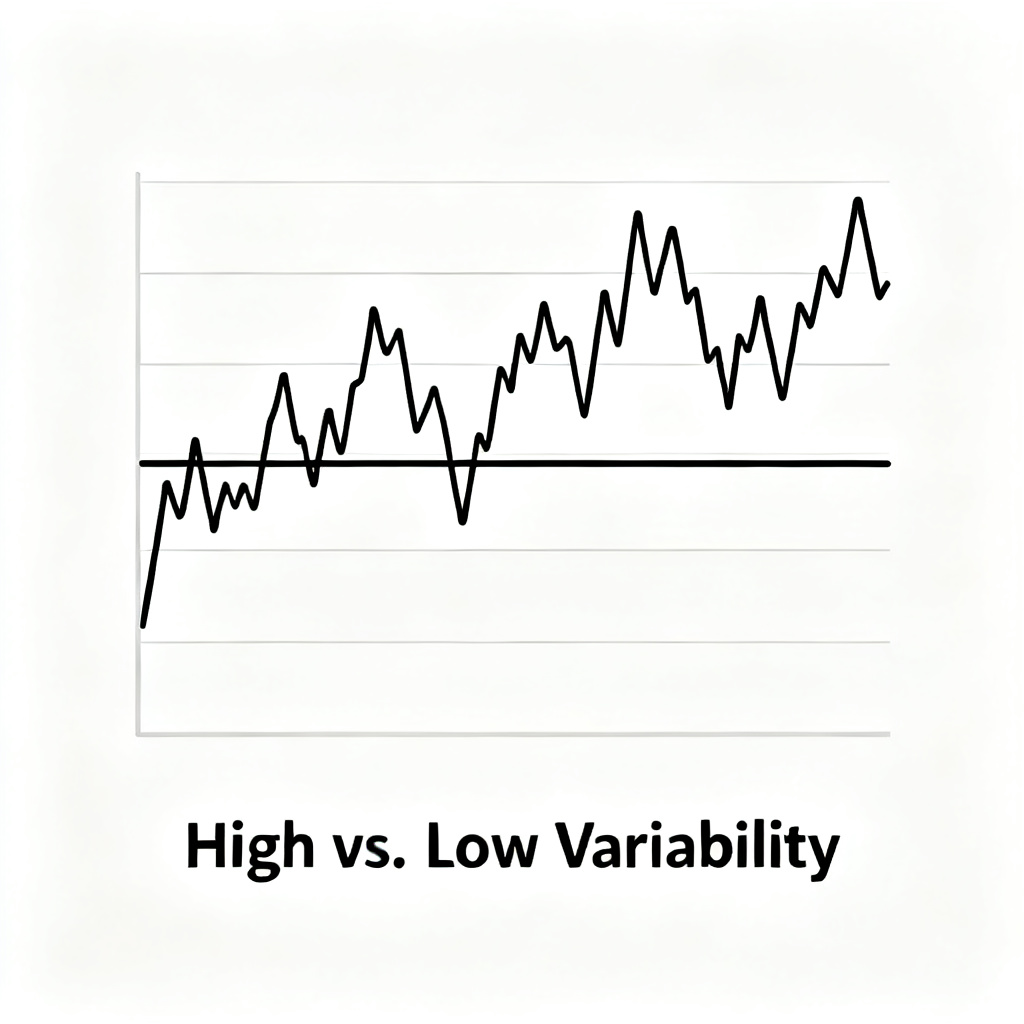
Variability: Definition, Examples, and Usage
Meaning 1:changeability (variability)
variability
/ˌvɛəriəˈbɪlɪti/
n.
How likely something is to change, or the fact that it changes often.
changeability
➕
/ˌtʃeɪndʒəˈbɪləti/
n.
The quality or state of being subject to change, often unpredictably.
📘 Details & Usage
📖 Root Explanation
From Latin 'variabilis' (changeable) via 'varius' (various) + '-ity' (state).
💡 Mnemonic
Think of 'vary' + 'ability' = the ability to vary easily.
📖 Example
The variability of the weather makes planning a picnic tricky.
The variability of the weather makes planning a picnic tricky.
🔗 Collocations
high variability – A large degree of change or fluctuation.
variability in – The range of changes observed within a specific context.
reduce variability – To minimize the amount of change or inconsistency.
🔄 Synonyms
changeability (n.) – The quality of being likely to change, similar to variability.
fluctuation (n.) – Irregular changes or variations, often in a pattern.
volatility (n.) – The tendency to change rapidly and unpredictably, especially in financial contexts.
🚫 Antonyms
stability (n.) – The state of being steady and not changing.
constancy (n.) – The quality of being consistent and unchanging.
invariability (n.) – The condition of not changing at all.
🌱 Derivatives
📖 Cultural Story
Derived from Latin 'varius' (diverse), 'variability' entered English in the 17th century and is widely used in statistics and meteorology to describe natural fluctuations.
Wordbook
Your data is saved in this browser