Reading Theme:
Unemployment Definition, Causes & Key Statistics
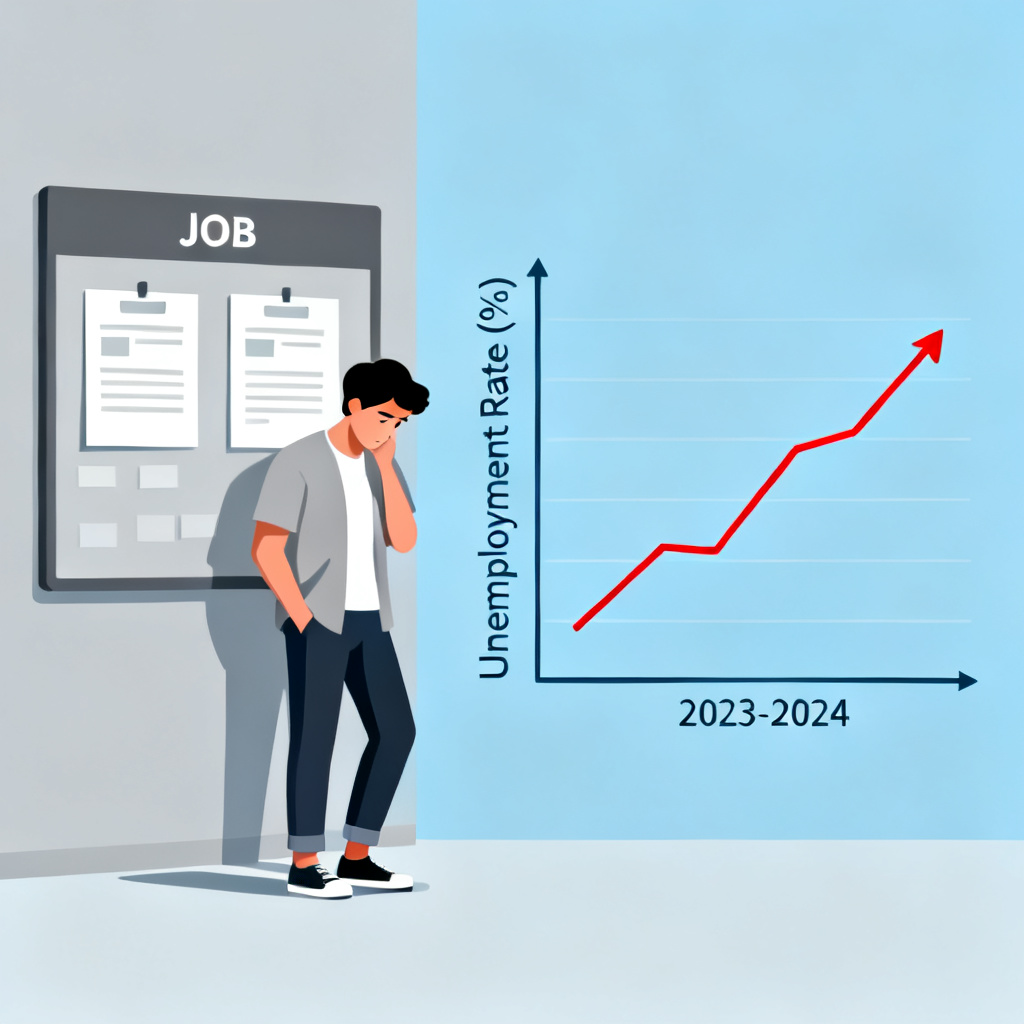
Meaning 1:lack of a job (unemployment)
unemployment
/ˌʌnɪmˈplɔɪmənt/
n.
The situation where people who want to work and are able to work cannot find any jobs.
lack of a job
➕
/læk əv ə ʤɒb/
n.
The state of not having a paid job despite being willing and able to work.
📘 Details & Usage
📖 Root Explanation
Formed by prefix ‘un-’ (not), root ‘employ’ (to use, to hire), and suffix ‘-ment’ (state or result).
💡 Mnemonic
Think: 'Unemployed' means you are 'not employed'. The '-ment' makes it a state or condition.
📖 Example
After graduating, he faced fierce competition in the job market, and unemployment became his biggest worry.
After finishing his studies, the intense competition for jobs meant that his main concern was not finding work.
🔗 Collocations
unemployment rate – the percentage of the labor force that is jobless
unemployment benefits – payments made by the government to people who are out of work
structural unemployment – joblessness caused by a mismatch between workers' skills and job requirements
🔄 Synonyms
joblessness (n.) – a direct synonym, focusing on the lack of employment
idleness (n.) – a state of not working or being active; often implies a lack of busyness
inactivity (n.) – a general state of not being engaged in work or action
🚫 Antonyms
employment (n.) – the state of having a paid job
occupation (n.) – a job or profession
work (n.) – activity involving mental or physical effort done to achieve a purpose, especially a job
🌱 Derivatives
unemployed (adj.) – without a paid job but available to work
unemployable (adj.) – not able or likely to get a job, typically because of a lack of skills
unemployability (n.) – the state of being unemployable
📖 Cultural Story
The term gained prominence during the Great Depression of the 1930s, highlighting mass joblessness as a critical socioeconomic issue. Today, 'unemployment rate' is a key metric reported by governments and news outlets globally.
Wordbook
Your data is saved in this browser