Reading Theme:
Theme Park Definition, Examples & Usage Tips
Meaning 1:a themed amusement park (Theme park)
Theme park
/θiːm pɑːrk/
n.
A big fun place where all rides, shows, and decorations follow one main idea, like fairy tales or movies, for family enjoyment.
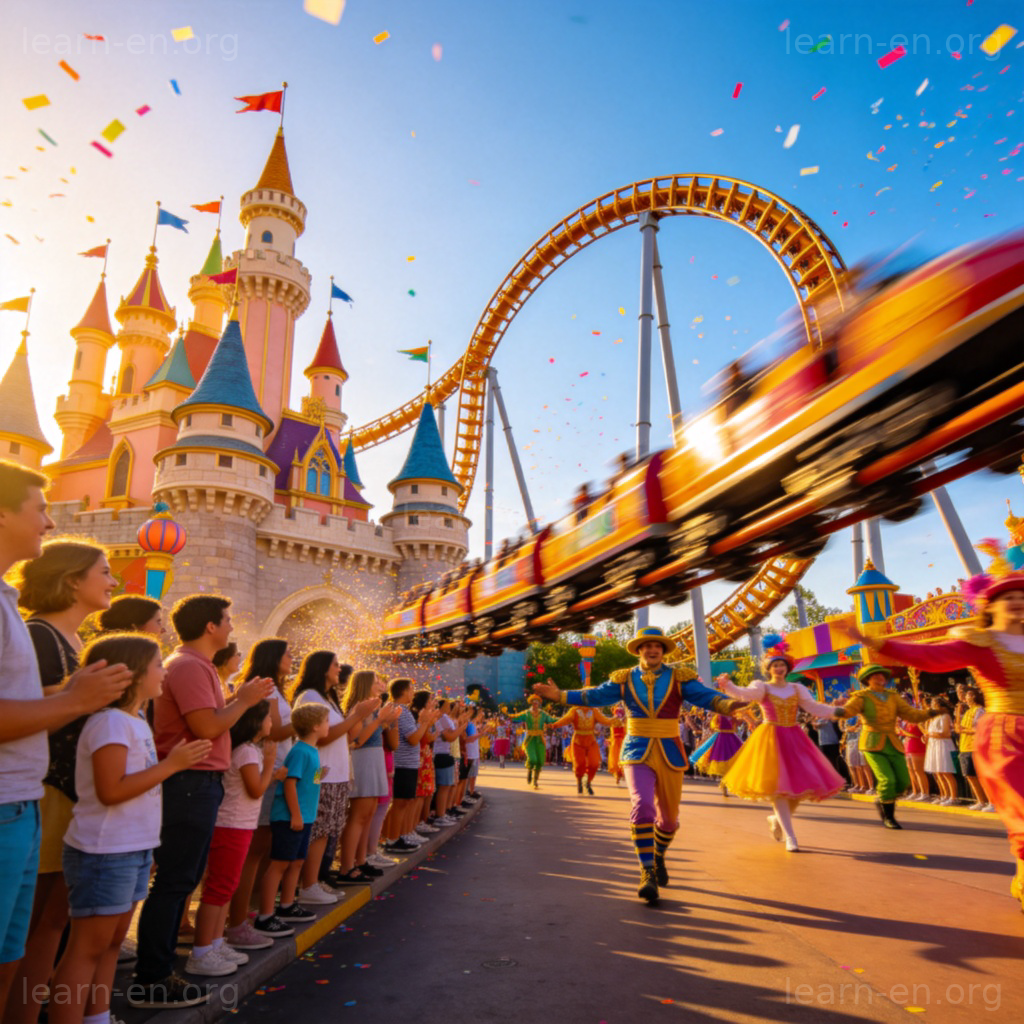
a themed amusement park
➕
/ə θiːmd əˈmjuːzmənt pɑːrk/
n.
An entertainment venue where all attractions, rides, shows, and decorations are organized around one central idea or story, such as fairy tales, movies, or historical periods. Designed to provide a cohesive and immersive experience for visitors.
📘 Details & Usage
📖 Root Explanation
From Latin 'thema' (subject) + Old French 'parc' (enclosed land).
💡 Mnemonic
Imagine a park where every corner tells the same story—like a movie set you can ride.
📖 Example
During the summer holiday, we visited a theme park based on ancient myths, and it felt like stepping into a history book.
During the summer holiday, we visited a theme park based on ancient myths, and it felt like stepping into a history book.
🔗 Collocations
theme park attraction – An individual ride, show, or exhibit within a theme park.
theme park ticket – A pass granting entry to a theme park for a day or longer.
theme park resort – A complex that includes a theme park along with hotels, dining, and shopping.
🔄 Synonyms
amusement park (n.) – A large outdoor area with rides, games, and entertainment, though often without a unifying theme.
funfair (n.) – A traveling or temporary event with rides and games, typically smaller and less themed.
carnival (n.) – A festive event with rides, games, and parades, sometimes with a loose theme.
📖 Cultural Story
Modern theme parks originated with Disneyland (1955), where Walt Disney created a unified imaginative world. The term 'theme park' entered English in the 1950s.
Wordbook
Your data is saved in this browser