Reading Theme:
Terrain: Definition, Usage & Examples Explained
Meaning 1:physical landscape (terrain)
terrain
/təˈreɪn/
n.
A stretch of land, including all its physical features like hills, valleys, rivers, etc.
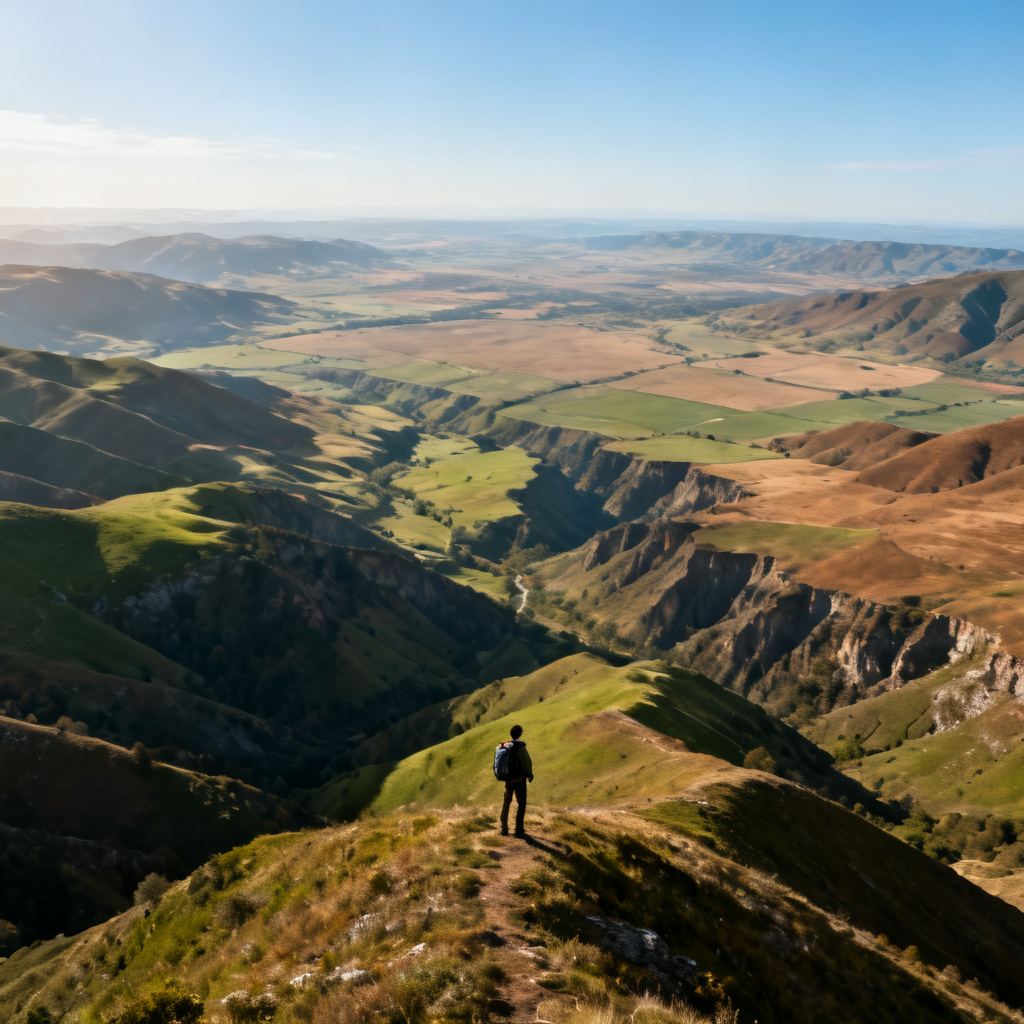
physical landscape
➕
/ˈfɪzɪkəl ˈlændskeɪp/
n.
The physical features and characteristics of a piece of land, including its hills, valleys, soil, and other natural attributes.
📘 Details & Usage
📖 Root Explanation
From French 'terrain', from Latin 'terra' (earth, land).
💡 Mnemonic
Think of 'TERRA' (Latin for earth) and a 'TRAIN' moving across varied land.
📖 Example
The terrain in this national park is very rugged, with steep hills and deep valleys, making hiking both challenging and exciting.
The physical landscape in this national park is very rugged, with steep hills and deep valleys, making hiking both challenging and exciting.
🔗 Collocations
rough terrain – Land that is uneven and difficult to travel over.
mountainous terrain – Land dominated by mountains and steep slopes.
difficult terrain – Land that is hard to navigate or cross.
🔄 Synonyms
landscape (n.) – All the visible features of an area of land.
topography (n.) – The detailed mapping or description of the features of an area.
landform (n.) – A natural feature of the earth's surface, like a hill or valley.
🚫 Antonyms
plain (n.) – A large area of flat land with few trees.
🌱 Derivatives
terrestrial (adj.) – Relating to the earth or land, as opposed to water or air.
📖 Cultural Story
The term originates from French and Latin, emphasizing the physical characteristics of land. It is frequently used in military strategy, geology, and outdoor recreation to describe the tactical or navigational challenges posed by the land's surface.
Wordbook
Your data is saved in this browser