Reading Theme:
Sundial: Definition, Usage & How It Tells Time
Meaning 1:solar timekeeper (sundial)
sundial
/ˈsʌnˌdaɪəl/
n.
An old tool that uses the shadow of the sun to tell the time.
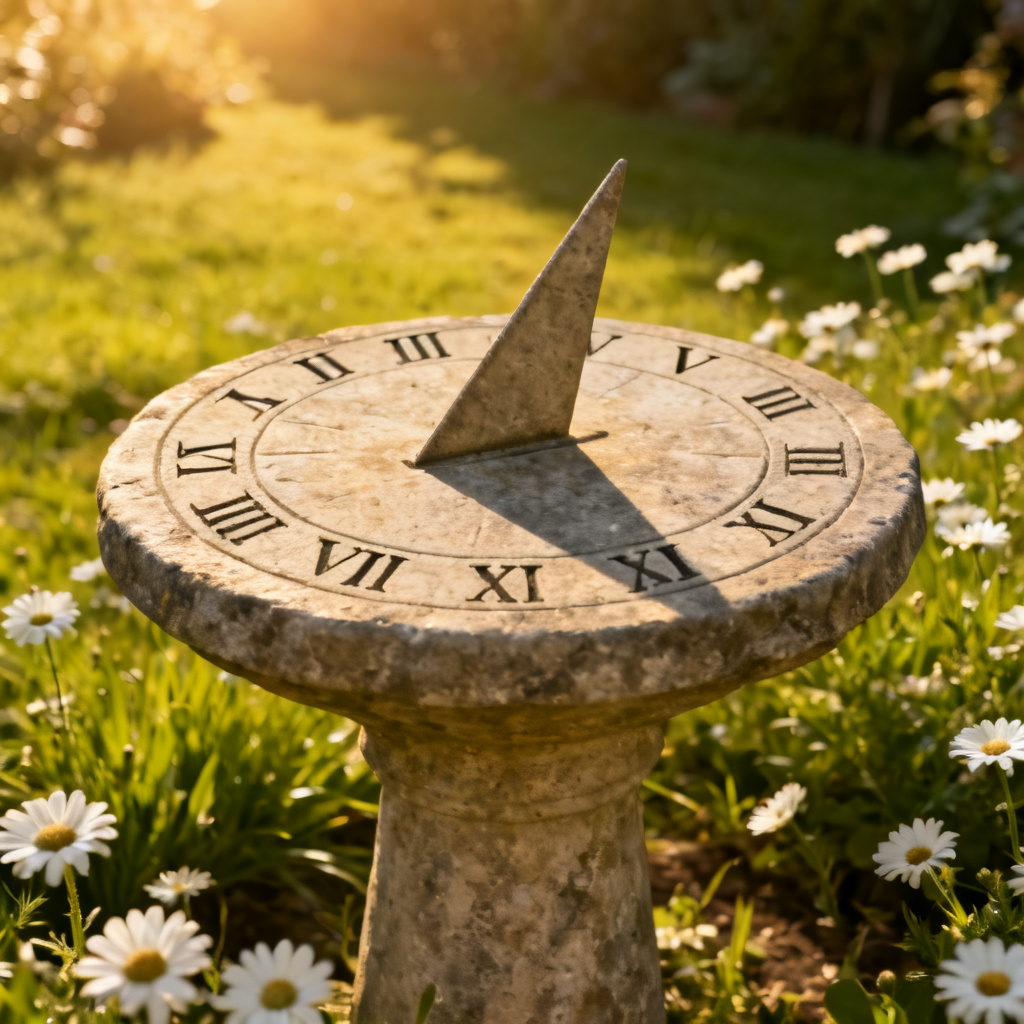
solar timekeeper
➕
/ˈsoʊlər ˈtaɪmkiːpər/
n.
A device that indicates the time of day by measuring the position of the sun's shadow on a marked surface.
📘 Details & Usage
📖 Root Explanation
From 'sun' + 'dial', where 'dial' derives from Latin 'dies' meaning 'day'.
💡 Mnemonic
SUN + DIAL: imagine the SUN casting a shadow on a DIAL to show the time.
📖 Example
The old stone sundial in the garden still works perfectly on sunny days.
An ancient stone sundial in a garden remains accurately functional during sunny weather.
🔗 Collocations
stone sundial – a sundial constructed from stone material
garden sundial – a sundial commonly placed in a garden setting
ancient sundial – a historical sundial from early civilizations
🔄 Synonyms
sun clock (n.) – a timekeeping instrument that uses the sun's position to indicate hours
shadow clock (n.) – a device that tells time by the movement of shadows cast by the sun
dial (n.) – a flat plate with markings, often part of a sundial, for showing time or direction
🚫 Antonyms
digital clock (n.) – an electronic clock that displays time numerically, not relying on shadows or sunlight
mechanical clock (n.) – a clock operated by gears and springs, independent of solar observation
📖 Cultural Story
Sundials originated in ancient Egypt around 1500 BCE, using obelisk shadows for timekeeping. They were crucial before mechanical clocks, symbolizing early scientific observation of solar movement.
Wordbook
Your data is saved in this browser