Reading Theme:
State of Emergency: Definition and Examples
Meaning 1:emergency declaration (State of Emergency)
State of Emergency
/steɪt əv ɪˈmɜːrdʒənsi/
n.
A special situation declared by the government during a serious crisis, allowing them to use extra powers to protect people and restore order quickly.
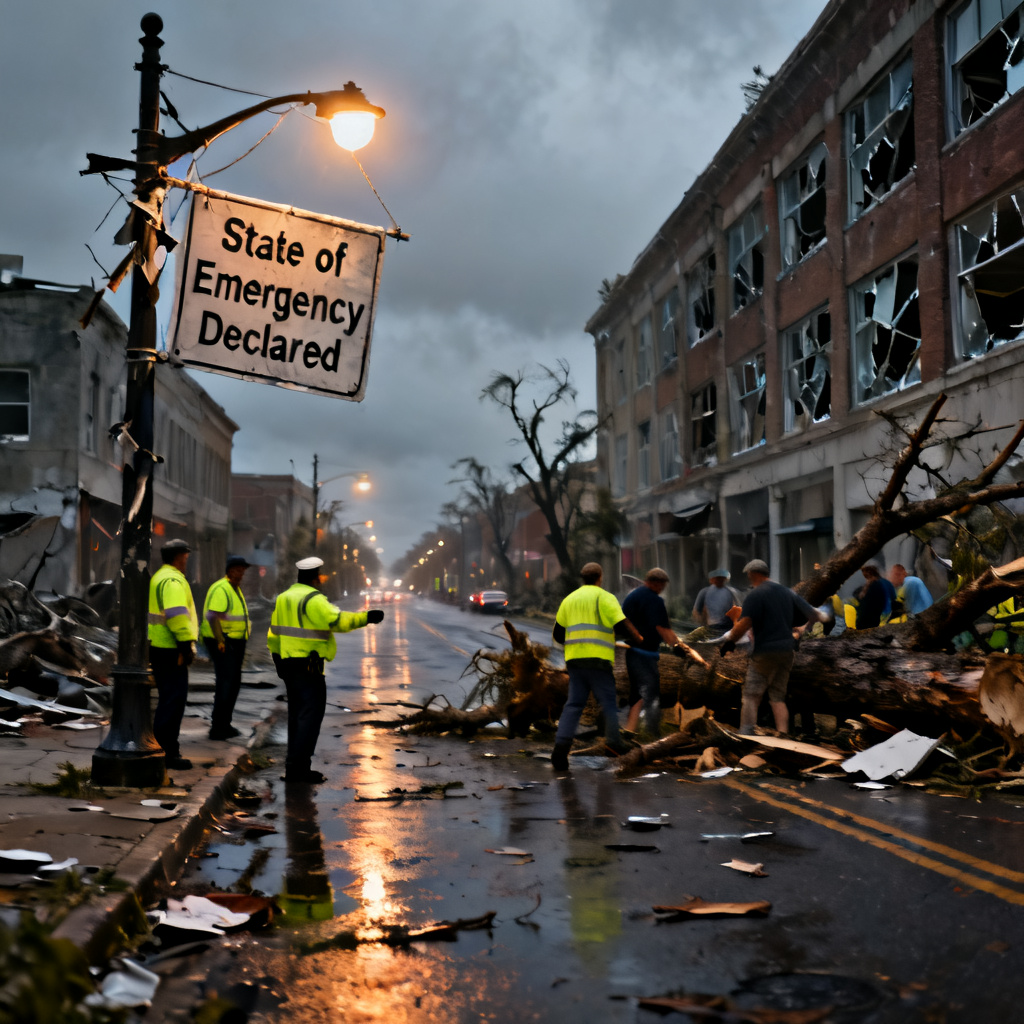
emergency declaration
➕
/ɪˈmɜːrdʒənsi ˌdɛkləˈreɪʃən/
n.
A formal proclamation by a government authorizing exceptional measures to manage a critical situation that threatens public safety or order.
📘 Details & Usage
📖 Root Explanation
'State' from Latin 'status', 'Emergency' from Latin 'emergere' (to arise). Combined: official condition arising from crisis.
💡 Mnemonic
Think of a red 'EMERGENCY' button that triggers a special government 'STATE' to handle chaos.
📖 Example
During the pandemic, the government declared a state of emergency to organize medical resources and keep everyone safe.
During the pandemic, the government declared a state of emergency to organize medical resources and keep everyone safe.
🔗 Collocations
declare a state of emergency – to officially announce a state of emergency
lift a state of emergency – to end a state of emergency, restoring normal governance
a national state of emergency – a state of emergency applying to the entire country
🔄 Synonyms
martial law (n.) – military control over civilian functions during an emergency
emergency powers (n. pl.) – special authorities granted to the government during a crisis
crisis situation (n.) – a critical state requiring immediate action
🚫 Antonyms
🌱 Derivatives
emergency (n.) – a serious, unexpected situation requiring immediate action
emergency management (n.) – the organization and coordination of resources to handle emergencies
📖 Cultural Story
Originates from French 'état de siège' (state of siege). Adopted into English in 19th century for government powers during wars or disasters.
Wordbook
Your data is saved in this browser