Reading Theme:
Shall Usage: Formal Obligation & Polite Suggestions (2 meaning)
Meaning 1:must definitely happen (formal) (shall)
shall
/ʃæl/
modal v.
In very formal situations, it means something will definitely happen or must be done.
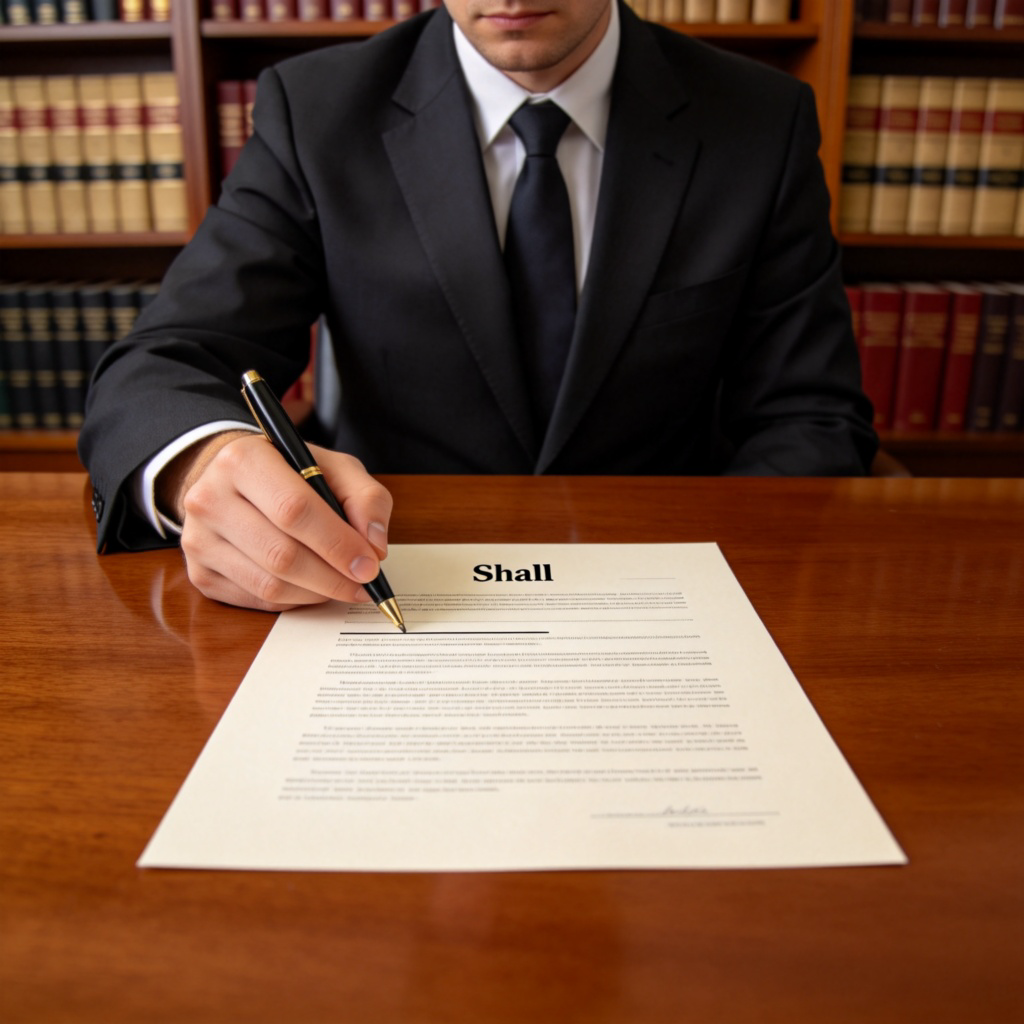
must definitely happen (formal)
➕
/mʌst ˈdɛfɪnətli ˈhæpən/
modal v.
In formal, legal, or official contexts, 'shall' expresses a mandatory action or a certainty about a future event. It indicates that something is required by law or rule.
📘 Details & Usage
📖 Root Explanation
Derived from Old English 'sceal' (to owe, must), related to German 'sollen'.
💡 Mnemonic
'Shall' starts like 'should' but stands for a stronger command: think of a lawyer saying 'You shall comply!'
📖 Example
The new law states that all public buildings shall have wheelchair access by next year.
The new law states that all public buildings shall have wheelchair access by next year.
🔗 Collocations
shall be – must be (used to state a requirement)
shall have – must have (indicating a necessary action)
shall not – must not (prohibition in formal rules)
🔄 Synonyms
🚫 Antonyms
📖 Cultural Story
In modern legal English, 'shall' denotes an obligation, contrasting with 'may' (permission). Its use is fading in everyday speech, replaced by 'must' or 'will'.
Meaning 2:make a polite suggestion or offer (shall)
shall
/ʃæl/
modal v.
Used to politely ask for someone's wish, especially when offering help or making a suggestion.

make a polite suggestion or offer
➕
/meɪk ə pəˈlaɪt səˈdʒɛstʃən ɔːr ˈɒfər/
modal v.
Used in questions with 'I' or 'we', 'shall' politely asks for the listener's preference or suggests a course of action. It is common in British English for offers and suggestions.
📘 Details & Usage
📖 Example
Shall I book a table for two at the restaurant tonight?
Shall I book a table for two at the restaurant tonight?
🔗 Collocations
Shall we...? – Used to make a suggestion to a group or partner.
Shall I...? – Offering to do something for someone.
Shall we go? – A common invitation to start moving or leave.
🔄 Synonyms
Wordbook
Your data is saved in this browser