Reading Theme:
River Meaning: Definition, Examples, and Usage
Meaning 1:large natural stream (river)
river
/ˈrɪvər/
n.
A large natural stream of water that flows across the land and empties into an ocean, lake, or another river.
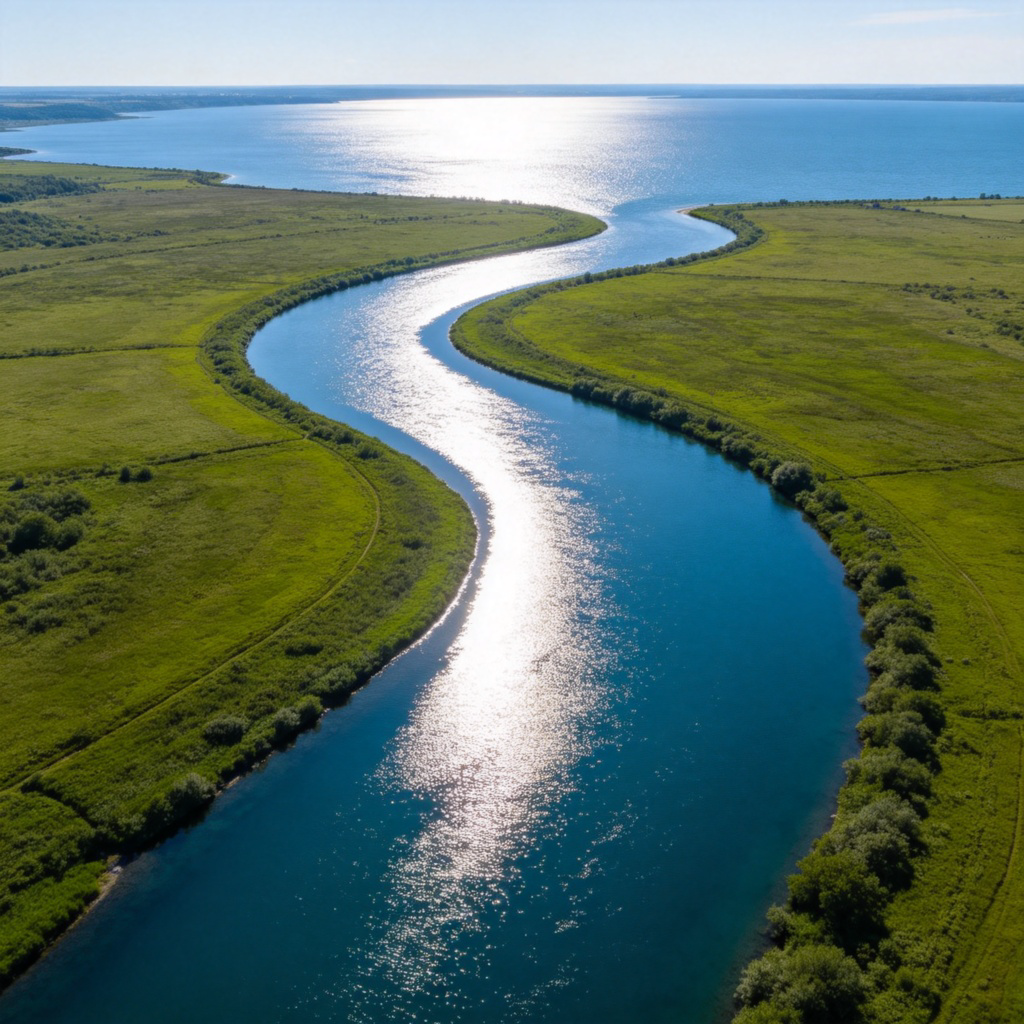
large natural stream
➕
/lɑːrdʒ ˈnætʃrəl striːm/
n.
A river is a large natural flow of water that moves across land, typically from higher to lower ground, and empties into a sea, lake, or another river.
📘 Details & Usage
📖 Root Explanation
From Latin 'riparia' (riverbank), via Old French 'riviere'.
💡 Mnemonic
RIVER: Roll In Vast Eternal River - imagine a flowing waterway carving the land.
📖 Example
We had a lovely picnic by the river, listening to the gentle flow of the water.
We had a lovely picnic by the river, listening to the gentle flow of the water.
🔗 Collocations
river bank – the land alongside a river
river mouth – the place where a river flows into the sea
river basin – the area of land drained by a river and its tributaries
🔄 Synonyms
🌱 Derivatives
📖 Cultural Story
The word 'river' traces back to Latin 'ripa' meaning 'bank', evolving through 'riparia' and Old French 'riviere'. Rivers have been vital for agriculture, trade, and settlement since ancient civilizations.
Wordbook
Your data is saved in this browser