Reading Theme:
Refugee Definition, Examples & Usage Guide
Meaning 1:person fleeing danger (refugee)
refugee
/ˌrɛf.jʊˈdʒiː/
n.
A person who has been forced to leave their country in order to escape war, persecution, or danger, and is seeking safety in another place.
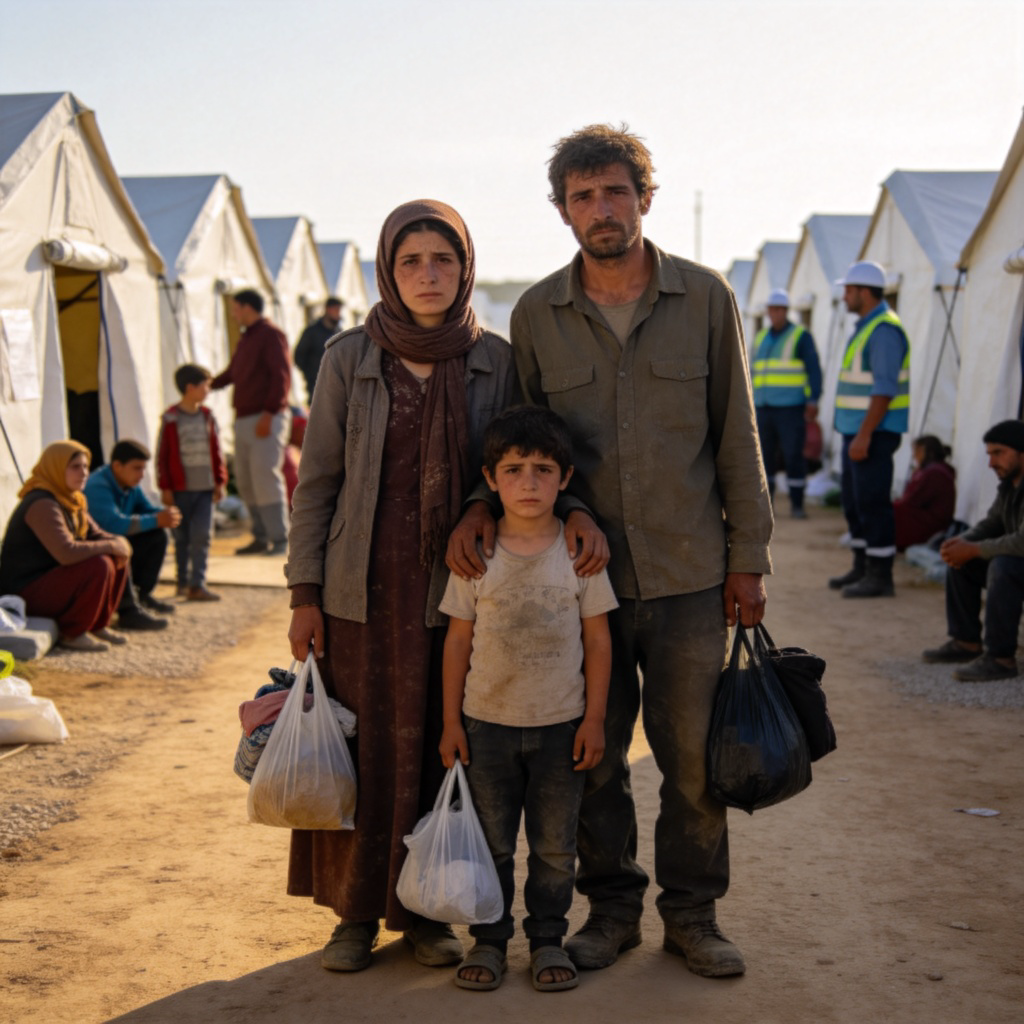
person fleeing danger
➕
/ˈpɜːrsən ˈfliːɪŋ ˈdeɪndʒər/
n.
A person who is forced to leave their home country due to war, persecution, or natural disaster and seek safety elsewhere.
📘 Details & Usage
📖 Root Explanation
From Latin 'refugium' (place of refuge), from 're-' (back) + 'fugere' (flee).
💡 Mnemonic
Re- (again) + fuge (flee) = flee again to safety. Picture someone constantly fleeing danger to find refuge.
📖 Example
After the war broke out, his family had to leave everything behind and became refugees in a neighboring country.
After the war broke out, his family had to leave everything behind and became refugees in a neighboring country.
🔗 Collocations
refugee camp – a temporary settlement providing shelter and basic necessities for displaced people
refugee crisis – a large-scale situation involving a sudden influx of refugees that strains resources
refugee status – legal recognition granted by a host country to a person as a refugee
🔄 Synonyms
asylum seeker (n.) – a person who has applied for asylum and is awaiting a decision on their claim for protection
displaced person (n.) – someone who has been forced to leave their home, often due to conflict or disaster
exile (n.) – a person who is forced to leave their native country, often for political reasons
🚫 Antonyms
🌱 Derivatives
refuge (n.) – shelter or protection from danger or trouble
refugeless (adj.) – having no refuge or shelter
📖 Cultural Story
Borrowed from French 'réfugié', past participle of 'réfugier' (to take refuge). The term gained prominence in English after the 1685 revocation of the Edict of Nantes, when French Protestant Huguenots fled to England and were called 'réfugiés'.
Wordbook
Your data is saved in this browser