Reading Theme:
Pumice: Definition, Uses, and How It's Formed
Meaning 1:a porous volcanic rock (pumice)
pumice
/ˈpʌm.ɪs/
n.
A very light and holey rock from volcanoes, often used for scrubbing skin or smoothing surfaces.
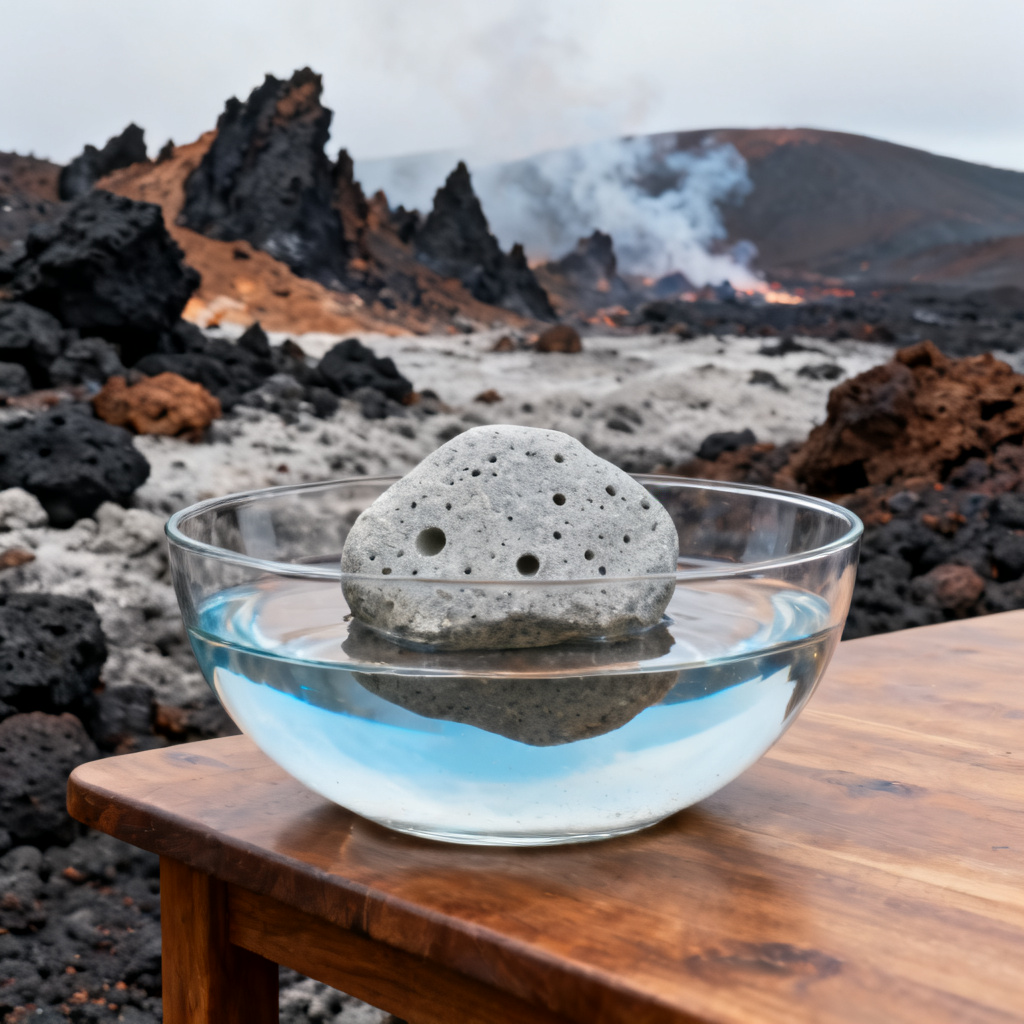
a porous volcanic rock
➕
/ə ˈpɔːrəs vɒlˈkænɪk rɒk/
n.
A type of volcanic rock that is extremely light and full of holes, formed from rapidly cooling lava and gas. It is valued for its abrasive properties.
📘 Details & Usage
📖 Root Explanation
From Latin 'pumex', meaning 'foam stone', referring to its porous, frothy texture.
💡 Mnemonic
Think: PUMICE = Porous, Ultra-light, Makes It Clean Easily. Picture a bubbly, lightweight stone scrubbing away dirt.
📖 Example
She rubbed the pumice stone gently on her heel to remove the rough skin after a long walk.
She used the light, porous stone to smooth the hardened skin on her foot.
🔗 Collocations
pumice stone – a piece of pumice used as a tool for scrubbing or polishing
volcanic pumice – pumice in its natural state as a product of volcanic eruption
to scrub with pumice – to clean or smooth a surface using a pumice stone
🔄 Synonyms
volcanic rock (n.) – A broad category of rock formed from volcanic activity; pumice is a specific type.
lava rock (n.) – Rock formed from solidified lava; pumice is a frothy, lightweight variety.
scoria (n.) – Another vesicular volcanic rock, typically darker and denser than pumice.
🚫 Antonyms
solid rock (n.) – Rock with a dense, non-porous structure, lacking the holes and lightness of pumice.
granite (n.) – A hard, dense, granular igneous rock, contrasting sharply with pumice's lightweight porosity.
🌱 Derivatives
pumiceous (adj.) – Of or resembling pumice; having a porous, light texture.
📖 Cultural Story
The word 'pumice' derives directly from Latin 'pumex'. Romans valued it for smoothing parchment and personal hygiene. Today, it's a common sight in spas and hardware stores for exfoliation and polishing.
Wordbook
Your data is saved in this browser