Reading Theme:
Public Transportation: Definition, Examples & Usage
Meaning 1:public transit (public transportation)
public transportation
/ˈpʌblɪk ˌtrænspərˈteɪʃən/
n.
Vehicles like buses and trains that anyone can use for a fee to travel around a city or country.
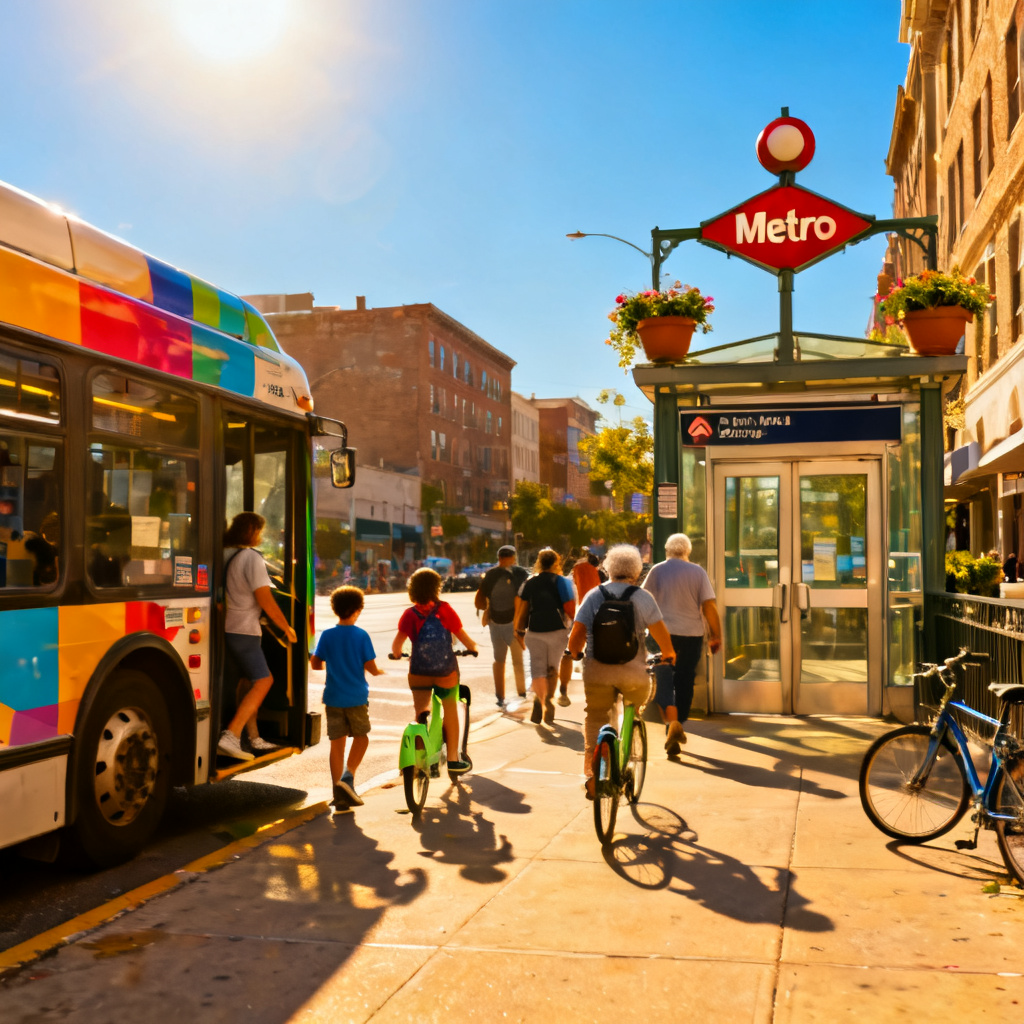
public transit
➕
/ˈpʌblɪk ˈtrænzɪt/
n.
Systems of vehicles such as buses and trains that are available for use by the general public, typically for a fare.
📘 Details & Usage
📖 Root Explanation
From Latin 'publicus' (of the people) + 'transportare' (carry across).
💡 Mnemonic
Imagine a 'public' bus where everyone is welcome. 'Transportation' means moving. So public transportation moves the public together.
📖 Example
Because the public transportation system is so good, I chose to live downtown and not buy a car.
Because the public transportation system is so good, I chose to live downtown and not buy a car.
🔗 Collocations
reliable public transportation – transportation that is dependable
use public transportation – to make use of shared transit
public transportation system – the network of public transit services
🔄 Synonyms
mass transit (n.) – A system of transportation for large numbers of people, usually in urban areas.
public transit (n.) – Another term for public transportation, commonly used in North America.
commuter rail (n.) – A passenger train service that connects a city center to its suburbs.
🚫 Antonyms
private transportation (n.) – Transportation owned or used by an individual, such as a personal car.
personal vehicle (n.) – A vehicle owned by a person for their own use, not shared with the public.
📖 Cultural Story
Public transportation originated in 1820s Paris with horse-drawn omnibuses. The term 'public' denotes shared use, fostering urban mobility and reducing traffic congestion.
Wordbook
Your data is saved in this browser