Reading Theme:
Propellant: Definition, Uses, and Common Examples (2 meaning)
Meaning 1:rocket propellant (propellant)
propellant
/prəˈpelənt/
n.
A substance that is burned in a rocket to create a fast-moving stream of gas, which pushes the rocket forward.

rocket propellant
➕
/ˈrɒkɪt prəˈpelənt/
n.
A chemical substance used in rockets that, when ignited, produces high-pressure gas to generate thrust and propel the vehicle forward.
📘 Details & Usage
📖 Root Explanation
From Latin 'propellere' (to drive forward), from 'pro-' (forward) + 'pellere' (to drive).
💡 Mnemonic
Think 'PROpel a PLANET' – propellant helps propel rockets to other planets!
📖 Example
The rocket's powerful propellant ignited, creating a brilliant plume of fire and sending the spacecraft on its journey to Mars.
The rocket's powerful propellant ignited, producing a bright plume of fire and launching the spacecraft towards Mars.
🔗 Collocations
liquid propellant – A propellant in liquid form, commonly used in rocket engines for controllable thrust.
solid propellant – A propellant in solid form, often used in missiles and boosters for stable combustion.
rocket propellant – Propellant specifically designed for use in rocket propulsion systems.
🔄 Synonyms
fuel (n.) – A substance burned to produce energy or thrust, though broader in scope than propellant.
thruster (n.) – A device that generates thrust by expelling mass, often relying on a propellant.
propulsive agent (n.) – A substance that causes or facilitates propulsion, similar to propellant.
🌱 Derivatives
propel (v.) – To drive or push something forward, often using force.
propulsion (n.) – The action or process of driving or pushing forward, as in rocket propulsion.
📖 Cultural Story
The term 'propellant' derives from Latin 'propellere', meaning 'to drive forward'. It entered English in the 17th century and later specialized in rocketry and aerosol technology during the 20th century, reflecting advancements in space exploration and consumer products.
Meaning 2:aerosol propellant (propellant)
propellant
/prəˈpelənt/
n.
A gas under pressure in a can that forces the liquid contents (like paint or hairspray) out when you press the button.
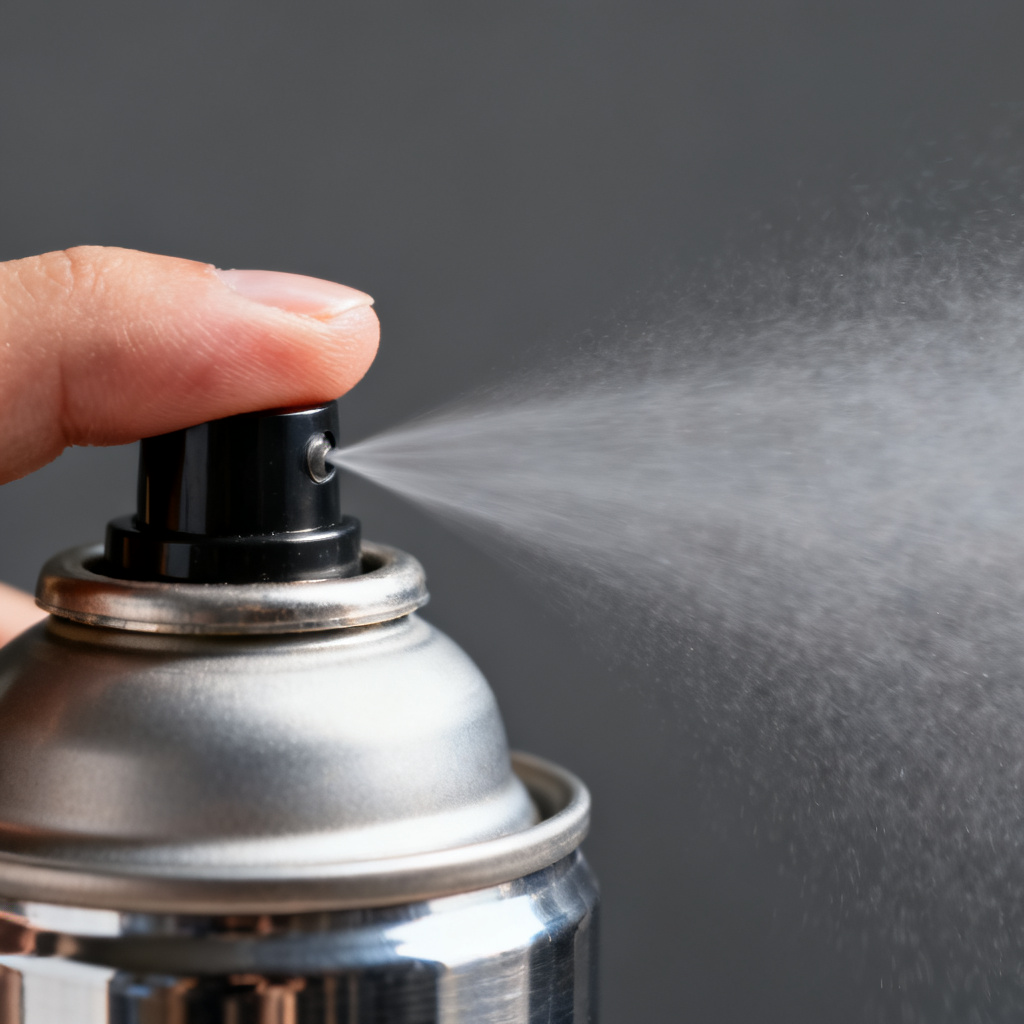
aerosol propellant
➕
/ˈeərəsɒl prəˈpelənt/
n.
A gas stored under pressure in a container that, when released, forces out the liquid contents, such as in spray cans for personal or household use.
📘 Details & Usage
📖 Example
This deodorant uses a natural gas as its propellant, making it more environmentally friendly than older aerosol cans.
This deodorant uses a natural gas as its propellant, making it more eco-friendly than traditional aerosol cans.
🔗 Collocations
aerosol propellant – A propellant gas used in aerosol cans to dispense products as a fine spray.
compressed gas propellant – A propellant that is a gas stored under high pressure, commonly found in spray containers.
propellant charge – The amount of propellant gas in a canister that enables the spraying action.
🔄 Synonyms
propellent gas (n.) – A gas used to force out contents from a pressurized container, similar to propellant.
driving gas (n.) – A gas that drives or expels liquid from a can, often interchangeable with propellant.
expellant (n.) – A substance that expels or pushes out material, used in contexts like aerosols.
🌱 Derivatives
propel (v.) – To drive or push something forward, as in propelling spray from a can.
propulsion (n.) – The act of driving forward, applicable to the mechanism in aerosol dispensers.
Wordbook
Your data is saved in this browser