Reading Theme:
Percentage: Definition, Usage & Examples
Meaning 1:proportion per hundred (percentage)
percentage
/pərˈsentɪdʒ/
n.
The amount of something out of 100, used to show a part of a whole.
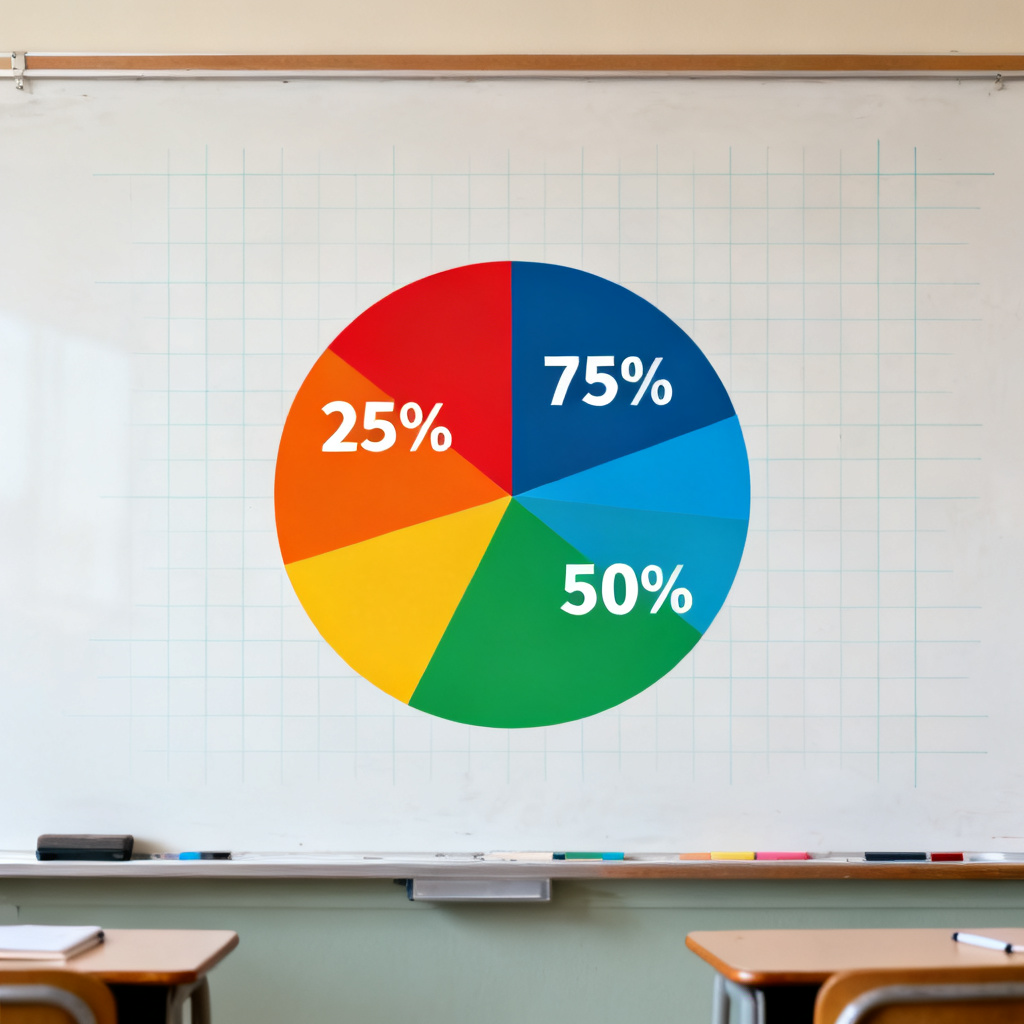
proportion per hundred
➕
/prəˈpɔːrʃn pər ˈhʌndrəd/
n.
A value or ratio stated as a fraction of 100. It is a way to express how large one quantity is relative to another, with the whole being represented by 100.
📘 Details & Usage
📖 Root Explanation
From Latin 'per centum', meaning 'by the hundred'.
💡 Mnemonic
PERfectly CENTered figures express PERCENTAGE. It's about parts PER hundred CENTuries.
📖 Example
In the annual report, the percentage of people using renewable energy has risen to 40%.
The report shows that forty out of every one hundred people now use renewable energy.
🔗 Collocations
a high/low percentage – A large or small proportion relative to the total.
percentage point – A unit for the difference between two percentages (e.g., from 5% to 7% is a 2 percentage point increase).
percentage increase/decrease – The amount something has gone up or down, expressed as a proportion of its original value.
🔄 Synonyms
proportion (n.) – A part or share of a whole, not necessarily out of 100.
rate (n.) – A measure, quantity, or frequency in relation to something else, often per unit of something (e.g., per hundred, per thousand).
fraction (n.) – A numerical quantity that is not a whole number, representing a part of a whole.
🌱 Derivatives
percent (n./adv.) – One part in a hundred; used with a number (e.g., 40%).
📖 Cultural Story
The term originated from the Latin 'per centum'. It was commonly used in medieval Italian commerce as 'per cento' and later in French as 'pour cent', before being adopted into English to express rates, taxes, and proportions in a standardized way, especially in finance and statistics.
Wordbook
Your data is saved in this browser