Reading Theme:
Paternity Leave Meaning and Examples
Meaning 1:paternity leave (Paternity leave)
Paternity leave
/pəˈtɜːrnɪti liːv/
n. phr.
A period of paid time off work for fathers after their child is born, so they can help at home.
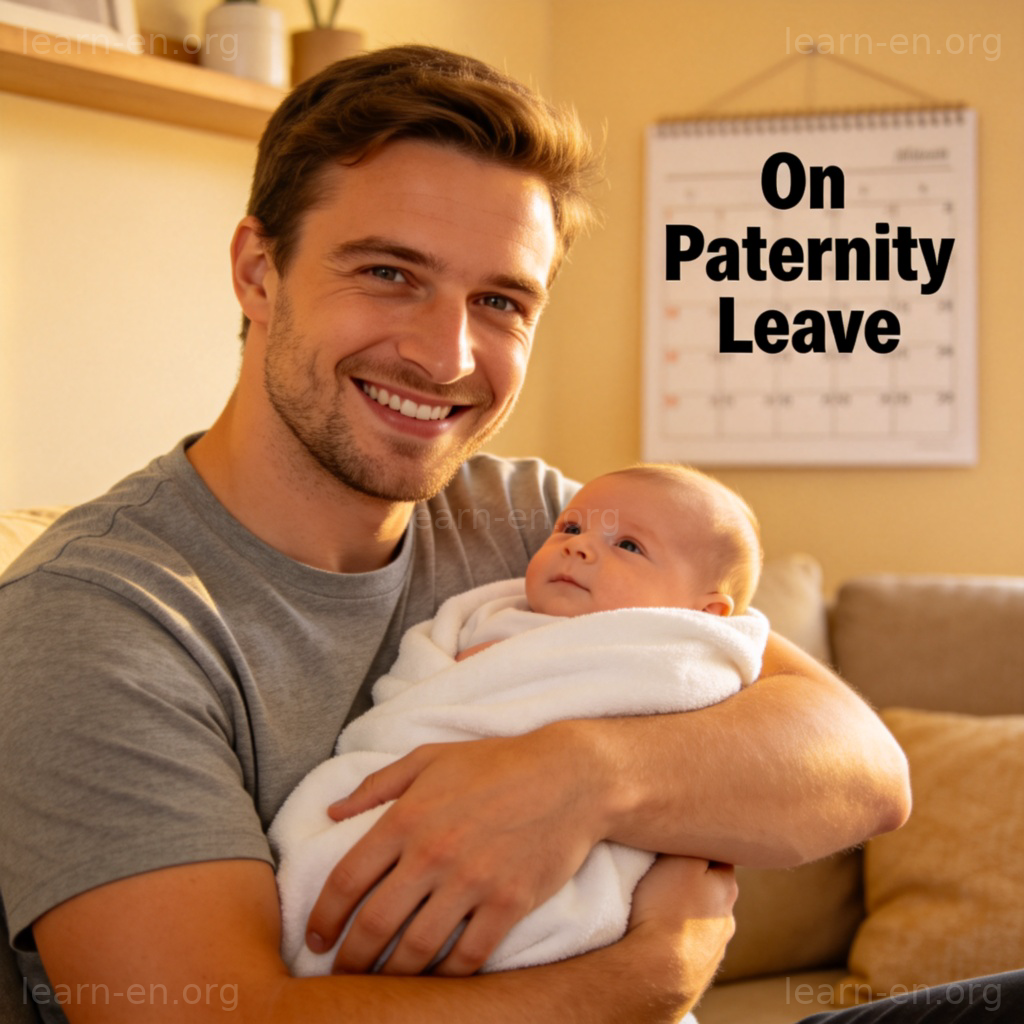
paternity leave
➕
/pəˈtɜːrnɪti liːv/
n. phr.
A period of time granted to a father following the birth of his child, typically with pay, to care for the newborn and support the mother.
📘 Details & Usage
📖 Root Explanation
From Latin 'paternitas' (fatherhood) and Old English 'lēaf' (permission).
💡 Mnemonic
Remember 'pater' (father) + 'leave' = time off for dad; think of a father leaving work to care for baby.
📖 Example
Mark was thrilled to take paternity leave for four weeks after his daughter was born, so he could help his wife and bond with the baby.
Mark felt excited to take paternity leave for four weeks after his daughter was born, allowing him to assist his wife and connect with his baby.
🔗 Collocations
take paternity leave – to use the allocated time off from work for fathers after childbirth
paternity leave policy – the company rules regarding time off for new fathers
paid paternity leave – paternity leave during which the father receives his regular salary
🔄 Synonyms
parental leave (n. phr.) – Time off work for either parent after childbirth.
baby bonding leave (n. phr.) – Leave specifically for bonding with a newborn.
📖 Cultural Story
Paternity leave gained recognition in the 1970s as gender equality movements advocated for fathers' rights; Sweden was among the first to enact paid leave.
Wordbook
Your data is saved in this browser