Reading Theme:
Particulate: Definition, Usage & Examples
Meaning 1:consisting of fine particles (particulate)
particulate
/pɑːˈtɪkjʊlət/
adj.
Made up of or containing extremely small, separate pieces.
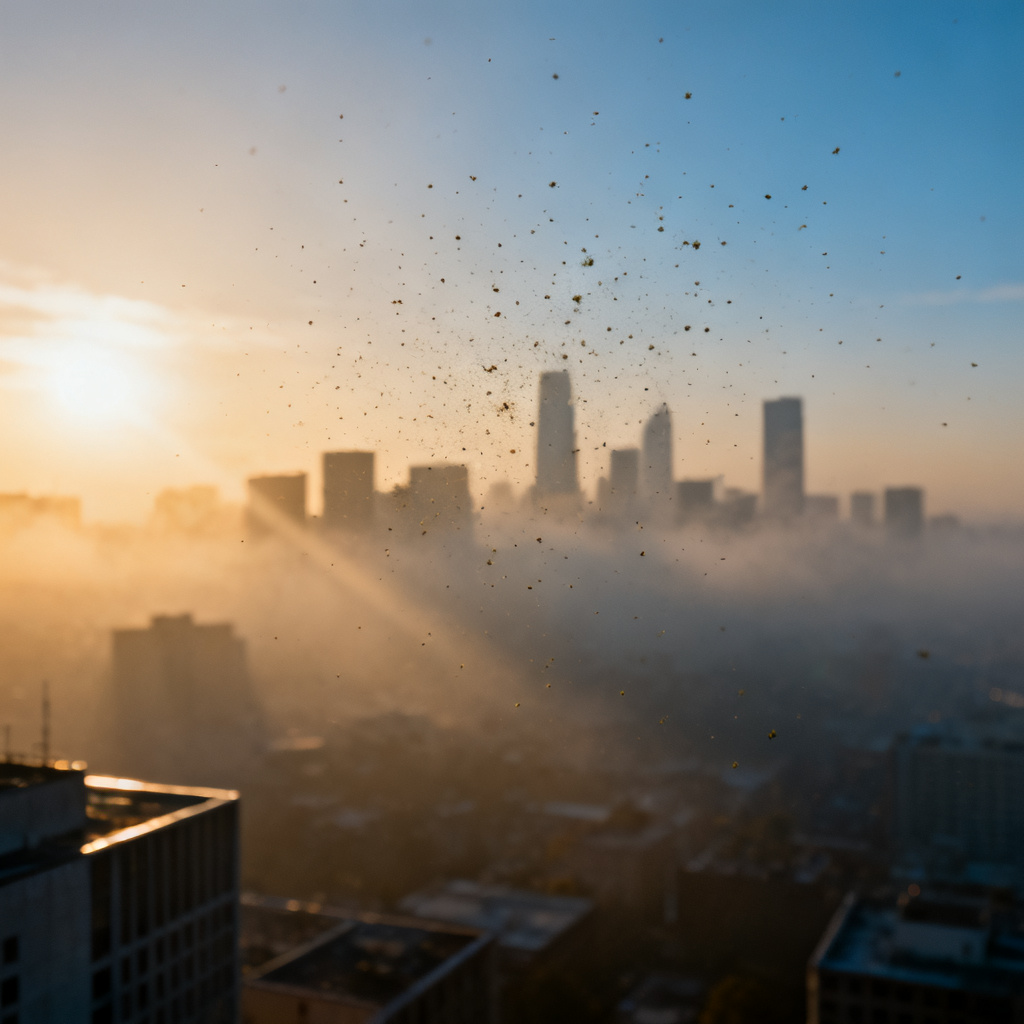
consisting of fine particles
➕
/kənˈsɪstɪŋ əv faɪn ˈpɑːtɪk(ə)lz/
adj.
Describes a substance that is composed of distinct, separate, and often microscopic solid or liquid particles.
📘 Details & Usage
📖 Root Explanation
From Latin ‘particula’ (a small part, particle) + adjective-forming suffix ‘-ate’.
💡 Mnemonic
Think of ‘PARTI’ (like a party) and ‘CULATE’ (sounds like accumulate). Tiny particles accumulating at a party.
📖 Example
The air quality monitor displayed high levels of particulate pollution, advising residents to wear masks outdoors.
The air quality monitor displayed high levels of particulate pollution, advising residents to wear masks outdoors.
🔗 Collocations
particulate matter – A mixture of tiny solid and liquid particles suspended in the air.
particulate filter – A device designed to remove solid particles from a fluid, such as air or diesel exhaust.
particulate emissions – The release of solid or liquid particles into the atmosphere from a source.
🔄 Synonyms
granular (adj.) – Consisting of or resembling small grains or particles.
powdery (adj.) – Resembling or consisting of a fine, dry substance made of tiny particles.
fine-particled (adj.) – Composed of very small particles.
🚫 Antonyms
non-particulate (adj.) – Not consisting of or containing separate particles; often describing gaseous, liquid, or homogeneous solid states.
📖 Cultural Story
Derived from the Latin ‘particula’, a diminutive of ‘pars’ (part). Its use surged with modern environmental science, specifically in discussing air quality standards for ‘particulate matter’ (PM2.5/PM10), a key health metric worldwide.
Wordbook
Your data is saved in this browser