Reading Theme:
Ownership Definition, Examples & Usage Guide
Meaning 1:legal right to possess (ownership)
ownership
/ˈoʊnərʃɪp/
n.
the legal right to have something and use it as you want.
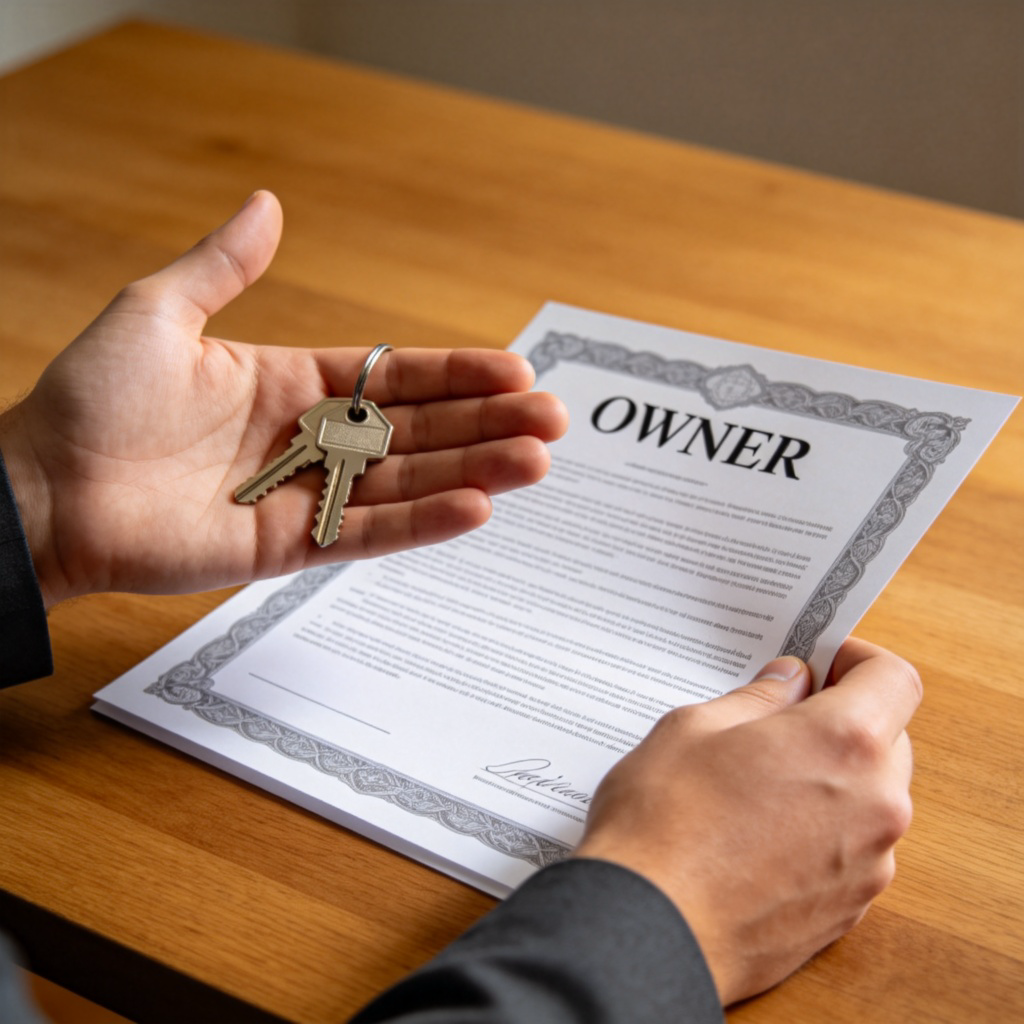
legal right to possess
➕
/ˈliːɡəl raɪt tə pəˈzes/
n.
The legal right to have, use, and control something, typically property or an asset, as recognized by law.
📘 Details & Usage
📖 Root Explanation
Root: 'owner' (one who owns) + '-ship' (state or condition).
💡 Mnemonic
Think of a ship's captain owning the vessel: 'owner' + 'ship' = owning a ship, but really any property.
📖 Example
Buying a house gives you legal ownership of the property and the land it sits on.
Buying a house gives you legal ownership of the property and the land it sits on.
🔗 Collocations
take ownership of – to assume responsibility or legal possession of something
ownership rights – the legal entitlements that come with being the owner
transfer of ownership – the act of legally moving possession from one party to another
🔄 Synonyms
possession (n.) – the state of having or owning something
title (n.) – a legal document or right confirming ownership
proprietorship (n.) – the state of being the owner of a business or property
🚫 Antonyms
dispossession (n.) – the act of depriving someone of property or possession
leasehold (n.) – the temporary right to use property without full ownership
🌱 Derivatives
owner (n.) – a person who owns something
co-ownership (n.) – joint ownership with another person
📖 Cultural Story
The suffix '-ship' comes from Old English '-sciepe', denoting quality or condition. 'Ownership' evolved in legal contexts during the 17th century to formalize property rights.
Wordbook
Your data is saved in this browser