Reading Theme:
Overweight: Definition, Usage, and Common Mistakes
Meaning 1:weighing too much (overweight)
overweight
/ˌəʊvəˈweɪt/
adj.
Weighing more than what is considered healthy for your height and build.
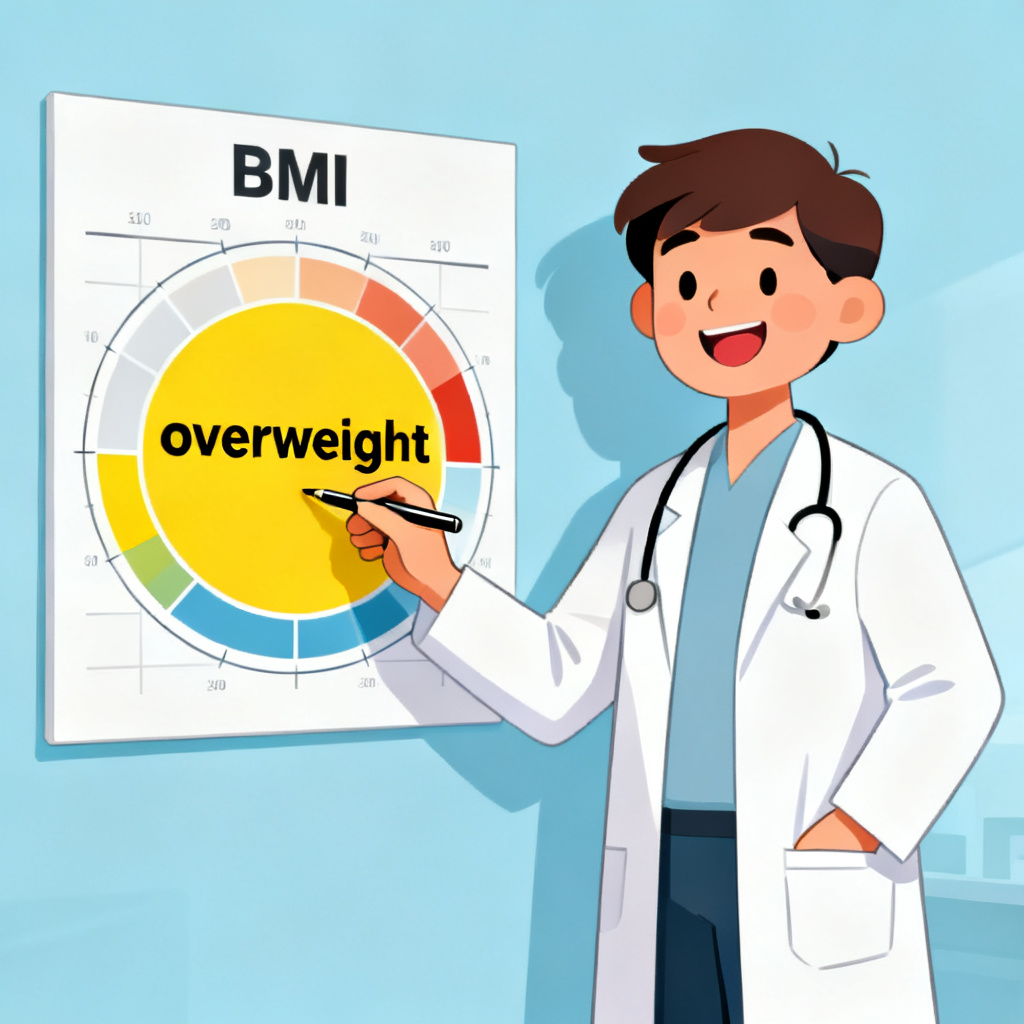
weighing too much
➕
/ˈweɪɪŋ tuː mʌtʃ/
adj.
Describes a person or animal whose body mass is greater than the standard or healthy range for their height and body type, as commonly defined by medical guidelines like BMI.
📘 Details & Usage
📖 Root Explanation
Compound word formed from 'over-' (meaning 'above' or 'too much') and 'weight' (the measure of heaviness). Literally means 'over the recommended weight'.
💡 Mnemonic
Think of the two parts: 'OVER' your healthy 'WEIGHT'. Imagine stepping on a scale and the needle going OVER the recommended zone for your WEIGHT.
📖 Example
During the check-up, the doctor advised him to exercise more as he was slightly overweight.
In the medical examination, the doctor recommended he increase his physical activity because his weight was a little above the healthy range.
🔗 Collocations
be overweight – to have a body weight above the healthy standard
become overweight – to gain weight and enter a range considered unhealthy
overweight baggage – luggage that exceeds the weight limit set by an airline
🔄 Synonyms
obese (adj.) – Describes a more severe degree of being overweight, often associated with significant health risks.
hefty (adj.) – A more informal term suggesting large size and weight, often in a robust or solid way.
heavy (adj.) – A general term for having great weight; can be used for objects or people.
🚫 Antonyms
underweight (adj.) – Weighing less than what is considered healthy for one's height and build.
slim (adj.) – Gracefully thin; attractively thin and well-proportioned.
fit (adj.) – In good physical condition, especially as a result of exercise and proper nutrition.
🌱 Derivatives
overweightness (n.) – The state or condition of being overweight. (Note: Less common than the adjective form.)
📖 Cultural Story
The word 'overweight' has straightforward origins, entering English to describe physical heaviness exceeding a norm. It gained significant modern usage with the development of standardized body mass index (BMI) charts and public health campaigns focused on obesity. Today, it is a standard term in medical contexts and a common topic in everyday conversations about health, fitness, and lifestyle. It is also used metaphorically in finance to describe an investment portfolio holding more of a particular security than its benchmark index.
Wordbook
Your data is saved in this browser