Reading Theme:
Opera Definition, Examples & Usage Guide
Meaning 1:musical drama (opera)
opera
/ˈɑːpərə/
n.
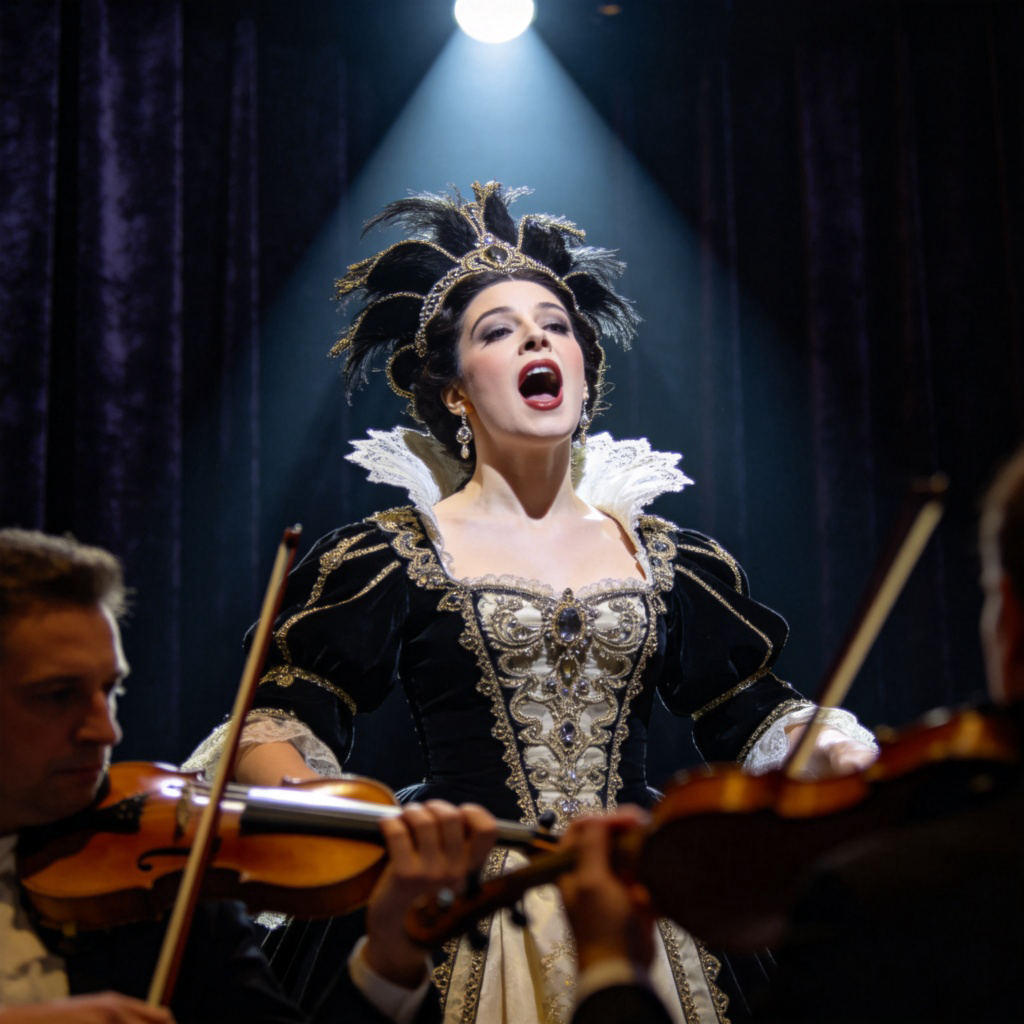
A type of play where the story is told mostly through singing, with music from an orchestra and often elaborate costumes.
musical drama
➕
/ˈmjuːzɪkəl ˈdrɑːmə/
n.
A form of theatre where the story is told through singing accompanied by an orchestra, often with elaborate costumes and sets.
📘 Details & Usage
📖 Root Explanation
Italian 'opera' from Latin 'opera' (plural of 'opus' meaning 'work').
💡 Mnemonic
Think of 'opera' as 'Op' (open) + 'Era' – open your ears to a new era of musical storytelling!
📖 Example
For their anniversary, they dressed up and went to see a classic opera about a tragic love story.
For their anniversary, they dressed up and went to see a classic opera about a tragic love story.
🔗 Collocations
go to the opera – attend an opera performance
opera house – a theater where operas are performed
opera singer – a vocalist trained for opera
🔄 Synonyms
musical drama (n.) – a dramatic performance set to music
lyric drama (n.) – a play in which music and singing are essential
operetta (n.) – a light opera, often with spoken dialogue
🚫 Antonyms
spoken drama (n.) – a play without singing
instrumental concert (n.) – a performance of music only, without theatrical singing
🌱 Derivatives
operatic (adj.) – relating to or characteristic of opera
operatically (adv.) – in a way that relates to opera
opera-goer (n.) – a person who regularly attends opera performances
📖 Cultural Story
'Opera' comes from Italian, literally 'work', from Latin 'opera' (plural of 'opus'). First used in 17th-century Italy for staged musical dramas, a revolutionary genre that spread worldwide.
Wordbook
Your data is saved in this browser