Reading Theme:
Larva Definition, Usage & Examples in Biology
Meaning 1:immature form (larva)
larva
/ˈlɑːrvə/
n.
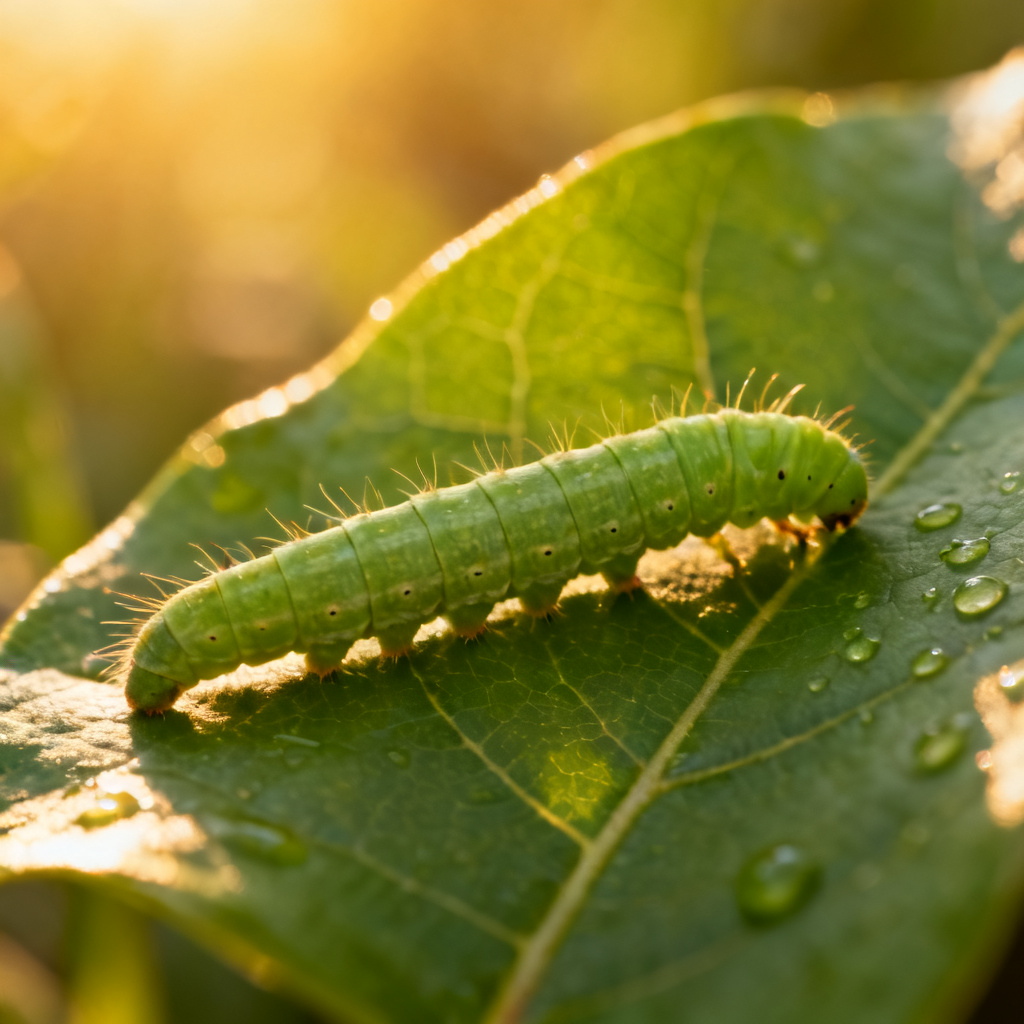
The young form of an insect before it changes into its adult form, like a caterpillar before it becomes a butterfly.
immature form
➕
/ˌɪməˈtʃʊr fɔːrm/
n.
The juvenile, wingless, and often worm-like feeding stage of an insect that undergoes complete metamorphosis, distinctly different from its adult form.
📘 Details & Usage
📖 Root Explanation
From Latin 'larva', meaning 'ghost, mask', likely referencing the hidden, transformative stage of an insect.
💡 Mnemonic
LARVA in a LEAF: An early stage insect LURking in VegetAtion.
📖 Example
The child carefully placed the caterpillar, which is the larva of a butterfly, back on the leaf after observing it.
The child carefully placed the caterpillar, which is the immature form of a butterfly, back on the leaf after observing it.
🔗 Collocations
insect larva – The juvenile stage of an insect.
larval stage – The period in an insect's life cycle when it is in the larva form.
hatch from a larva – To emerge from the larval stage (typically into a pupa or adult).
🔄 Synonyms
caterpillar (n.) – The larva of a butterfly or moth.
grub (n.) – A larva, especially of a beetle; often used for thick, short larvae found in soil.
maggot (n.) – The soft-bodied, legless larva of a fly.
🚫 Antonyms
🌱 Derivatives
📖 Cultural Story
The word 'larva' originates from Latin, where it meant 'ghost' or 'mask'. This reflects the transformative nature of insects; the larval stage acts as a 'mask' that hides the future adult form, which emerges dramatically through metamorphosis.
Wordbook
Your data is saved in this browser