Reading Theme:
Irrigation Definition, Usage & Common Examples (2 meaning)
Meaning 1:supply water to land (irrigation)
irrigation
/ˌɪrɪˈɡeɪʃn/
n.
The process of supplying water to land or crops, especially through channels, pipes, or sprinklers, to help them grow.
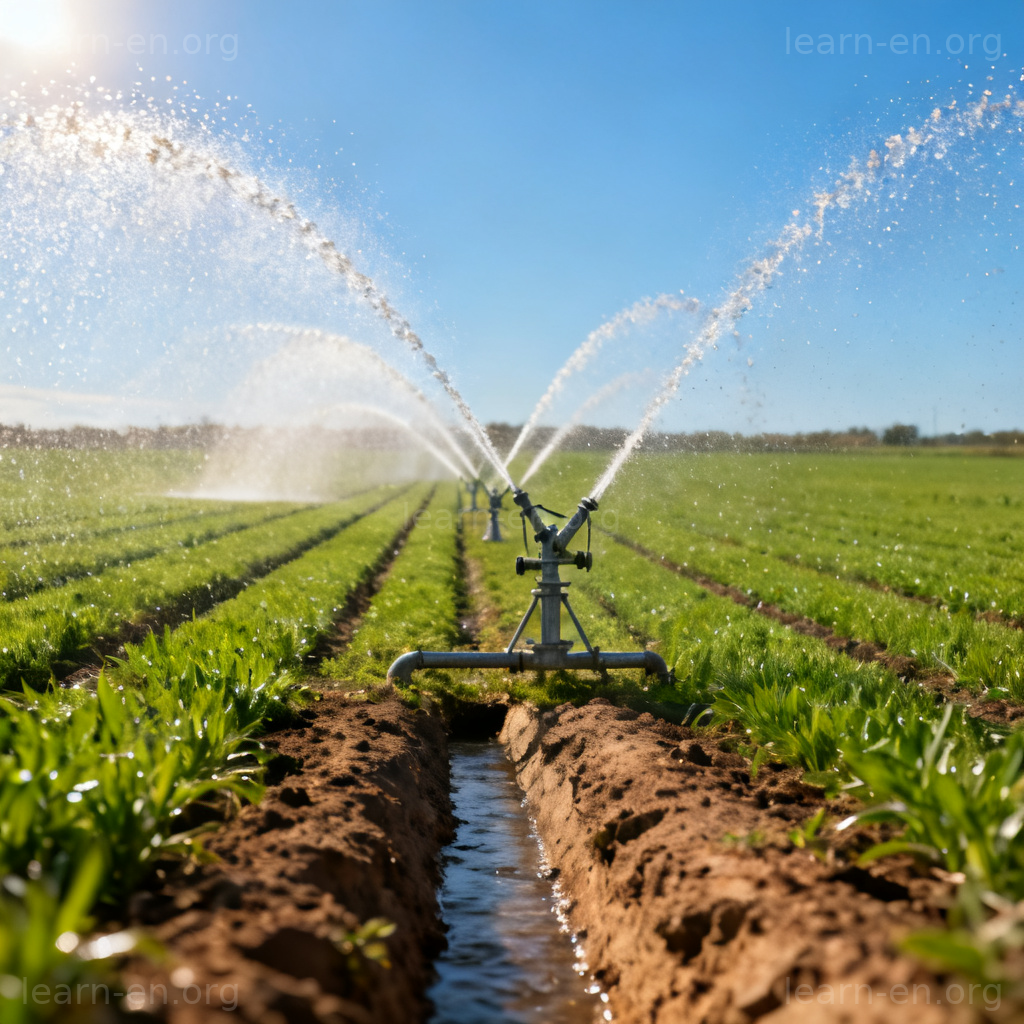
supply water to land
➕
/səˈplaɪ ˈwɔːtər tuː lænd/
n.
The artificial application of water to soil or land to assist in the growth of crops, maintain landscapes, or revegetate disturbed soils in dry areas or during periods of inadequate rainfall.
📘 Details & Usage
📖 Root Explanation
From Latin 'in-' (in, into) + 'rigare' (to water). '-ation' is a noun suffix indicating an action or process.
💡 Mnemonic
Think: 'Irri-' like 'irrigate' (to water) and '-gation' like an action. So, irrigation is the action of watering.
📖 Example
Modern irrigation systems, like those using drip technology, help farmers save a lot of water while growing healthy vegetables.
Advanced watering systems, such as drip irrigation, enable farmers to conserve significant amounts of water while cultivating nutritious crops.
🔗 Collocations
irrigation system – A network of structures and channels designed to distribute water to fields.
irrigation canal – A man-made waterway built to transport water for agricultural purposes.
irrigation water – Water that is specifically supplied to agricultural land for crop growth.
🔄 Synonyms
watering (n.) – The act of supplying with water, often used more generally than 'irrigation'.
artificial watering (n.) – Specifies that the water supply is not from natural rainfall.
watering system (n.) – Refers to the equipment and infrastructure used for irrigation.
🚫 Antonyms
drought (n.) – A prolonged period of abnormally low rainfall, leading to a shortage of water, the opposite condition that irrigation addresses.
🌱 Derivatives
irrigate (v.) – To supply land with water by means of channels, pipes, or sprinklers.
📖 Cultural Story
The word 'irrigation' entered English in the early 17th century from French, which derived it from the Latin 'irrigare', meaning 'to water, flood, inundate'. This Latin root reflects the ancient practice of bringing water to agricultural lands, a cornerstone of civilizations from Mesopotamia to Rome.
Meaning 2:wash out a wound (irrigation)
irrigation
/ˌɪrɪˈɡeɪʃn/
n.
The act of washing out or cleaning a wound, body cavity, or other area with a flow of water or liquid.
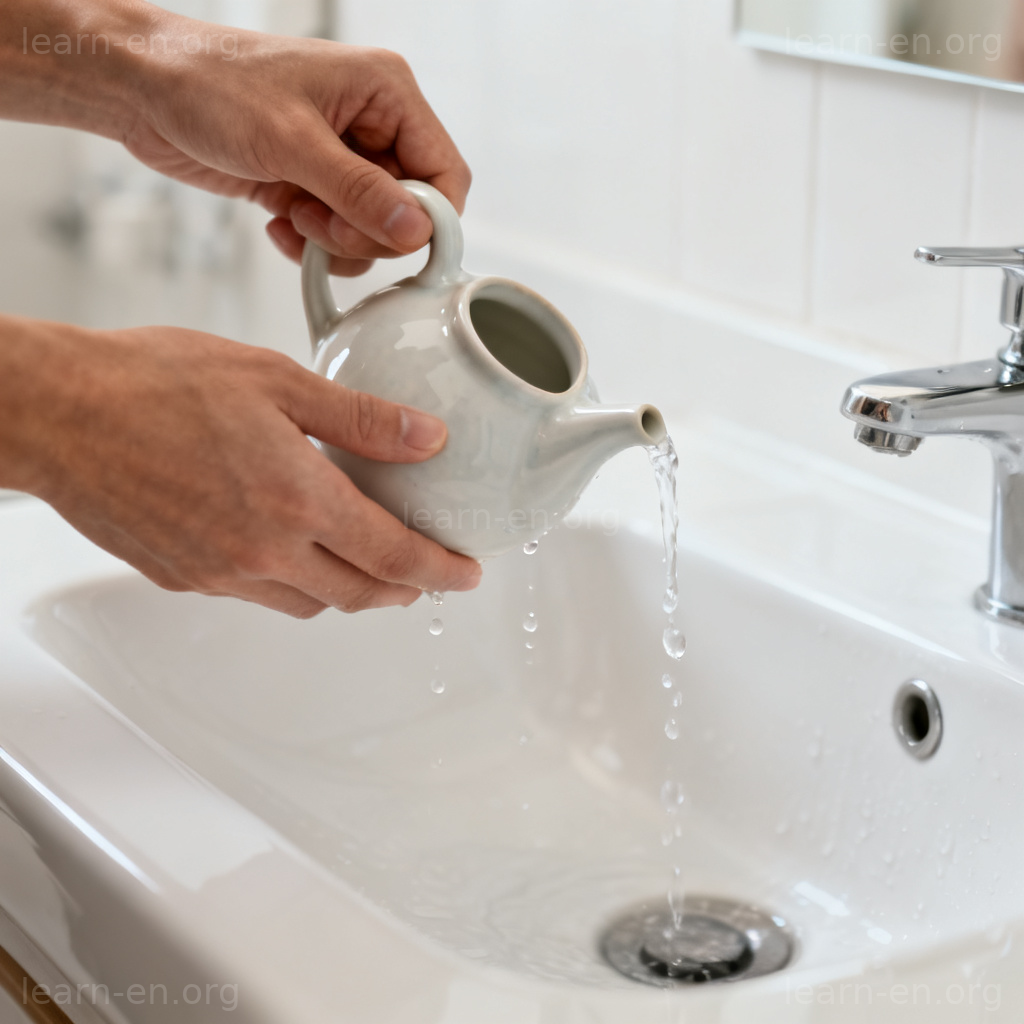
wash out a wound
➕
/wɒʃ aʊt ə wuːnd/
n.
The therapeutic flushing of a body part, wound, or cavity with a stream of water or other fluid to cleanse it, remove debris, or prevent infection.
📘 Details & Usage
📖 Example
After my dental surgery, the dentist recommended gentle irrigation of the area with warm salt water to keep it clean.
Following the oral surgery, the dental professional advised careful cleansing of the site using a mild saline solution to maintain hygiene.
🔗 Collocations
wound irrigation – The process of cleansing a wound with a controlled flow of a sterile solution.
nasal irrigation – Rinsing the nasal cavity with a saline solution, often using a device like a neti pot.
oral irrigation – Cleansing around the teeth and gums using a targeted stream of water, typically with a water flosser.
🔄 Synonyms
🚫 Antonyms
contamination (n.) – The action of making something impure or dirty, which irrigation aims to prevent or reverse.
🌱 Derivatives
irrigate (v.) – To wash out (a wound or body cavity) with water or a medicated fluid.
Wordbook
Your data is saved in this browser