Reading Theme:
What is an Ion? Definition, Examples & Types
Meaning 1:charged particle (ion)
ion
/ˈaɪ.ən/ or /ˈaɪ.ɑːn/
n.
A very small particle (atom or molecule) that has either gained or lost electrons, making it electrically charged (positive or negative).
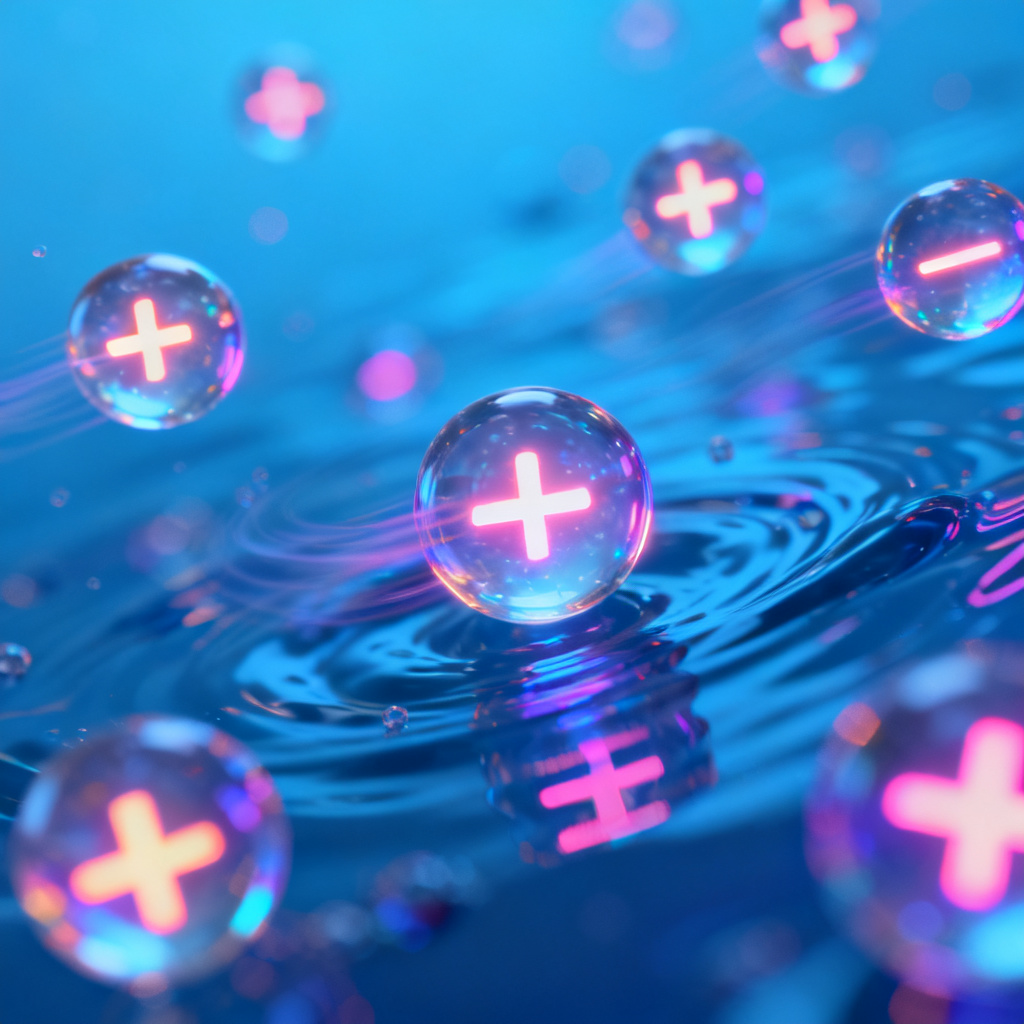
charged particle
➕
/tʃɑːrdʒd ˈpɑːrtɪkəl/
n.
An atom or molecule that has gained or lost one or more electrons, resulting in a net positive or negative electrical charge.
📘 Details & Usage
📖 Root Explanation
Derived from Greek "iōn," meaning "going," because ions "go" or move towards oppositely charged electrodes.
💡 Mnemonic
An Ion is Independent ON its own, missing or having extra electrons, giving it a charge.
📖 Example
This air purifier works by releasing negative ions to attract dust and pollen, making the air feel fresh.
This air purifier works by releasing negative charged particles to attract dust and pollen, making the air feel fresh.
🔗 Collocations
positive ion – An ion with a net positive charge (cation).
negative ion – An ion with a net negative charge (anion).
ion exchange – A process where ions are exchanged between a solid and a liquid.
🌱 Derivatives
ionic (adj.) – Relating to, composed of, or using ions.
ionize (v.) – To convert an atom or molecule into an ion.
ionization (n.) – The process of forming ions.
📖 Cultural Story
Coined by English scientist Michael Faraday in 1834 from the Greek "iōn," which means "going." He used it to describe the moving, electrically charged particles that carry current through a solution between electrodes.
Wordbook
Your data is saved in this browser