Reading Theme:
Intestine: Definition, Function, and Anatomy
Meaning 1:internal digestive organ (intestine)
intestine
/ɪnˈtes.tɪn/
n.
The long, tube-shaped part inside your belly that breaks down food after you eat it.
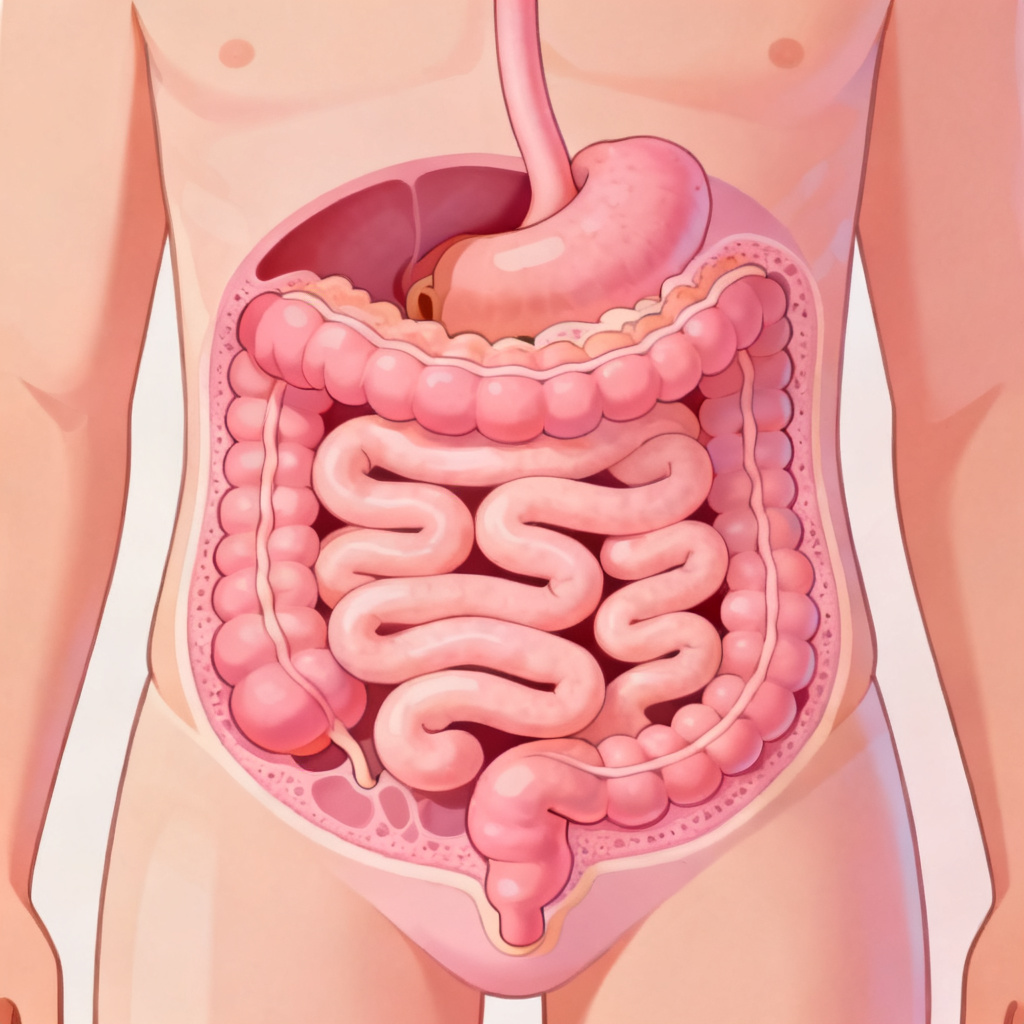
internal digestive organ
➕
/ɪnˈtɜːrnəl dɪˈdʒestɪv ˈɔːrɡən/
n.
A long, coiled, tube-like part of the digestive system located in the abdomen, responsible for digesting food and absorbing nutrients.
📘 Details & Usage
📖 Root Explanation
From Latin 'intestinus' meaning 'internal, inward'.
💡 Mnemonic
Think 'IN-TESTINE' like the long, winding tube that is TESTING and processing food INSIDE you.
📖 Example
The doctor explained that eating more fiber is good for your intestine because it helps everything move smoothly.
The doctor explained that eating more fiber is good for your internal digestive organ because it helps everything move smoothly.
🔗 Collocations
large intestine – The wider, shorter part of the intestine that absorbs water and forms feces.
small intestine – The long, narrow part of the intestine where most digestion and nutrient absorption occurs.
intestinal tract – The entire passageway from the stomach to the anus, including the intestines.
🔄 Synonyms
🚫 Antonyms
🌱 Derivatives
intestinal (adj.) – Relating to or occurring in the intestine.
intestinally (adv.) – In a manner related to the intestine.
📖 Cultural Story
Derived from Latin 'intestinus' (internal), reflecting its position inside the body. The term highlights the anatomical focus on internal organs in early medical Latin.
Wordbook
Your data is saved in this browser