Reading Theme:
Interactive Exhibits: Meaning, Examples & Hands-On Displays
Meaning 1:hands-on displays (interactive exhibits)
interactive exhibits
/ˌɪntərˈæktɪv ɪɡˈzɪbɪts/
n.
Exhibits that allow visitors to participate and interact, often by touching, pressing buttons, or using them directly.
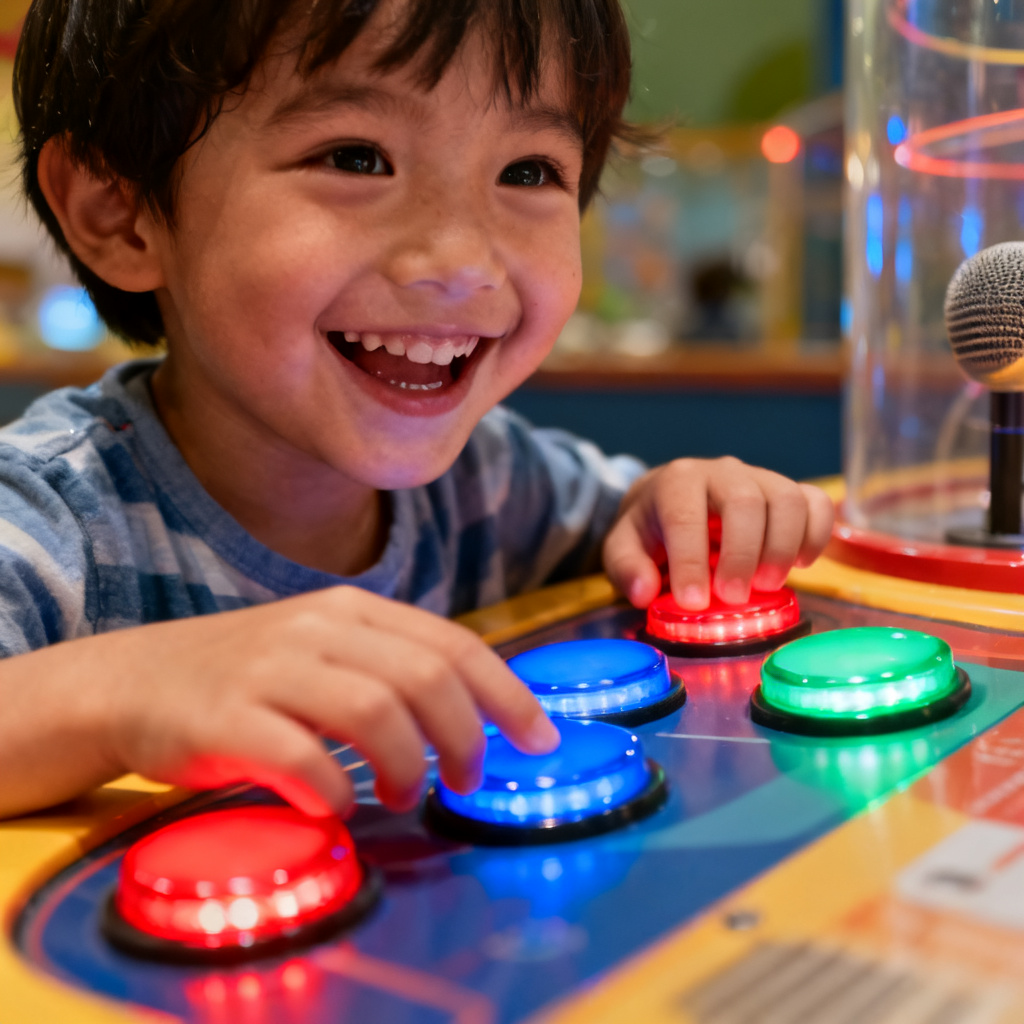
hands-on displays
➕
/ˈhændz-ɒn dɪˈspleɪz/
n.
Interactive exhibits are displays or installations that visitors can actively engage with, typically by touching, manipulating, or responding to them, rather than just observing passively.
📘 Details & Usage
📖 Root Explanation
inter- (between) + act (do) + -ive (adjective) + exhibit (show forth)
💡 Mnemonic
Imagine pressing a button and seeing a reaction – that's an interactive exhibit: you interact, it exhibits.
📖 Example
At the science center, children spent hours at the interactive exhibits where they could experiment with light and sound.
At the science center, children spent hours at the interactive exhibits where they could experiment with light and sound.
🔗 Collocations
interactive museum exhibits – exhibits in a museum that are interactive and encourage participation
interactive science exhibits – exhibits focused on scientific topics that are hands-on and engaging
touch-screen interactive exhibits – exhibits that use touch-screen technology for user interaction
🔄 Synonyms
hands-on exhibits (n.) – Exhibits that require physical participation or manipulation from visitors
participatory displays (n.) – Displays that invite active involvement from the audience
interactive installations (n.) – Art or technology installations that respond to user actions
🚫 Antonyms
static displays (n.) – Exhibits that remain unchanged and do not allow user interaction
passive exhibits (n.) – Exhibits that are only meant to be viewed, not touched or manipulated
non-interactive exhibits (n.) – Exhibits that offer no means for visitor participation or feedback
🌱 Derivatives
interactivity (n.) – the quality of being interactive, allowing two-way communication or action
interact (v.) – to act in such a way as to have an effect on each other
exhibition (n.) – a public display of works of art or items of interest
📖 Cultural Story
The term gained popularity with the rise of experiential learning in the 1960s, especially after the Exploratorium in San Francisco pioneered hands-on museum education in 1969.
Wordbook
Your data is saved in this browser