Reading Theme:
What Is a Heritage Site? Definition and Examples
Meaning 1:protected historic place (Heritage site)
Heritage site
/ˈhɛrɪtɪdʒ saɪt/
n.
A place that is protected by law because it is important for history, culture, or nature, and we want to keep it safe for future people.
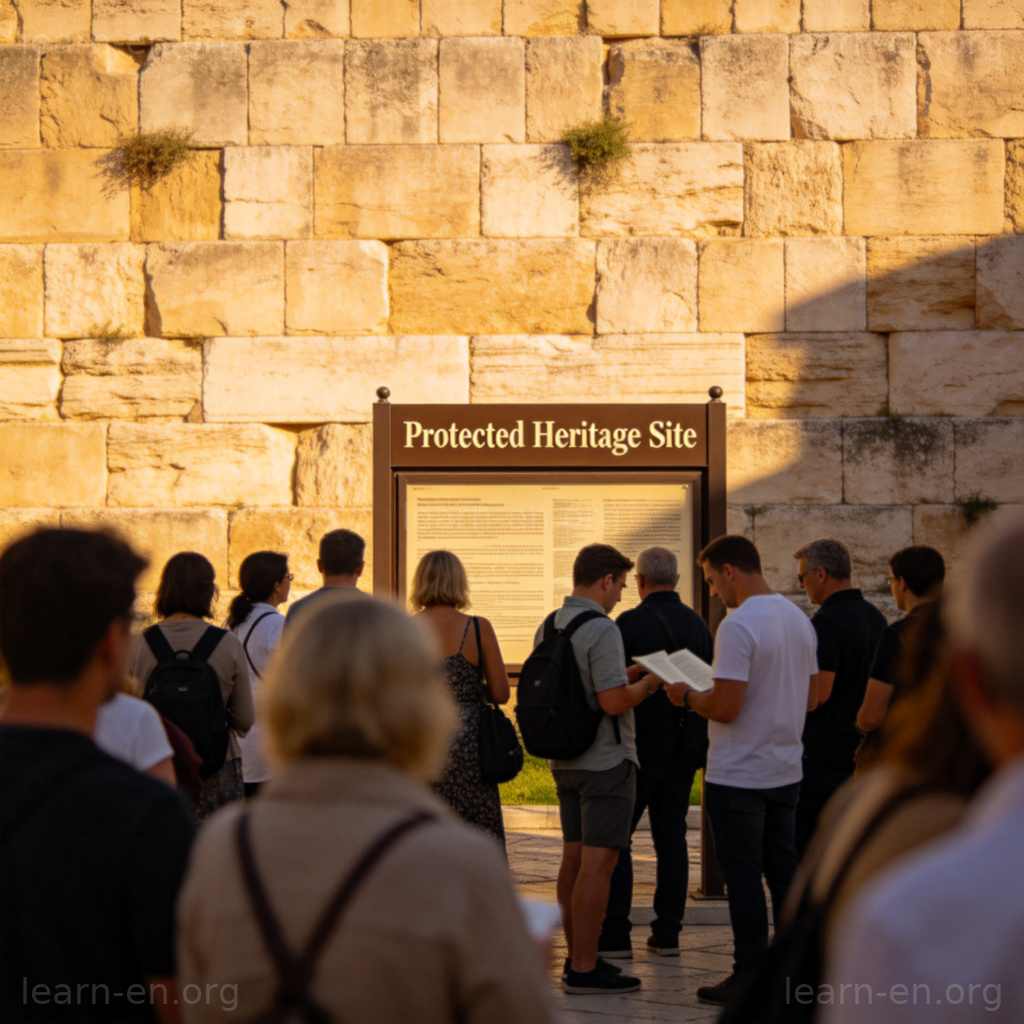
protected historic place
➕
/prəˈtɛktɪd hɪˈstɒrɪk pleɪs/
n.
A location legally safeguarded for its historical, cultural, or natural importance, so future generations can appreciate it.
📘 Details & Usage
📖 Root Explanation
From Old French 'heritage' (inherit) + Latin 'situs' (position). A place passed down through generations.
💡 Mnemonic
Think: 'Heritage' = inheritance from ancestors + 'site' = location → a treasured location you inherit.
📖 Example
On our trip to China, visiting the Great Wall, a famous heritage site, was the most unforgettable experience.
On our trip to China, visiting the Great Wall, a famous heritage site, was the most unforgettable experience.
🔗 Collocations
UNESCO heritage site – a heritage site recognized by the United Nations for global importance
designated heritage site – a site officially protected by law under heritage legislation
cultural heritage site – a place valued for its historical or artistic significance
🔄 Synonyms
historical landmark (n.) – a famous or important place in history
protected monument (n.) – a structure or site legally preserved for its heritage value
world heritage (n.) – a site listed by UNESCO as having universal cultural or natural significance
🚫 Antonyms
ordinary location (n.) – a place with no special historical or cultural protection
modern development (n.) – a newly built area without historical significance
🌱 Derivatives
📖 Cultural Story
The term gained global prominence through UNESCO's 1972 World Heritage Convention, which legally protects places of outstanding universal value for future generations.
Wordbook
Your data is saved in this browser