Reading Theme:
Happen: Meaning, Usage, and Examples
Meaning 1:occur (happen)
happen
/ˈhæpən/
v.
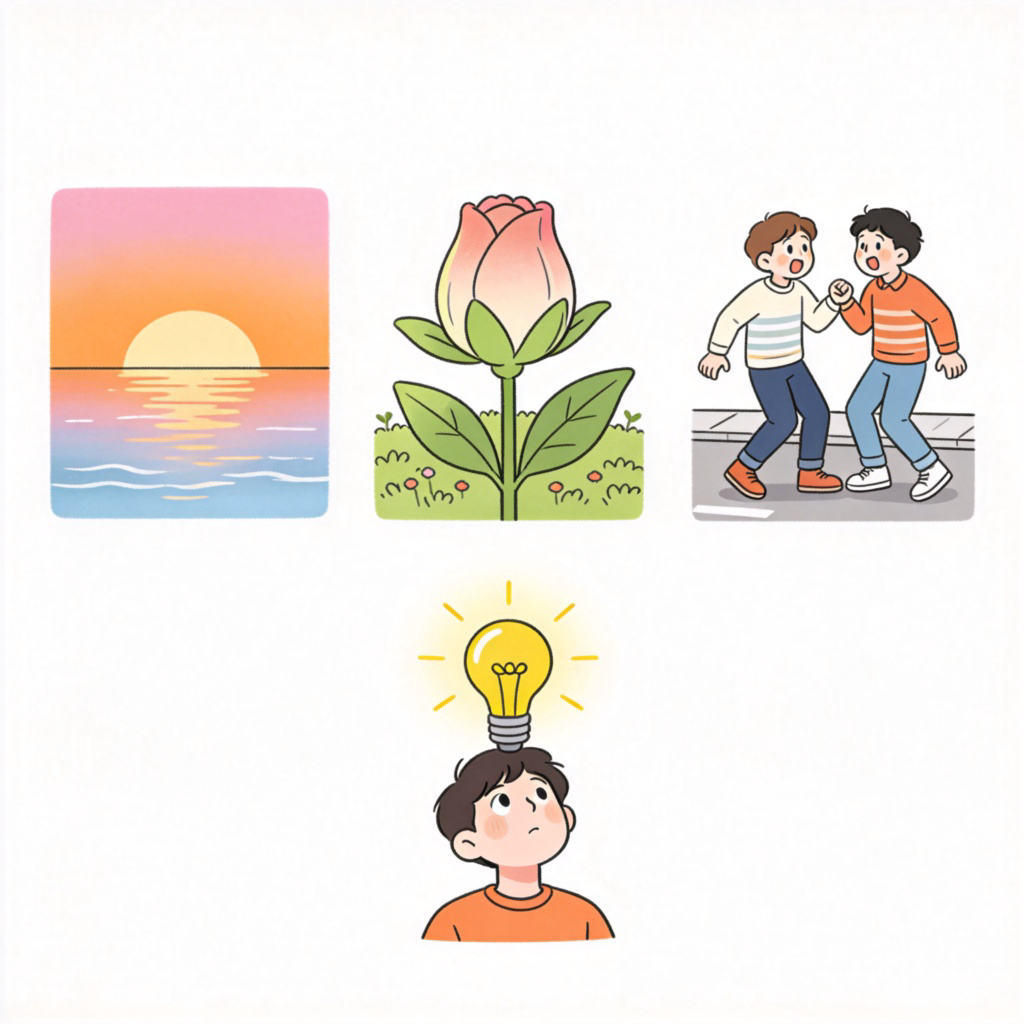
to take place or come into being; used to describe an event occurring.
occur
➕
/əˈkɜːr/
v.
To take place or come into being, often unexpectedly or as a result of chance.
📘 Details & Usage
📖 Root Explanation
From Old English 'hæppian' meaning 'to come to pass', possibly of Old Norse origin 'happa'.
💡 Mnemonic
Think 'hap' like 'happy accident' – events just 'happen' by chance, often bringing surprise.
📖 Example
We were lost in the old town when we happened upon a tiny dessert shop with the best cake I've ever tasted.
We were lost in the old town when we unexpectedly found a tiny dessert shop with the best cake I have ever tasted.
🔗 Collocations
happen to – occur by chance (e.g., 'I happen to know her')
happen upon – find or meet unexpectedly
as it happens – used to introduce a coincidental fact
🔄 Synonyms
🚫 Antonyms
🌱 Derivatives
happening (n.) – an event or occurrence, especially one that is interesting or exciting
happenstance (n.) – a coincidence or chance occurrence
📖 Cultural Story
The word 'happen' shares roots with 'happy' via Old Norse 'happ' meaning 'luck' or 'chance'. In modern English, it commonly describes unplanned events, often used in everyday conversation to emphasize spontaneity.
Wordbook
Your data is saved in this browser