Reading Theme:
Generation: Definition, Examples, and Common Usage (2 meaning)
Meaning 1:group of same age (generation)
generation
/ˌdʒɛnəˈreɪʃən/
n.
A group of people born and living at about the same time, like your grandparents, parents, or you and your friends.

group of same age
➕
/ɡruːp əv seɪm eɪdʒ/
n.
A generation refers to all people born around the same time, who share similar historical and cultural experiences.
📘 Details & Usage
📖 Root Explanation
From Latin 'generatio' (begetting, generation), from 'genus' (race, kind) + '-ation' (noun suffix).
💡 Mnemonic
Think 'gene' + 'ration' — a generation shares similar genes and a 'ration' of time on earth.
📖 Example
My grandmother and her siblings all share similar life experiences because they belong to the same generation.
My grandmother and her siblings all share similar life experiences because they belong to the same generation.
🔗 Collocations
generation gap – The differences in attitudes, values, and behaviors between younger and older generations.
next generation – The group of people who are born after the current or previous generation.
first generation – The earliest group of people in a family to be born in a particular country or to adopt a new lifestyle.
🔄 Synonyms
cohort (n.) – A group of people who share a common characteristic, typically age, within a population.
age group (n.) – A set of people of roughly the same age, often used in demographic studies.
peer group (n.) – People of similar age, status, or interests who interact as equals.
🚫 Antonyms
individual (n.) – A single person, as opposed to a collective group like a generation.
🌱 Derivatives
generational (adj.) – Relating to or characteristic of a particular generation.
generationally (adv.) – In a way that relates to different generations.
intergenerational (adj.) – Involving or affecting multiple generations.
📖 Cultural Story
Originating from Latin 'generare' (to beget), the word entered Middle English via Old French. Its modern use for 'age cohort' rose in the 19th century, popularized by terms like 'generation gap' in the 1960s.
Meaning 2:process of producing (generation)
generation
/ˌdʒɛnəˈreɪʃən/
n.
The process of making or producing something, like electricity or an idea.
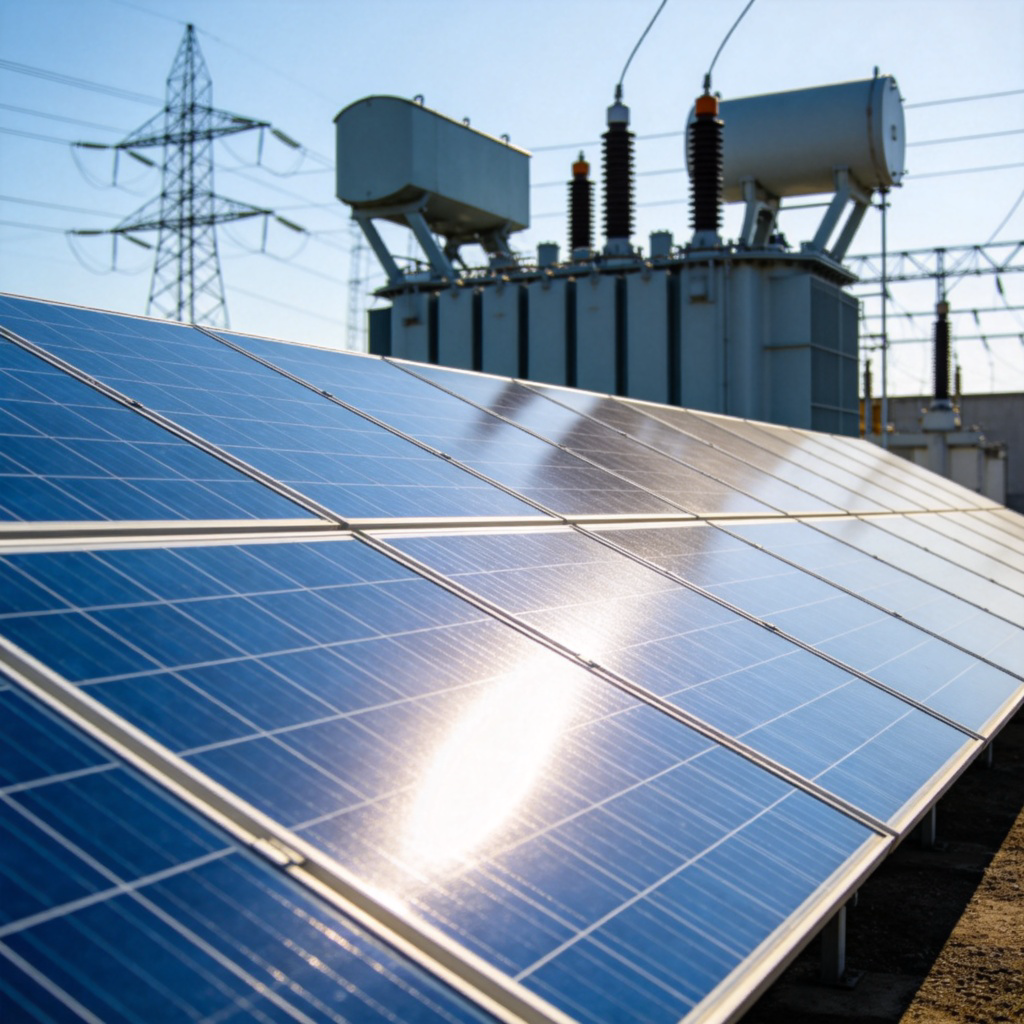
process of producing
➕
/ˈprɒsɛs əv prəˈdjuːsɪŋ/
n.
Generation is the act or process of creating or producing something, such as electricity, power, or ideas.
📘 Details & Usage
📖 Example
The new solar panels on our roof are responsible for the generation of all our household electricity.
The new solar panels on our roof are responsible for the generation of all our household electricity.
🔗 Collocations
power generation – The process of producing electrical power from various sources, such as coal, wind, or solar.
ideas generation – The activity of creating new concepts, suggestions, or solutions through brainstorming.
heat generation – The production of thermal energy, often through chemical reactions or mechanical work.
🔄 Synonyms
production (n.) – The process of creating goods, services, or energy, often on a large scale.
creation (n.) – The act of bringing something into existence, emphasizing innovation or origin.
manufacturing (n.) – The industrial process of making products from raw materials.
🚫 Antonyms
destruction (n.) – The act of damaging or destroying something, opposite of generation.
consumption (n.) – The use of resources, as opposed to their creation.
termination (n.) – The end or cessation of a process; opposite of production.
🌱 Derivatives
generative (adj.) – Relating to or capable of production or reproduction.
generator (n.) – A machine that converts mechanical energy into electrical energy.
regeneration (n.) – The process of renewal or re-creation, e.g., of tissue or energy.
Wordbook
Your data is saved in this browser