Reading Theme:
Gene Definition: The Basic Unit of Heredity
Meaning 1:hereditary unit (gene)
gene
/dʒiːn/
n.
A part of DNA that holds instructions from your parents, deciding things like how you look.
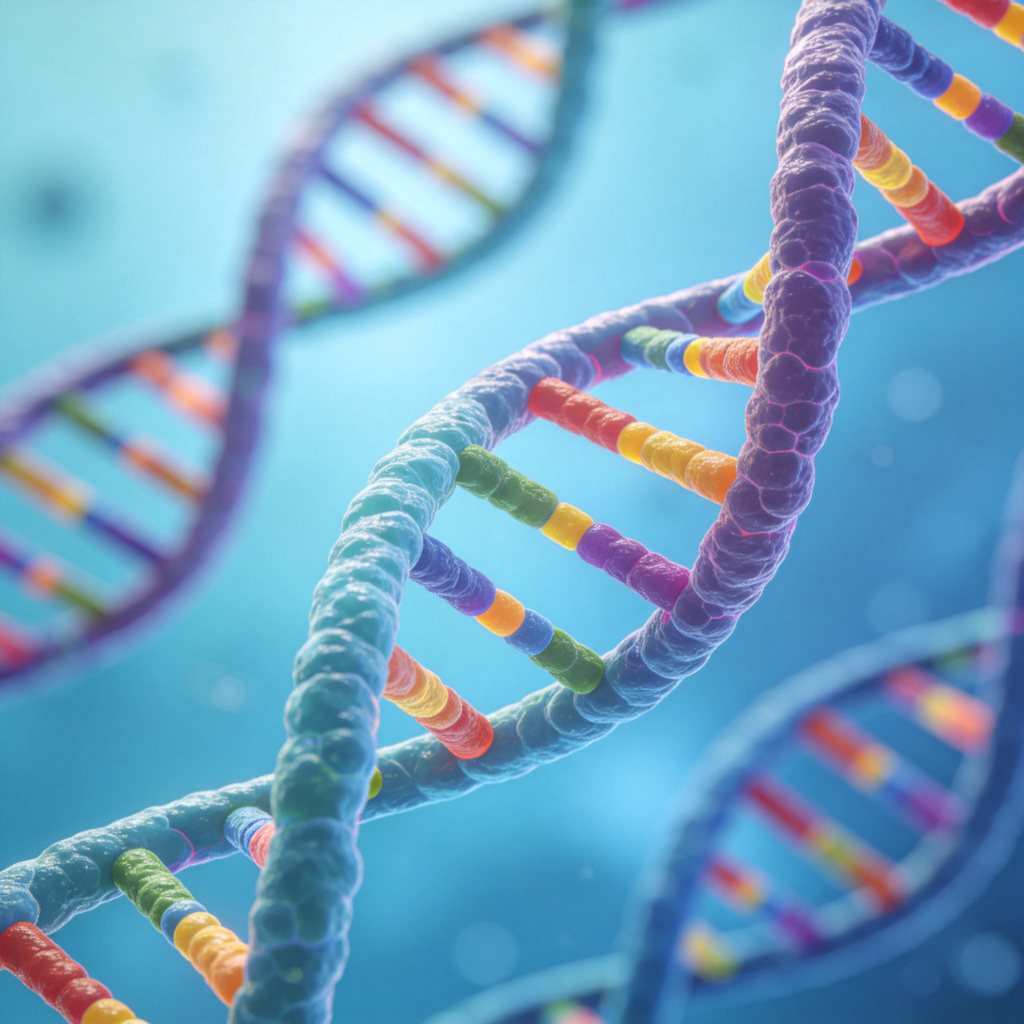
hereditary unit
➕
/həˈredɪtəri ˈjuːnɪt/
n.
A gene is a segment of DNA that carries the information needed to produce a specific protein or function, acting as the basic physical and functional unit of heredity.
📘 Details & Usage
📖 Root Explanation
From Greek 'genos' meaning race or birth; coined in 1909.
💡 Mnemonic
Genes are like 'Gen'eral instructions for your body's traits.
📖 Example
She inherited her father's gene for being tall.
She inherited her father's gene for being tall.
🔗 Collocations
dominant gene – A gene that expresses its trait even when paired with a different version.
recessive gene – A gene that only expresses its trait when paired with an identical version.
gene mutation – A permanent alteration in the DNA sequence of a gene.
🔄 Synonyms
hereditary factor (n.) – A factor that is passed from parent to offspring and determines characteristics.
genetic element (n.) – A component of DNA that carries genetic information.
allele (n.) – One of two or more alternative forms of a gene that arise by mutation.
🚫 Antonyms
environmental factor (n.) – A non-genetic influence that affects an organism's traits.
epigenetic mark (n.) – A modification that alters gene expression without changing the DNA sequence.
🌱 Derivatives
📖 Cultural Story
Coined by Danish botanist Wilhelm Johannsen in 1909 from Greek 'genos' (race, offspring). It replaced the earlier term 'pangene' and became fundamental in genetics.
Wordbook
Your data is saved in this browser