Reading Theme:
Excavate: Definition, Usage & Examples (2 meaning)
Meaning 1:dig out (excavate)
excavate
/ˈekskəveɪt/
v.
to dig a big hole or trench in the ground, usually with machines.
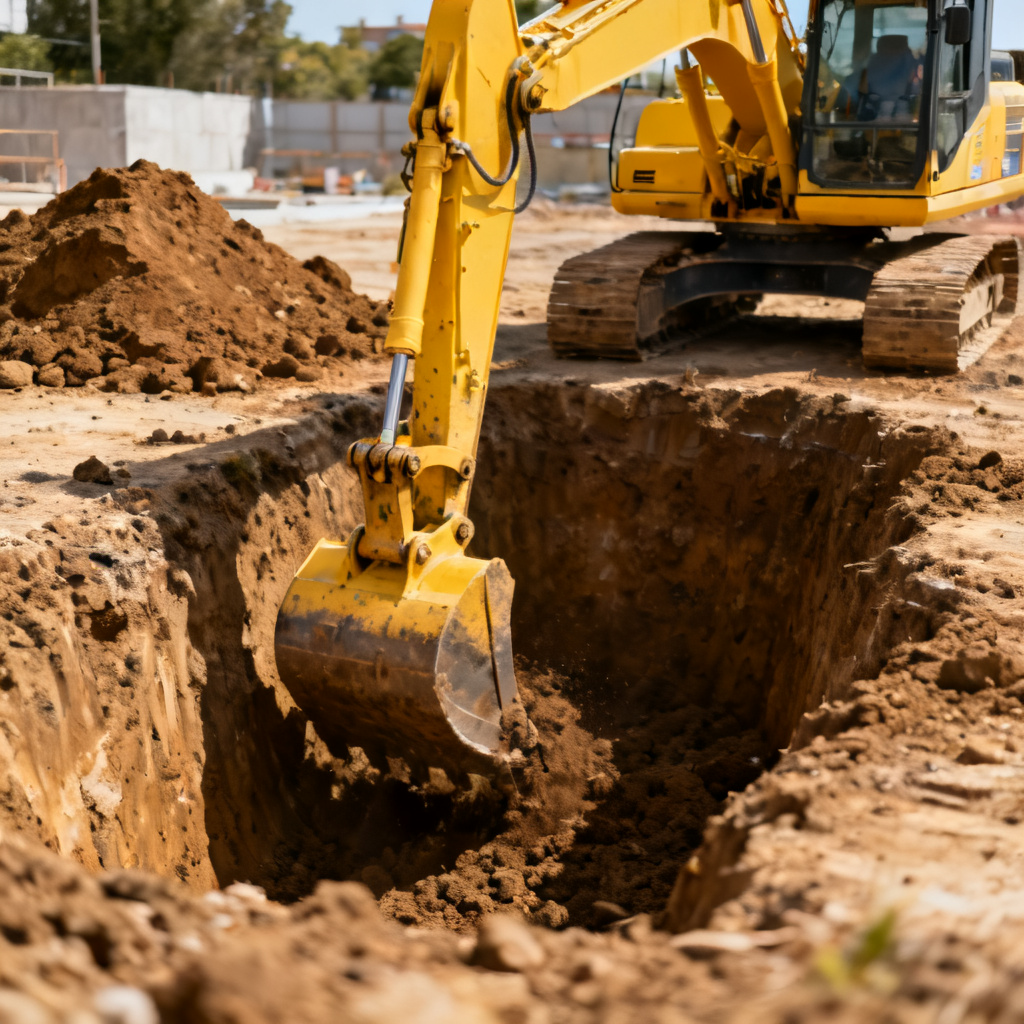
dig out
➕
/dɪɡ aʊt/
v.
The primary meaning refers to the action of removing earth, rock, or other material from the ground to create a large hole, trench, or foundation, typically using heavy machinery like excavators or bulldozers.
📘 Details & Usage
📖 Root Explanation
From Latin 'excavare', meaning 'to hollow out'. Composed of 'ex-' (out) + 'cavus' (hollow, cavity).
💡 Mnemonic
Imagine you need to EXIT A CAVE ATE (sounds like excavate). To get out, you must dig or hollow out a passage, linking the action to the word's meaning.
📖 Example
The construction crew will excavate the area to lay the foundation for the new library.
The construction team will dig out the ground in that location to prepare the base for the new library building.
🔗 Collocations
excavate a site – to dig and prepare a specific location, often for construction
excavate soil – to remove earth or dirt from an area
🔄 Synonyms
🚫 Antonyms
🌱 Derivatives
excavation (n.) – the process or result of digging out earth to form a hole or cavity.
excavator (n.) – a person or machine that excavates.
📖 Cultural Story
The term 'excavate' entered English in the late 16th century from Latin. While its literal sense of digging was used in construction, its most iconic cultural application is in archaeology. The professionalization of archaeology in the 18th and 19th centuries solidified 'excavate' as the precise verb for the careful, scientific process of uncovering historical sites and artifacts, distinguishing it from simple digging. This specialized meaning is now a cornerstone of historical and anthropological research.
Meaning 2:unearth archaeologically (excavate)
excavate
/ˈekskəveɪt/
v.
to carefully dig in the ground to find old objects or buildings from history.

unearth archaeologically
➕
/unˈɜːθ ˌɑːrkiˈɒlədʒikli/
v.
This meaning refers to the systematic and careful digging at a site of historical interest to uncover and study buried artifacts, structures, or other physical remains.
📘 Details & Usage
📖 Example
The team of archaeologists plans to excavate the ancient Roman villa next summer to learn more about daily life at that time.
The group of archaeology researchers intends to carefully dig at the site of the old Roman country house next summer to gain further insights into everyday living in that period.
🔗 Collocations
excavate ruins – to carefully dig at the site of ancient, decayed structures
excavate a tomb – to systematically uncover an ancient burial site
🔄 Synonyms
Wordbook
Your data is saved in this browser