Reading Theme:
Efficiency: Definition, Usage & Common Mistakes (2 meaning)
Meaning 1:doing well without waste (efficiency)
efficiency
/ɪˈfɪʃənsi/
n.
Doing tasks in the best way possible, getting good results without wasting time or resources.

doing well without waste
➕
/dʊɪŋ wɛl wɪˈðaʊt weɪst/
n.
The quality of achieving maximum productivity with minimum wasted effort or resources.
📘 Details & Usage
📖 Root Explanation
From Latin 'efficientia' (accomplishment), from 'ex-' (out) + 'facere' (to make, do).
💡 Mnemonic
Effort + Science = Efficiency. Good science in your effort leads to less waste.
📖 Example
By organizing her notes with color codes, she improved her study efficiency dramatically.
By organizing her notes with color codes, she greatly enhanced her ability to study effectively without wasting time.
🔗 Collocations
improve efficiency – to make a process or system work better with less waste
operational efficiency – how well a business or organization uses its resources to produce results
efficiency gains – improvements in productivity or performance that reduce waste
🔄 Synonyms
productivity (n.) – the rate at which goods are produced or work is completed
effectiveness (n.) – the degree to which something is successful in producing a desired result
competence (n.) – the ability to do something successfully or efficiently
🚫 Antonyms
inefficiency (n.) – the state of not achieving maximum productivity; wasting resources
wastefulness (n.) – using more of something than is necessary
🌱 Derivatives
efficient (adj.) – achieving maximum productivity with minimum wasted effort or expense
efficiently (adv.) – in a way that achieves maximum productivity with minimum waste
efficientize (v.) – to make efficient (rare)
📖 Cultural Story
Derived from Latin 'efficientia,' meaning 'accomplishment, performance.' Its modern prominence surged during the 18th-century Industrial Revolution, quantifying machine and system performance, becoming a cornerstone concept in engineering, management, and economics.
Meaning 2:energy conversion ratio (efficiency)
efficiency
/ɪˈfɪʃənsi/
n.
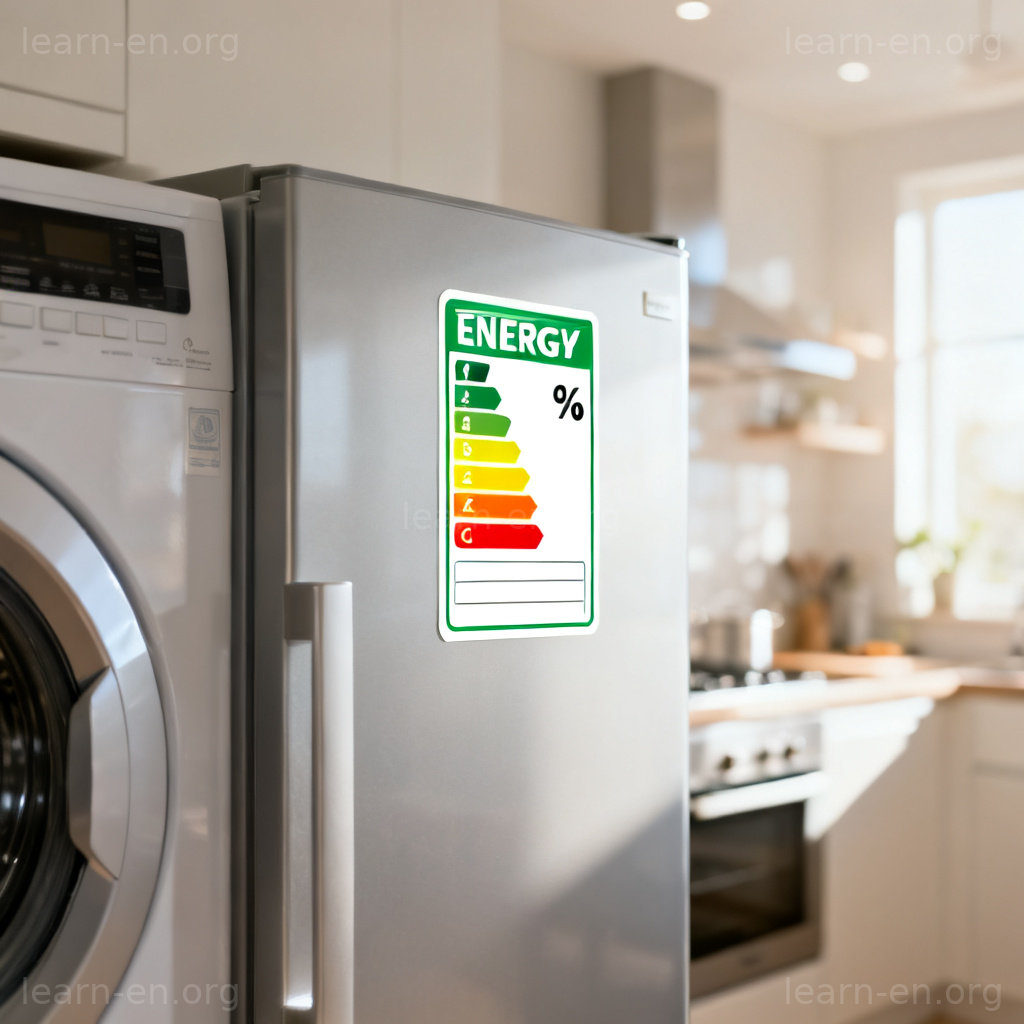
How well a machine or system converts the energy you put in into useful work. Less energy wasted means higher efficiency.
energy conversion ratio
➕
/ˈɛnərdʒi kənˈvɜːrʒən ˈreɪʃioʊ/
n.
The ratio of useful work or energy output to the total energy input in a system, often expressed as a percentage.
📘 Details & Usage
📖 Example
The new LED bulb has an energy efficiency of over 90%, meaning very little electricity is wasted as heat.
This new LED bulb converts over 90% of electrical energy into light, with minimal loss as heat.
🔗 Collocations
energy efficiency – using less energy to provide the same service
fuel efficiency – the distance a vehicle can travel per unit of fuel
efficiency rating – a standardized measure of how efficiently a device uses energy
🔄 Synonyms
efficacy (n.) – the ability to produce a desired or intended result, often used for systems
performance (n.) – how well a machine or device operates
yield (n.) – the amount of product obtained from a process relative to the input
🚫 Antonyms
inefficiency (n.) – poor conversion of input into useful output; high energy loss
loss (n.) – energy that is wasted and not converted to useful work
Wordbook
Your data is saved in this browser