Reading Theme:
Ecology: Definition, Usage, and Examples
Meaning 1:interaction of organisms and environment (ecology)
ecology
/ɪˈkɒlədʒi/
n.
The study of how living things interact with each other and their environment.
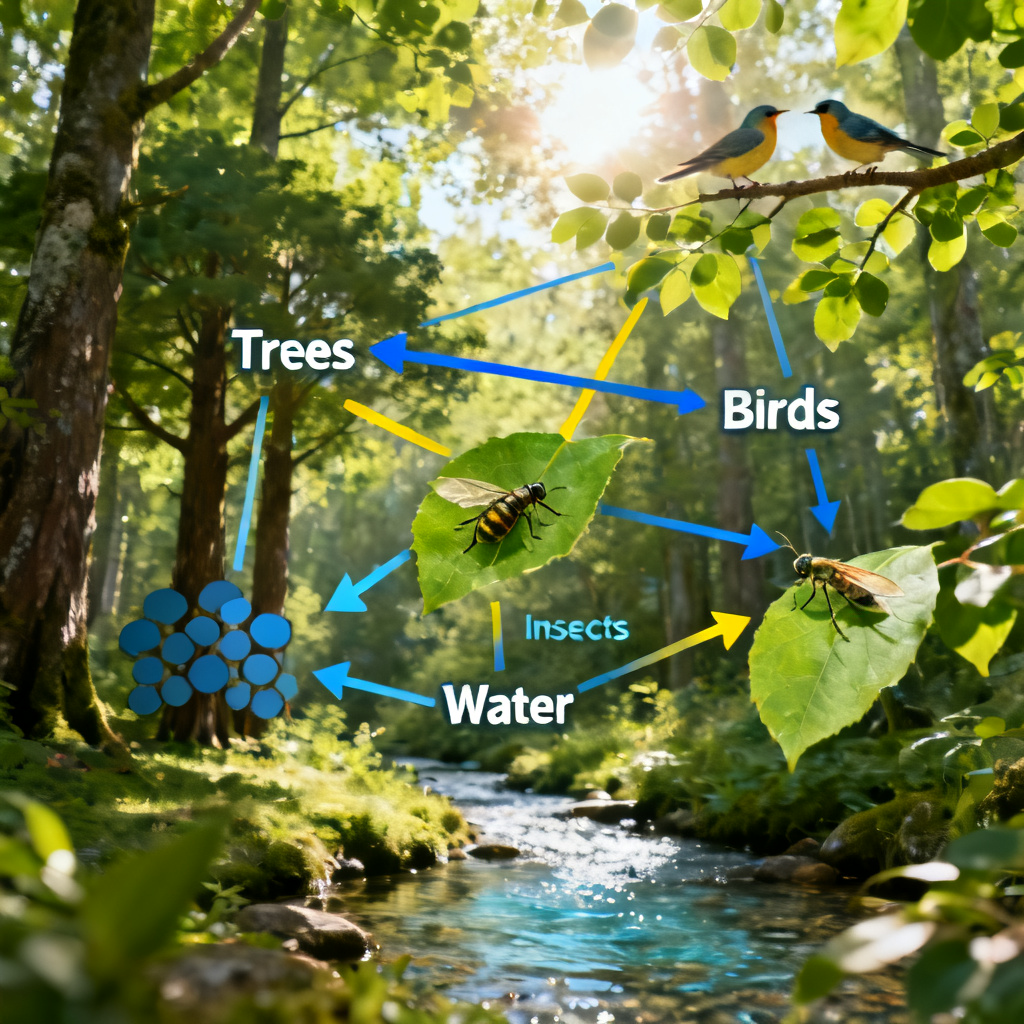
interaction of organisms and environment
➕
/ɪntərˈækʃən əv ˈɔːɡənɪzəmz ənd ɪnˈvaɪrənmənt/
n.
The scientific discipline focused on the relationships between living things and their physical surroundings.
📘 Details & Usage
📖 Root Explanation
From Greek 'oikos' (house) + '-logy' (study of).
💡 Mnemonic
Think 'Eco' (ecosystem) + 'logy' (study). Picture a scientist studying a house full of plants and animals.
📖 Example
We learned in school that protecting the forest is not just about saving trees, but about preserving the entire ecology of the area, including the birds, insects, and even the soil.
Our education emphasized that forest conservation involves safeguarding the whole web of life there.
🔗 Collocations
marine ecology – the study of life in the oceans and seas
restoration ecology – the practice of renewing degraded ecosystems
population ecology – the study of dynamics within species populations
🔄 Synonyms
environmental science (n.) – a broad field that includes ecology along with other studies of the environment
bionomics (n.) – a less common synonym for ecology
🌱 Derivatives
ecological (adj.) – relating to ecology or the environment
ecologist (n.) – a scientist who studies ecology
📖 Cultural Story
The term was coined in the 19th century by German zoologist Ernst Haeckel. It combined Greek 'oikos' (house, household) with '-logia' (study of), framing nature as a complex household where all organisms coexist.
Wordbook
Your data is saved in this browser