Reading Theme:
Earthworm: Definition, Usage & Key Facts
Meaning 1:soil-dwelling worm (earthworm)
earthworm
/ˈɜːrθ.wɜːrm/
n.
A long, soft worm that lives in soil and helps make it healthy.
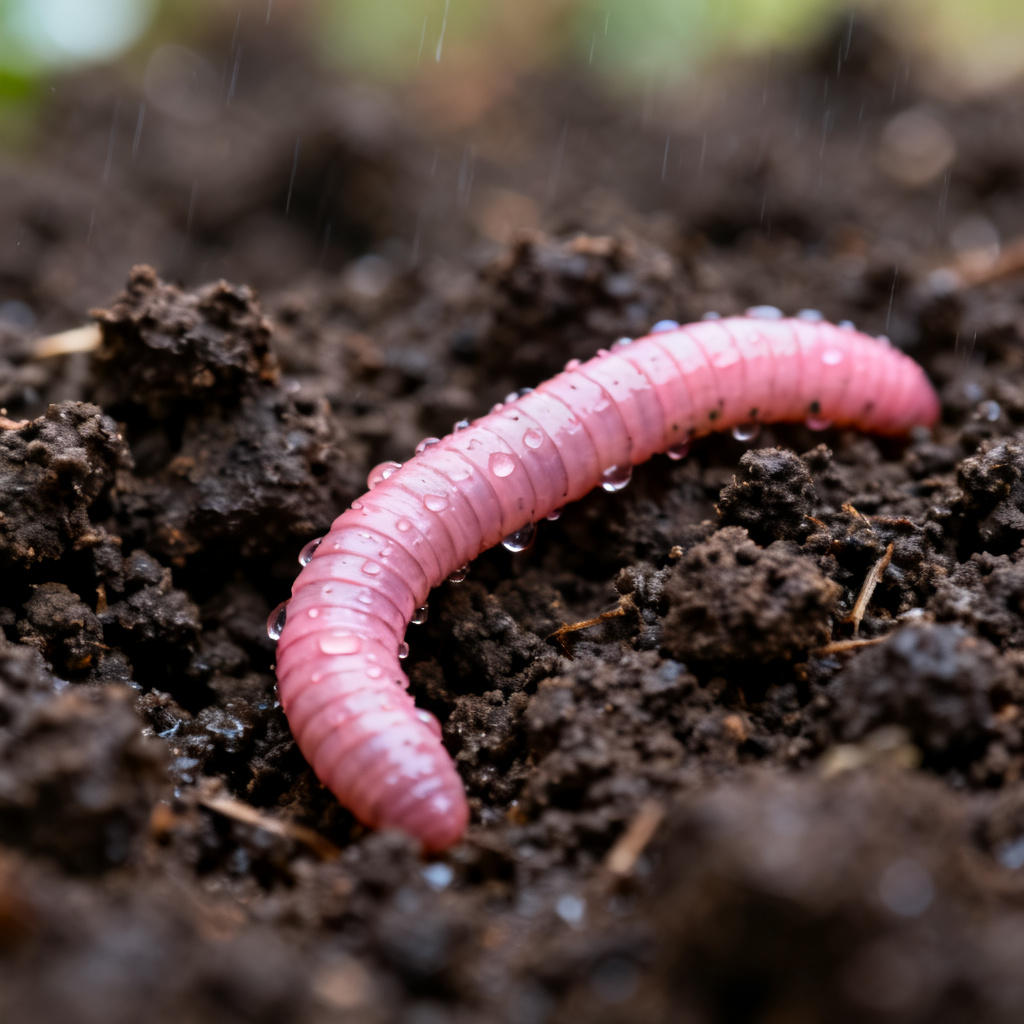
soil-dwelling worm
➕
/sɔɪl ˈdwɛl.ɪŋ wɜːrm/
n.
A long, segmented invertebrate that lives in soil, aerating it and breaking down organic matter to enhance fertility.
📘 Details & Usage
📖 Root Explanation
'Earth' (soil) + 'worm' (creature), literally meaning 'soil-dwelling worm'.
💡 Mnemonic
Think: Earth + worm = a worm that lives and works in the earth, like a tiny soil engineer.
📖 Example
When my little sister first saw an earthworm in the garden, she was fascinated by how it moved.
My younger sister was captivated by the motion of an earthworm she discovered in the garden.
🔗 Collocations
earthworm cast – the nutrient-rich waste produced by earthworms, improving soil structure
earthworm farm – a system for cultivating earthworms, commonly used in vermicomposting
common earthworm – a prevalent species of earthworm, often found in gardens and fields
🔄 Synonyms
nightcrawler (n.) – a large type of earthworm, frequently used as bait in fishing
angleworm (n.) – an alternative name for earthworm, especially in angling contexts
rainworm (n.) – a worm that emerges from soil after rainfall, similar to an earthworm
📖 Cultural Story
The term 'earthworm' derives from Old English 'eorþe' (earth) and 'wyrm' (worm). In modern ecology, it symbolizes soil health and is vital in composting and sustainable agriculture.
Wordbook
Your data is saved in this browser