Reading Theme:
Dragon Dance – Meaning, Examples & Performance
Meaning 1:dragon dance (Dragon dance)
Dragon dance
/ˈdræɡən dæns/
n.
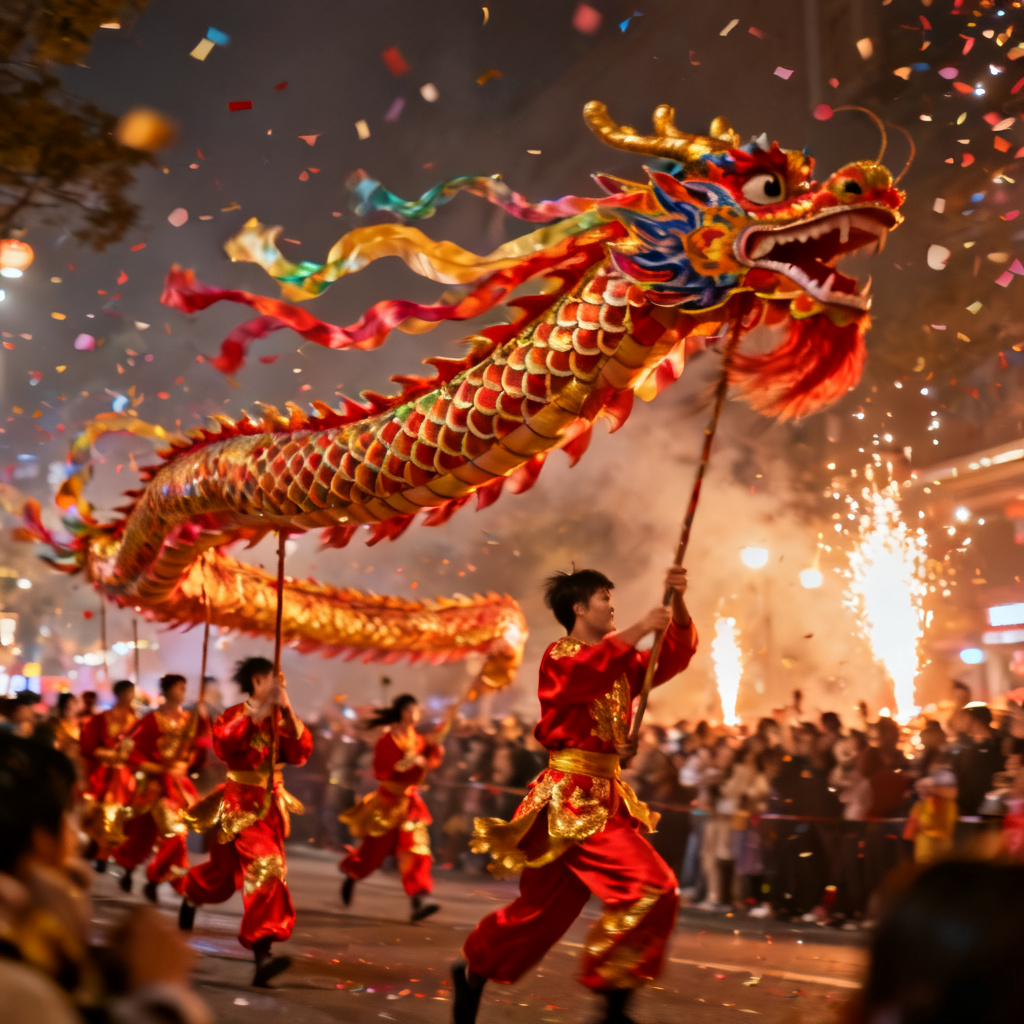
A traditional Chinese performance where a team of people moves a long dragon model in a dance, usually for festivals.
dragon dance
➕
/ˈdræɡən dæns/
n.
A traditional Chinese performance where a team of people moves a long dragon model in a dance, usually for festivals.
📘 Details & Usage
📖 Root Explanation
'Dragon' from Greek 'drakon' (serpent); 'dance' from Old French 'dancier' (to move rhythmically).
💡 Mnemonic
Imagine a long, colorful dragon snaking through the streets as dancers lift and twist poles—a festive, flowing spectacle.
📖 Example
During the Spring Festival parade, the dragon dance team moved through the crowded streets with amazing energy and coordination.
During the Spring Festival parade, the dragon dance team moved through the crowded streets with amazing energy and coordination.
🔗 Collocations
perform a dragon dance – perform a dragon dance
watch the dragon dance – watch the dragon dance
dragon dance festival – dragon dance festival
🔄 Synonyms
lion dance (n.) – Another traditional Chinese performance with a lion costume, also common at festivals.
dragon parade (n.) – A parade featuring a dragon model, often part of the same celebration.
🌱 Derivatives
dragon dancer (n.) – A performer who takes part in a dragon dance.
dragon dancing (n.) – The activity or art of performing the dragon dance.
📖 Cultural Story
Originating in Han Dynasty China, the dragon dance was performed to invoke good fortune and dispel evil. The dragon, a symbol of power and prosperity, is manipulated by a team of dancers holding poles, creating an undulating movement.
Wordbook
Your data is saved in this browser