Reading Theme:
Diesel: Definition, Examples, and Usage Guide (2 meaning)
Meaning 1:diesel fuel (diesel)
diesel
/ˈdiːzəl/
n.
A type of fuel used mostly in big vehicles like trucks and buses. It's thicker than gasoline and more efficient for long distances.
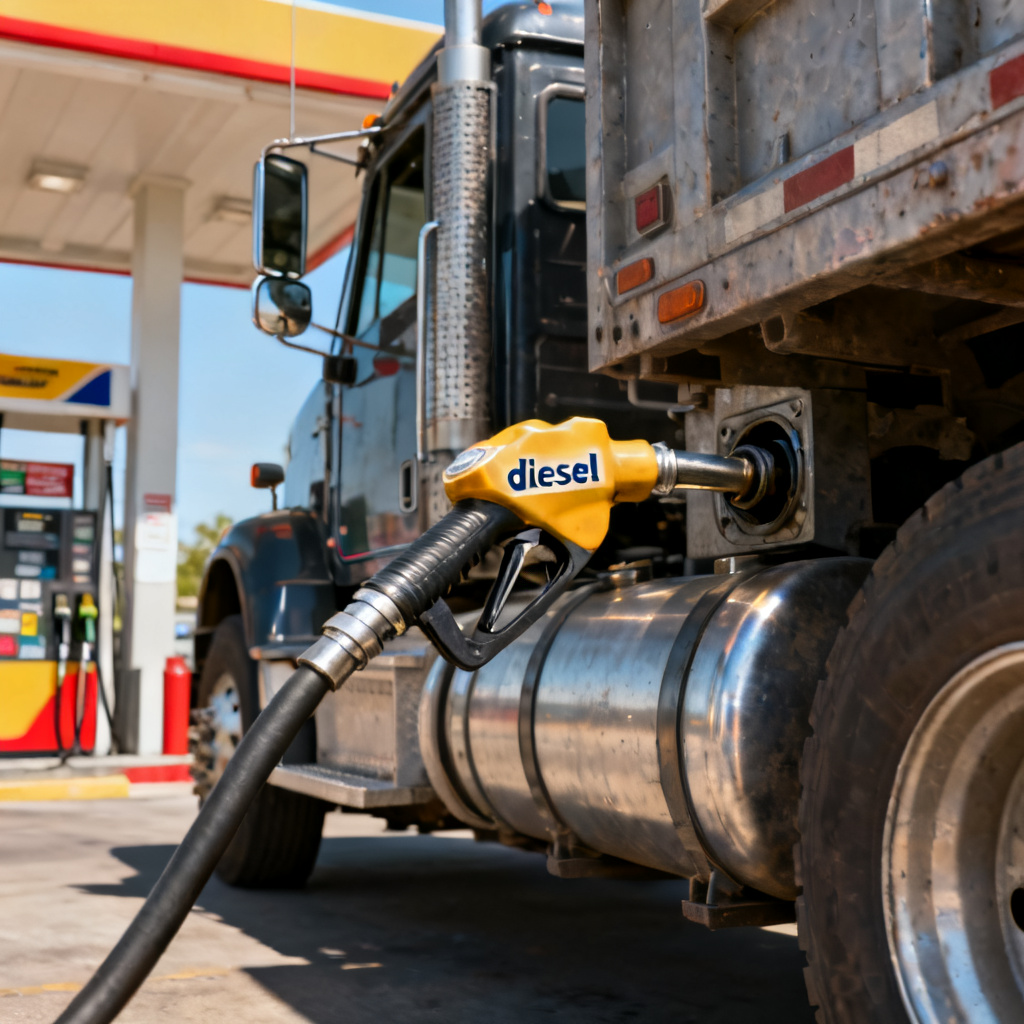
diesel fuel
➕
/ˈdiːzəl fjuːəl/
n.
A heavy petroleum-based fuel used in compression-ignition engines, particularly in trucks, buses, and heavy machinery. It provides better fuel economy than gasoline for long-distance travel.
📘 Details & Usage
📖 Root Explanation
Named after Rudolf Diesel, German inventor of the diesel engine (1897).
💡 Mnemonic
Diesel sounds like 'deals' - trucks get fuel deals with diesel efficiency.
📖 Example
Many city buses use diesel because it helps reduce fuel costs over time.
Many city buses use diesel because it helps reduce fuel costs over time.
🔗 Collocations
diesel engine – An engine that runs on diesel fuel.
diesel fuel – The fuel itself, also known as gas oil.
diesel price – The cost per unit of diesel fuel.
🔄 Synonyms
gas oil (n.) – Another term for diesel fuel, especially in industrial contexts.
petrodiesel (n.) – Diesel derived from petroleum, distinguishing it from biodiesel.
compression-ignition fuel (n.) – Technical term for diesel fuel based on its ignition method.
🚫 Antonyms
🌱 Derivatives
dieselize (v.) – To convert an engine to run on diesel.
dieselization (n.) – The process of converting to diesel power.
dieseling (n.) – The continued running of a gasoline engine after the ignition is shut off, similar to diesel operation.
📖 Cultural Story
Diesel engines operate on compression ignition, patented by Rudolf Diesel in 1898. The fuel type later took his name, becoming essential for heavy transport.
Meaning 2:diesel engine (diesel)
diesel
/ˈdiːzəl/
n.
An engine that uses diesel fuel to run. It works by compressing air until it gets hot enough to ignite the fuel, and is known for being powerful and fuel-efficient.

diesel engine
➕
/ˈdiːzəl ˈendʒɪn/
n.
An internal combustion engine in which air is compressed to a high temperature, causing ignition of fuel injected into the cylinder. Known for durability, fuel efficiency, and high torque, commonly used in industrial and transportation applications.
📘 Details & Usage
📖 Example
The old tractor still has a reliable diesel under the hood, starting easily even on cold mornings.
The old tractor still has a reliable diesel under the hood, starting easily even on cold mornings.
🔗 Collocations
diesel engine – The engine itself.
diesel generator – A generator powered by a diesel engine.
diesel locomotive – A locomotive that uses a diesel engine for propulsion.
🔄 Synonyms
compression-ignition engine (n.) – Technical name for a diesel engine.
CI engine (n.) – Abbreviation for compression-ignition engine.
oil engine (n.) – Historical term for a diesel engine.
🚫 Antonyms
gasoline engine (n.) – An engine that uses spark plugs to ignite fuel.
spark-ignition engine (n.) – Technical term for a gasoline engine.
electric motor (n.) – A motor that converts electrical energy into mechanical power, alternative to diesel.
🌱 Derivatives
dieselization (n.) – Conversion to diesel engines.
diesel-electric (adj.) – A system using a diesel generator to power electric motors.
dieselpunk (n.) – A sci-fi genre based on diesel technology.
Wordbook
Your data is saved in this browser