Reading Theme:
Conversely: Definition, Usage & Common Mistakes
Meaning 1:on the contrary (conversely)
conversely
/kənˈvɜːrsli/
adv.
Used to introduce a statement or idea that is the opposite of what was just said.
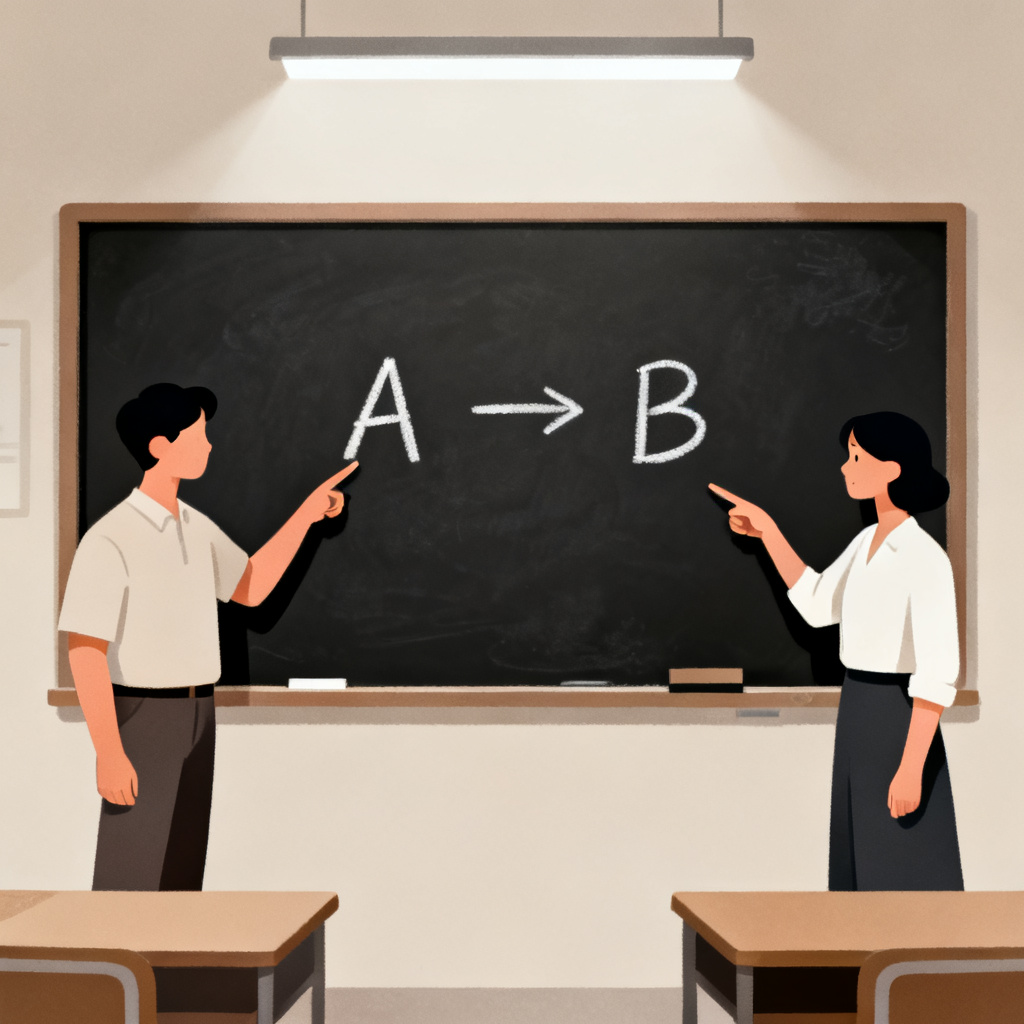
on the contrary
➕
/ɒn ðə ˈkɒntrəri/
adv.
Used to introduce a statement that is the opposite or contrast of what was previously mentioned.
📘 Details & Usage
📖 Root Explanation
From Latin 'conversus' (turned about), via 'converse' + adverbial suffix '-ly'.
💡 Mnemonic
Think 'CONVERSE' as in opposite talk, add '-LY' for adverb form.
📖 Example
Many people think city life is exciting; conversely, I find peace and quiet in the countryside.
Many believe urban life is thrilling; in contrast, I prefer the tranquility of rural areas.
🔗 Collocations
conversely, – introduces an opposite idea
and conversely – adds a contrasting point
🔄 Synonyms
on the contrary (adv.) – used to emphasize that the opposite is true
in contrast (adv.) – used to show how things are different
contrarily (adv.) – in a contrary manner
🚫 Antonyms
similarly (adv.) – in a similar way
likewise (adv.) – in the same way
correspondingly (adv.) – in a corresponding manner
🌱 Derivatives
📖 Cultural Story
Derived from Latin 'conversus', meaning 'turned about'. Historically used in logic to introduce opposing arguments, now common in academic and formal writing to present contrasts.
Wordbook
Your data is saved in this browser