Reading Theme:
City: Definition, Usage, and Examples
Meaning 1:large urban center (city)
city
/ˈsɪti/
n.
A very large and important place where many people live and work, with tall buildings, roads, shops, and many facilities.
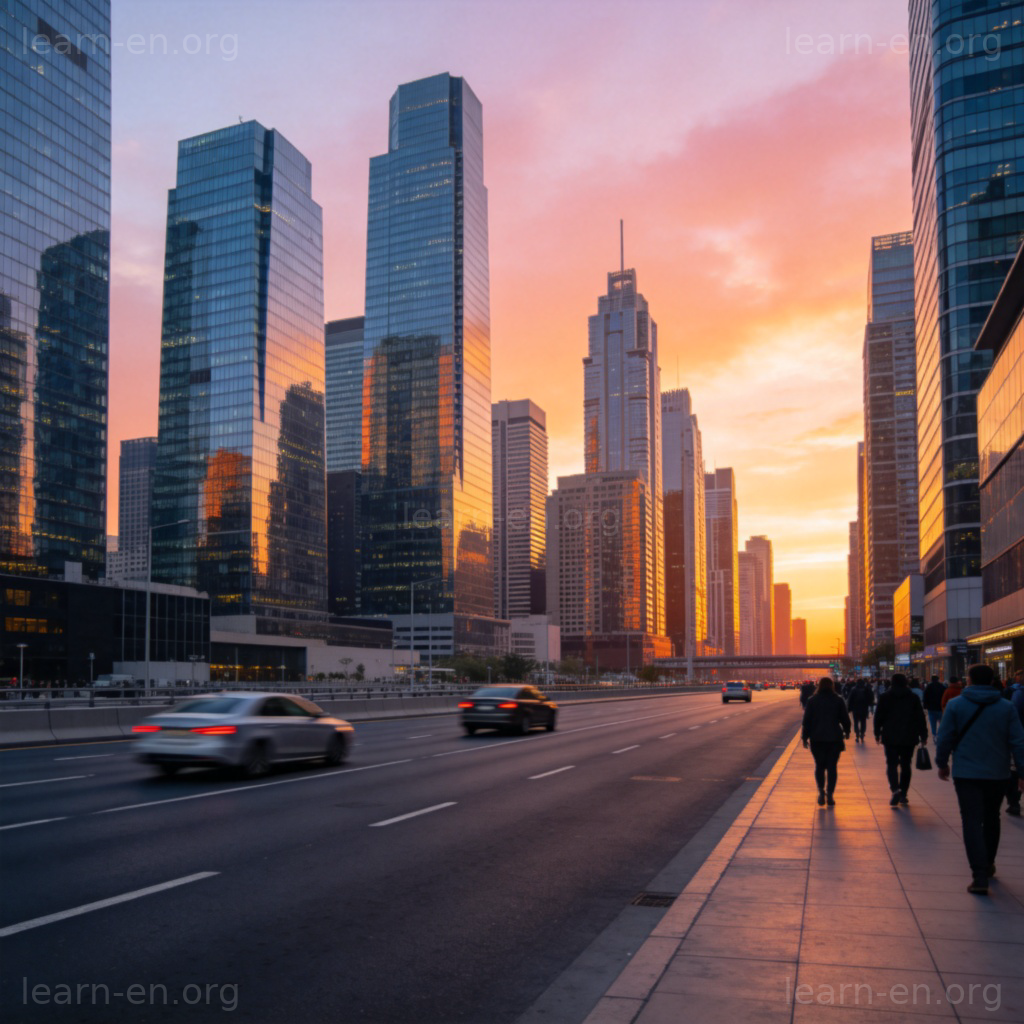
large urban center
➕
/lɑːrdʒ ˈɜːrbən ˈsɛntər/
n.
A city is a very large and important settlement where many people live and work, having tall buildings, extensive infrastructure, and cultural facilities.
📘 Details & Usage
📖 Root Explanation
From Latin 'civitas' (citizenship, community), via Old French 'cite', replacing the original English 'burg'.
💡 Mnemonic
Think 'CITY' as 'Central Intersection of Traffic and Youth'—a busy hub of movement and energy.
📖 Example
When she first arrived in the city, she was amazed by the tall skyscrapers and bright lights everywhere.
When she first arrived in the city, she was amazed by the tall skyscrapers and bright lights everywhere.
🔗 Collocations
city center – the central part of a city, typically with shops, offices, and entertainment
city dweller – a person who lives in a city
city council – the elected governing body of a city
🔄 Synonyms
metropolis (n.) – a very large and densely populated city, often the most important in a region
municipality (n.) – a town or city with its own local government
urban center (n.) – the core part of a city where most commercial and cultural activity takes place
🚫 Antonyms
village (n.) – a small community in a rural area, much smaller than a city
countryside (n.) – the rural area outside of towns and cities
🌱 Derivatives
citizen (n.) – a person who lives in a city or town and has certain rights
civic (adj.) – relating to a city or its citizens
civilization (n.) – an advanced stage of human social and cultural development, often associated with cities
📖 Cultural Story
The word descends from Latin 'civitas', which in ancient Rome originally meant the body of citizens, then the community itself. English borrowed it via Old French after the Norman Conquest, gradually supplanting native 'burgh'.
Wordbook
Your data is saved in this browser