Reading Theme:
Change Trains: Meaning, Usage & Examples
Meaning 1:transfer trains (change trains)
change trains
/tʃeɪndʒ treɪnz/
v.phr.
To get off one train and get on another one in order to continue your trip, usually on a different line.
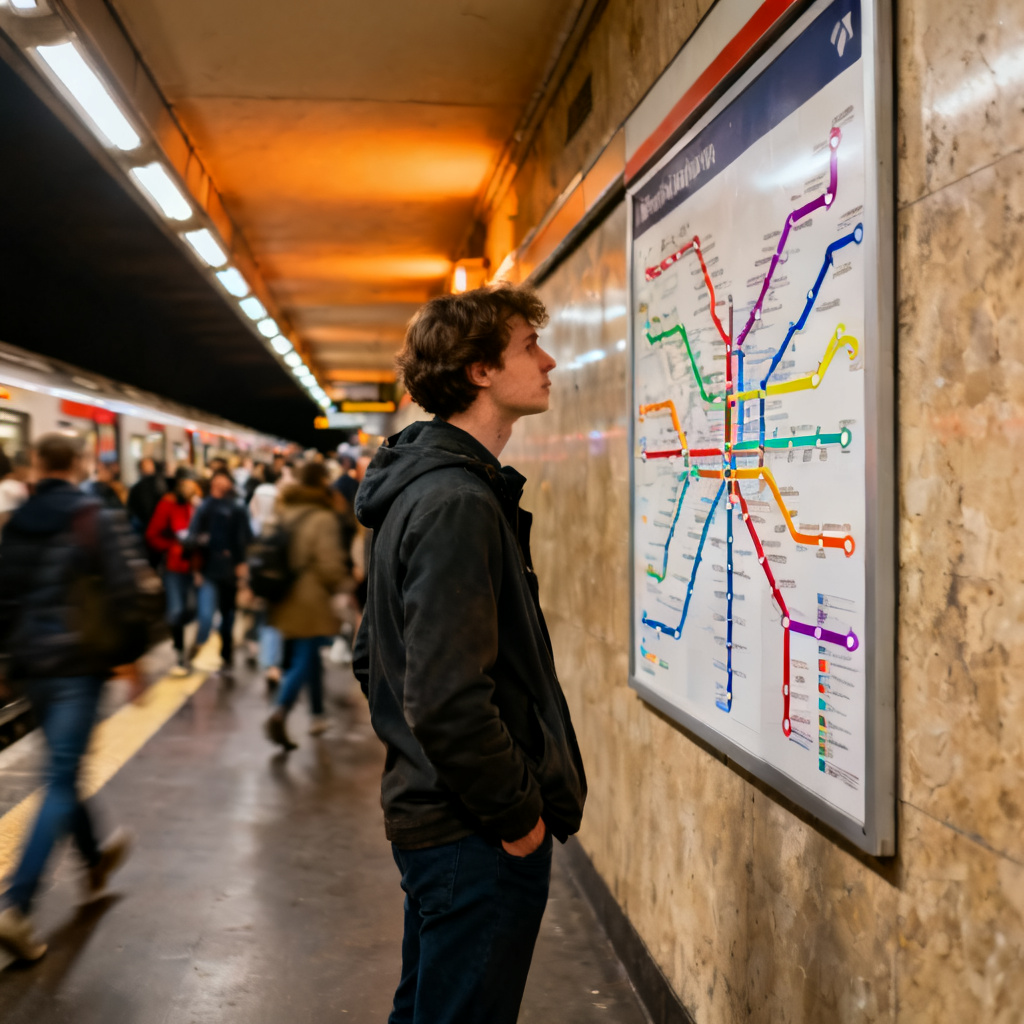
transfer trains
➕
/trænsˈfɜːr treɪnz/
v.phr.
To get off one train and board another to continue your journey, often on a different line or route.
📘 Details & Usage
📖 Root Explanation
Change from Latin 'cambiare' (to exchange) + train from Old French 'train' (to drag).
💡 Mnemonic
Visualize yourself at a station, stepping off one train and boarding another — that's changing trains.
📖 Example
To get to the museum, take the subway Line 1 and change trains at People's Square for Line 2.
To get to the museum, take the subway Line 1 and change trains at People's Square for Line 2.
🔗 Collocations
change trains at a station – to switch from one train to another at a specific station
change trains for a destination – to transfer to a train that goes to a particular place
change trains to a different line – to switch to a train on another route
🔄 Synonyms
transfer trains (v.phr.) – to move from one train to another to continue a journey
switch trains (v.phr.) – to exchange one train for another, often at a transfer point
change lines (v.phr.) – to move from one subway or rail line to another
🚫 Antonyms
stay on the same train (v.phr.) – to remain on the current train without switching
take a direct train (v.phr.) – to use a single train that goes directly to the destination without transferring
📖 Cultural Story
The phrase emerged with railways in the 1800s. Passengers needed to switch trains at junctions to reach destinations served by different companies. Today, it is a standard term in metro and rail systems globally.
Wordbook
Your data is saved in this browser