Reading Theme:
Asymmetry: Definition, Examples & Common Usage (2 meaning)
Meaning 1:lack of balance (asymmetry)
asymmetry
/eɪˈsɪmətri/
n.
When two sides or parts of something are not the same in size, shape, or position.

lack of balance
➕
/ˈlæk əv ˈbæləns/
n.
Refers to the state where two sides or parts of an object, design, or structure are not identical or mirror each other in size, shape, or arrangement.
📘 Details & Usage
📖 Root Explanation
From Greek 'a-' (not, without) + 'symmetria' (symmetry). Literally 'lack of symmetry'.
💡 Mnemonic
Think: 'a-' (not) + 'symmetry' (balanced proportions) = asymmetry (not balanced).
📖 Example
The modern architect designed a building with deliberate asymmetry, where the left wing was much taller and narrower than the right.
The modern architect designed a building with deliberate lack of balance, where the left wing was much taller and narrower than the right.
🔗 Collocations
deliberate asymmetry – an intentional lack of balance in design
facial asymmetry – a slight imbalance between the two sides of a face
structural asymmetry – an imbalance in the physical makeup of something
🔄 Synonyms
imbalance (n.) – A state of not being evenly balanced.
disproportion (n.) – A state of being out of proper relation in size or quantity.
irregularity (n.) – The state of not being regular, even, or symmetrical.
🚫 Antonyms
symmetry (n.) – The quality of being made up of exactly similar parts facing each other or around an axis.
balance (n.) – An even distribution of weight or elements ensuring stability.
proportion (n.) – The pleasing or harmonious relationship of parts to a whole.
🌱 Derivatives
asymmetric (adj.) – Not symmetric; lacking symmetry.
asymmetrical (adj.) – Another form of 'asymmetric'.
📖 Cultural Story
Derived from Greek 'asymmetria'. In science and art, asymmetry is often studied as a principle. In biology, it explains common phenomena like human handedness or the uneven claws of fiddler crabs.
Meaning 2:natural imbalance (asymmetry)
asymmetry
/eɪˈsɪmətri/
n.
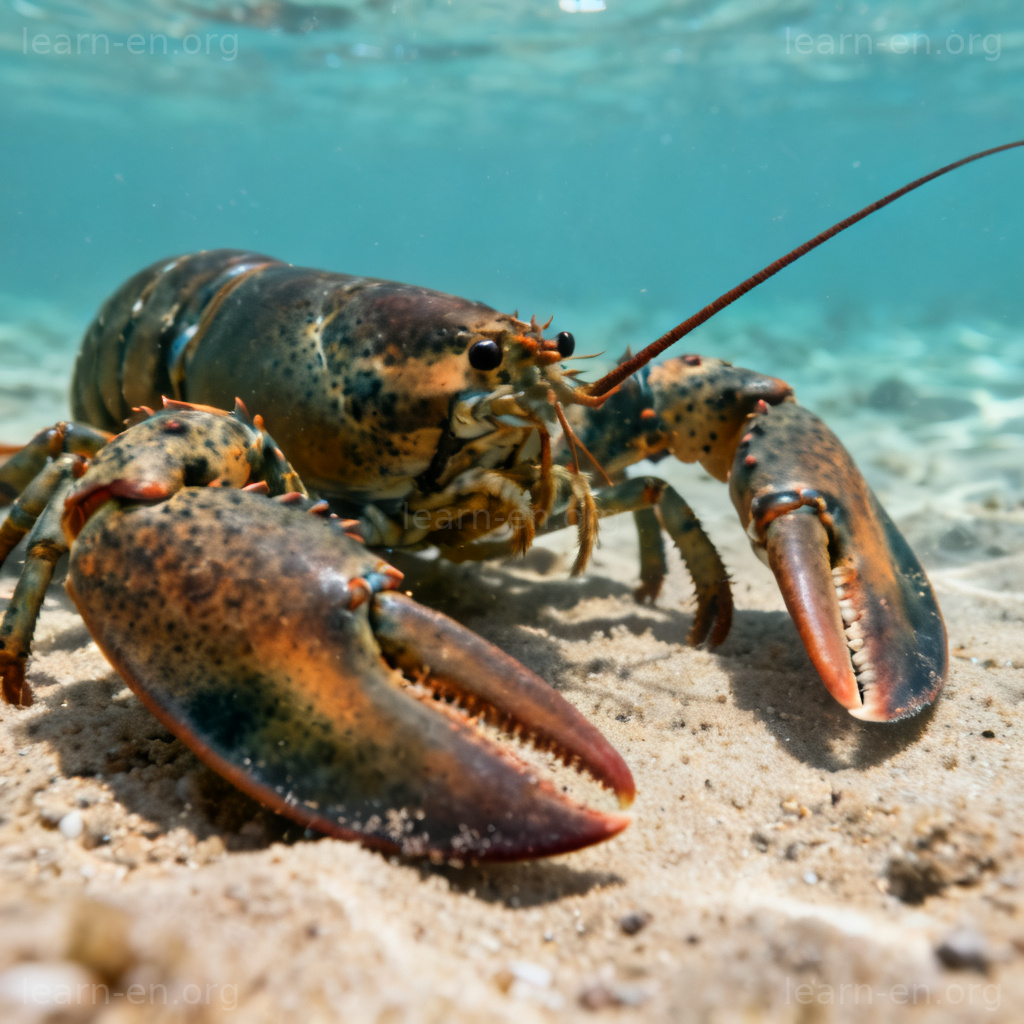
A common feature in nature where the two sides of a living thing are not exactly the same.
natural imbalance
➕
/ˈnætʃərəl ɪmˈbæləns/
n.
Describes a common biological condition where corresponding parts on opposite sides of an organism are not equal or identical.
📘 Details & Usage
📖 Example
In some species of lobsters, claw asymmetry is normal, with one claw being much larger and used for crushing, while the smaller one is for cutting.
In some species of lobsters, claw natural imbalance is normal, with one claw being much larger and used for crushing, while the smaller one is for cutting.
🔗 Collocations
biological asymmetry – an imbalance inherent in the structure of living organisms
claw asymmetry – the condition where an animal's claws are of different sizes or shapes
handedness asymmetry – the natural preference for using one hand over the other
🔄 Synonyms
lopsidedness (n.) – The state of being heavier, larger, or more developed on one side.
unevenness (n.) – Lack of uniformity or equality.
dissymmetry (n.) – A slight or partial lack of symmetry.
🚫 Antonyms
bilateral symmetry (n.) – Symmetry where an organism can be divided into two mirror-image halves.
evenness (n.) – The quality of being regular, level, or uniform.
uniformity (n.) – The state of being the same or consistent throughout.
🌱 Derivatives
asymmetrically (adv.) – In an asymmetric manner.
Wordbook
Your data is saved in this browser